
Last week, news of Microsoft working on a new "Low Latency Profile" for Windows 11 was leaked by Windows Central. When enabled, it would increase CPU clock speeds momentarily to improve app opening times. This was met with widespread backlash, with the community thrashing Microsoft for essentially putting on a Band-Aid instead of addressing underlying Windows performance issues. Since then, the company has stood firmly by the decision on social media, reminding users that it's simply catching up to industry practice.
Senior developer and VP Scott Hanselman replied to a lot of concerned users on X and compared other operating systems to Windows 11, highlighting that this boosting functionality isn't anything new. That's true; every modern OS, including the bastion of efficiency, Linux, and even smartphones, already have this implemented. He went on to claim that "this isn't cheating" and implies that such a solution works in tandem with optimizing apps and code in further replies.
Your smartphone already does this. Constantly. Every touch wakes cores, boosts clocks, renders a frame, then drops back to idle milliseconds later. You’ve discovered dynamic frequency scalingWelcome to modern computer science. Come on in! The water changes temperature often. https://t.co/peGdf6PcF1May 10, 2026
Todos los sistemas operativos modernos hacen esto, incluyendo macOS y Linux. No es “hacer trampa”; así es como los sistemas modernos hacen que las apps se sientan rápidas: suben temporalmente la velocidad del CPU y priorizan tareas interactivas para reducir la latencia https://t.co/kRSRMCB2MwMay 9, 2026
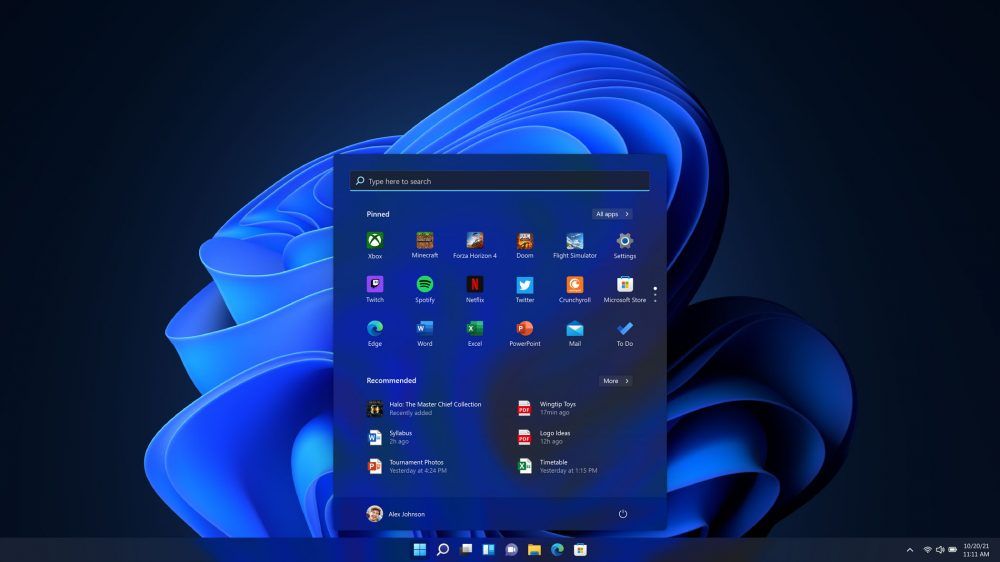
The Low Latency Profile (LLP) is part of Microsoft's broader "Windows K2" efforts to make Windows 11 smoother, more stable, and more efficient after years of sluggishness. As such, LLP works by boosting CPU frequencies for a quick assist in things like flyout delays for the Start Menu. Your CPU usage and clocks will spike for a fraction of a second to ensure the OS feels fast and responsive during those moments.
Think of it this way:Say a core runs 0.5W parked, 2.5W @ 800 MHz & 15W @ 4.5 GHz. If a task runs 1s @ 800MHz, & 0.1s @ 4.5GHz, over 1s, power draw will be:4.5 GHz = (15 W / 0.1s) + (0.5 W / 0.9s) = 1.95 W800 MHz = 2.5 WGrossly oversimplified, but that’s the gist of it.May 9, 2026
For all this to work on a technical level, though, you do require pretty aggressive clock parking so the CPU's prepared to shift into gear the moment it's needed to speed up an OS interaction. This is also important for mobile devices with batteries, such as laptops or handhelds that might consume more power when their cores are being utilized at a minimum for longer, compared to just idling in C-state after a quick burst at max speeds.
People across social media continue to dunk on Scott's replies, asking why Microsoft needed to wait until Windows 11 was in an intolerable state to think of this solution. That's entirely fair, too, considering just how long users have been complaining about the general reliability of the OS. Even devs who formerly worked on Windows have called out Windows 11 for its underwhelming navigation performance.
There's also the argument that perhaps Microsoft needs to optimize the operating system on a much deeper level before applying superficial patches like this, given complaints about the amount of bloatware a stock copy of Windows 11 comes with. Microsoft has even resorted to making an Xbox Mode just so games can bypass the bloat and run better.
It seems like the company is slowly realizing that the AI push it's been hiding behind for a few years at this point just isn't working out the way it was expected. Just look at Xbox — even with a new CEO that literally comes from Microsoft's AI department, it's making community-first changes like never before.