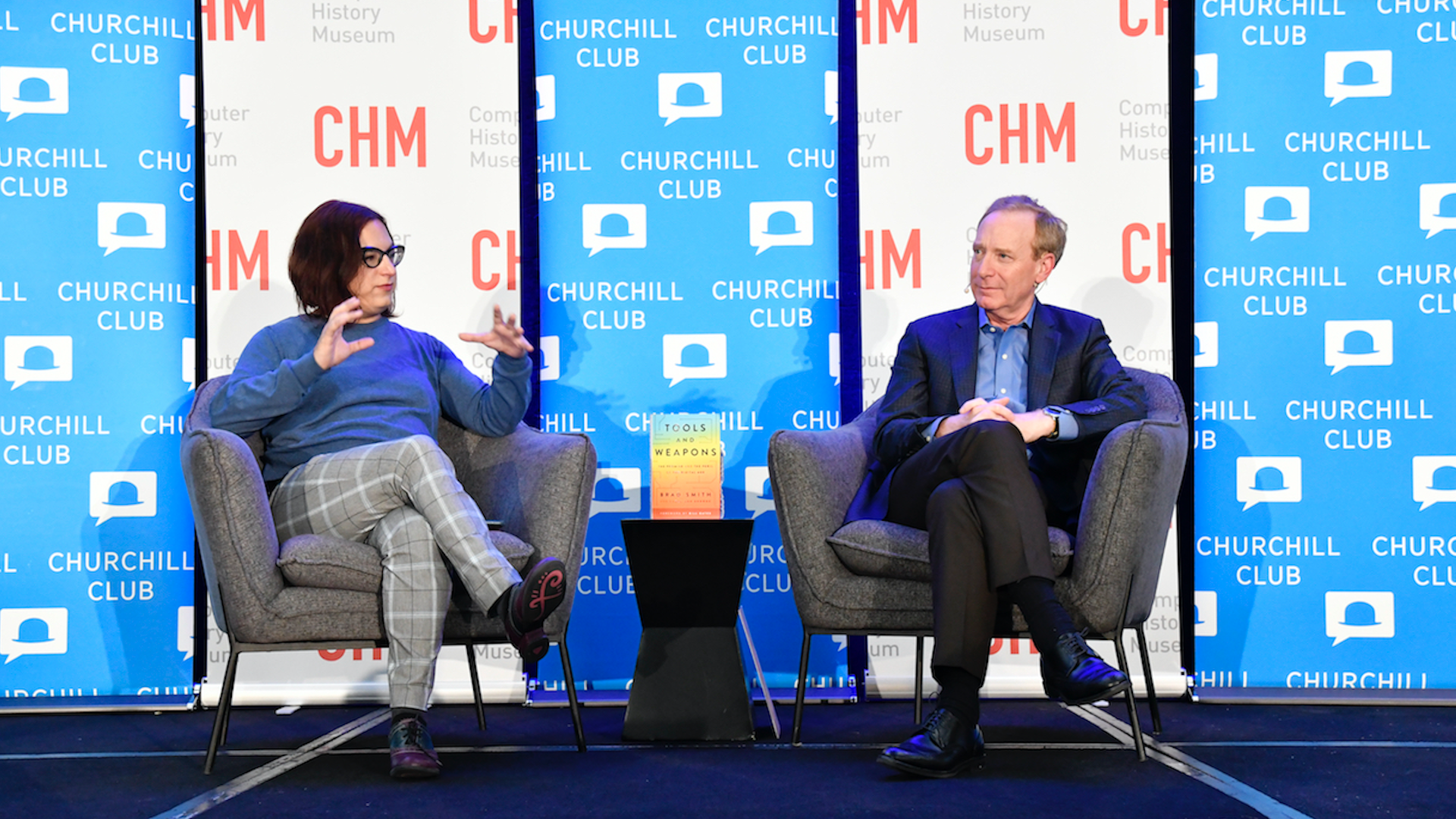
On Monday, I asked Microsoft president Brad Smith, who is all too familiar with antitrust battles, whether he thinks the antitrust investigation caused Microsoft to miss shifts in technology, such as the iPhone.
Why it matters: Microsoft wasn't broken up, as one judge initially ordered, but it spent years battling in court and ultimately was forced by regulators around the globe to pay fines and offer Windows customers in some places the ability to choose a different browser.
- "There's a lot that I think people can learn from our mistakes, our travails," he said during our interview at the Churchill Club.
Smith recalled a Microsoft director pointing out that there was an opportunity cost to continuing to fight the government.
- "Every hour you spend doing one thing is an hour you don't spend doing something else," he said:
As for the current antitrust situation, Smith noted that things are different from when Windows was under antitrust scrutiny.
- "At one level, I think you could look at it and say, hey, a world with multiple platforms by definition is more competitive than a world where everybody is focused on one," he said.
Yes, but: Smith noted that today's giants exert more control over their platforms than Microsoft did over Windows in its heyday. "
- "You know, we at Microsoft were never smart enough to think of a thing called an app store ... anybody could always put any app that they wanted onto Windows."
The bottom line: When evaluating regulators' concerns, tech companies have to think not only about the monetary penalties or conduct remedies that are on the table, but also about how fighting regulators — or not fighting them — will affect the company's ability to innovate.
Go deeper: Watch the full video of the event here