- MicroLED and Hollow Core Fiber are two British inventions revolutionizing Microsoft's data centers
- MicroLED sits between fiber and copper for short- and medium-length connections
- HCF can be used for longer distances to connect customers to data centers
Responding to the continually increasing demand for AI and cloud services, which are putting existing data center networking infrastructure under pressure, Microsoft says new UK-developed technologies are helping it gear up for a more efficient future.
Two key UK-developed technologies – MicroLED optical networking and Hollow Core Fiber (HCF) – are now being used by Microsoft at scale to boost energy and cost efficiency across the board, and they're not just being used within Britain.
The company said that these British inventions are helping it to address the current limits of networking infrastructure, including power, distance and reliability.
UK inventions are helping Microsoft's data centers
As a result, data centers customers globally are being treated to faster and lower-latency services.
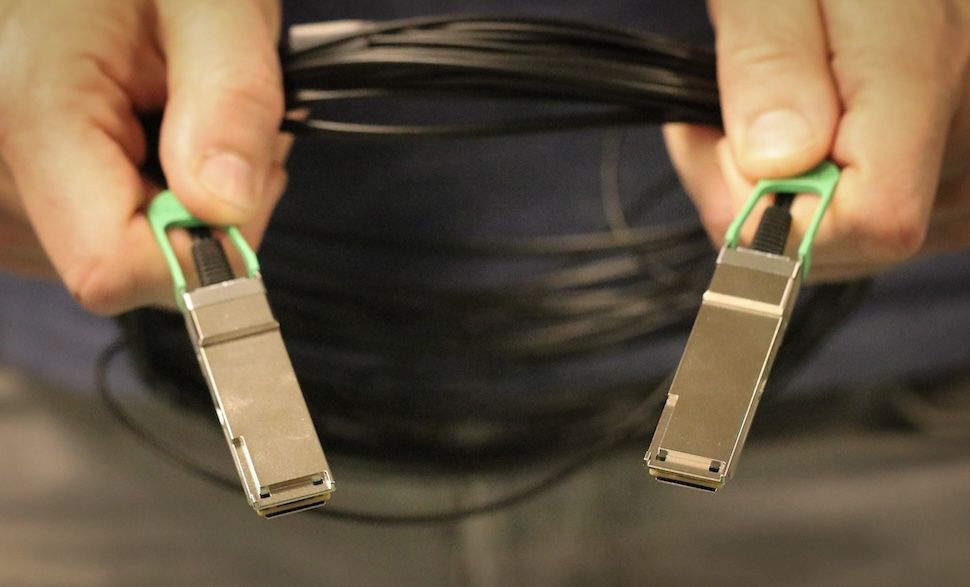
MicroLED is being used to replace traditional laser-based optical components, promising up to 50% lower energy use compared with current systems and a longer lifespan. Primarily used inside data centers to connect servers and GPUs, this technology is more reliable and less sensitive to heat and dust than laser systems.
Microsoft explained that current data centers use fiber optical cable for longer distances and copper cable for closer connections within two meters. MicroLED plugs the gap, equalling the reliability and cost efficiency of copper but matching the longer distances served by fiber optics.
"This breakthrough has the potential to change nearly every aspect of computing infrastructure … starting with high-bandwidth optical cables," Microsoft Research technical fellow and CVP Doug Burger wrote.
With Microsoft gearing up to roll out MicroLED, the company has already deployed HCF across its Azure regions. By transmitting data through air, not glass, it delivers up to 47% faster speeds and around 33% lower latency compared with standard fiber, which enables longer-distance connections with less performance loss.
HCF is for longer distances – connecting customers to data centers – unlike MicroLED which will mostly be used within the data center.
"Hollow Core allows us to extend that area served by one datacenter and an Azure region," Azure Hyperscale Networking GM Frank Rey added.