/AI%20(artificial%20intelligence)/AI%20data%20center%20infrastructure%20by%20FOTOGRIN%20via%20Shutterstock.jpg)
The artificial intelligence (AI) boom has rewarded nearly every corner of the semiconductor industry, but not all winners have followed the same path. Graphics processors grabbed the headlines first, then networking chips, and now memory has become one of the industry's biggest bottlenecks.
Demand for high-bandwidth memory (HBM) from Micron Technology (MU), Samsung Electronics, and SK Hynix continues to outpace supply as hyperscale cloud providers race to build AI infrastructure. Yet the market has begun questioning whether today's supply shortages will last.
That shift has created an intriguing race between two of the market's biggest AI beneficiaries: Micron and Advanced Micro Devices (AMD).
Memory's Explosive Rally Faces Its First Real Test
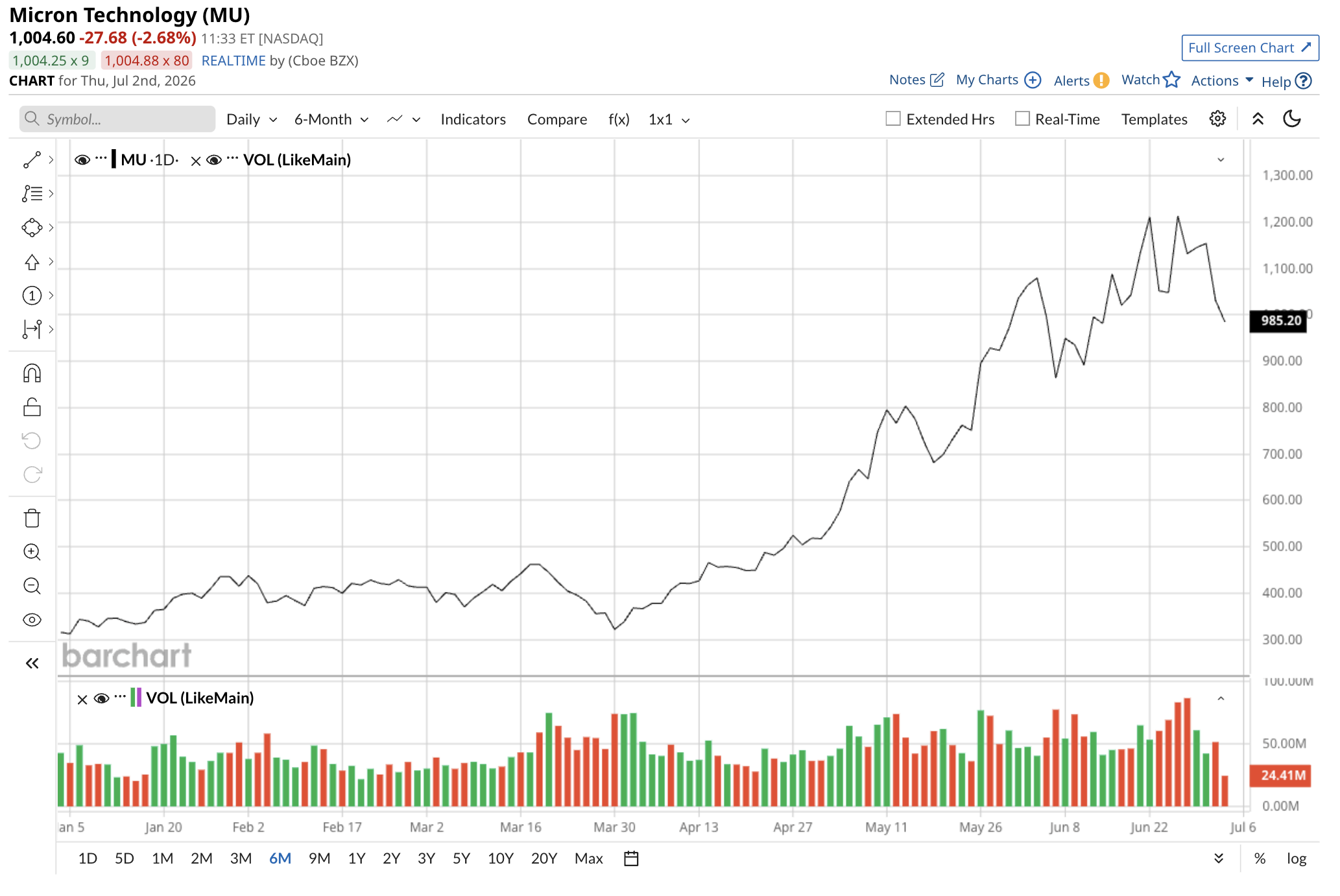
The shortage of AI memory has transformed Micron into one of the market's biggest winners. Over the past year, MU stock has gained 685%, while rising 235% year-to-date (YTD). The rally pushed its market capitalization from below $200 billion to nearly $1.4 trillion before a recent pullback trimmed it to roughly $1.16 trillion.
The decline came despite another strong earnings report from Micron showing continued pricing strength and robust HBM demand. Instead, sentiment shifted after reports that Meta Platforms (META) plans to lease surplus AI data-center capacity to third parties. Investors interpreted the move as a sign that AI compute shortages may ease faster than expected.
That narrative didn't just pressure Micron. Shares of Samsung and SK Hynix also declined as investors questioned whether today's extraordinary memory pricing can persist once new manufacturing capacity comes online.
Granted, those concerns aren't entirely unfounded. Memory has always been one of the semiconductor industry's most cyclical businesses. As supply catches demand, pricing typically cools. But AI demand also continues to expand at a pace few industries have experienced before, making comparisons with previous memory cycles less straightforward.
AMD's Path to $1 Trillion May Be Broader
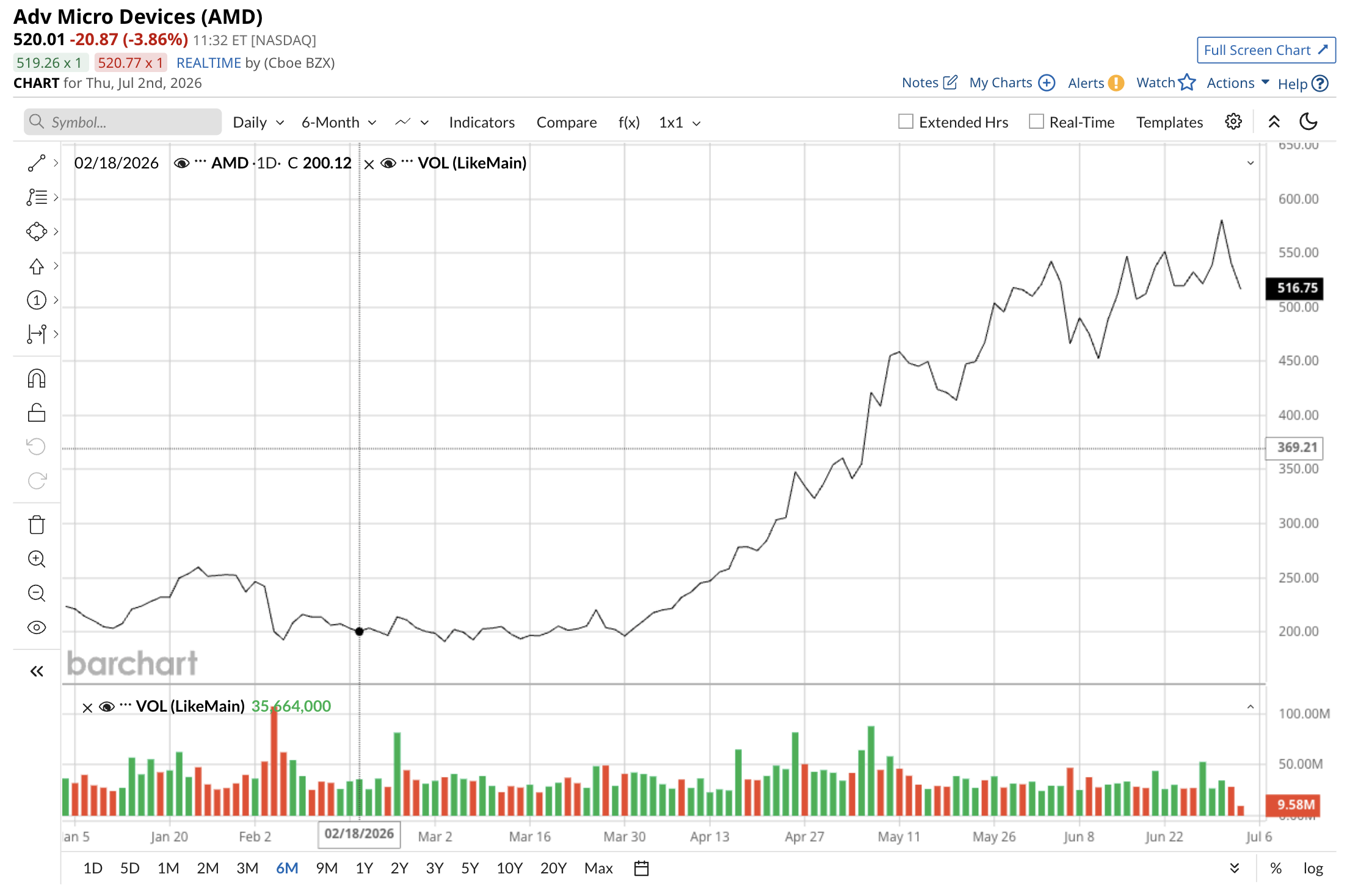
AMD has also benefited from the AI spending boom, although its gains have been less dramatic. AMD stock has climbed 270% over the past year and 140% in 2026, giving it a market cap of roughly $881 billion after retreating from a recent peak following the Meta news.
Let's look at why AMD may still have the easier path toward a $1 trillion valuation.
| Metric | Micron | AMD |
| One-Year Return | 685% | 270% |
| 2026 Return | 235% | 140% |
| Current Market Cap | ~$1.16 trillion | ~$881 billion |
| Pullback From High | ~20% | ~10% |
AMD's opportunity extends well beyond AI accelerators. The company continues gaining server CPU share, is expanding its Instinct AI accelerator business, and remains a growing supplier across cloud computing, enterprise servers, and edge AI. Those businesses provide multiple growth engines instead of relying primarily on one product category.
That diversification matters. If memory pricing moderates over the next few years, Micron's earnings could fluctuate more than AMD's earnings. Meanwhile, AMD still benefits if hyperscalers continue spending hundreds of billions of dollars annually on AI infrastructure — even if they become more efficient in how they deploy it.
Key Takeaway
In short, investors shouldn't view this as an either-or decision. Micron's recent pullback doesn't necessarily mean its $1 trillion-plus valuation is in jeopardy, just as AMD's climb doesn't require Micron to stumble.
That said, AMD arguably has a slightly smoother road ahead because its AI story spans CPUs, GPUs, networking, and enterprise computing rather than depending largely on memory pricing. Meanwhile, Micron still enjoys one of the strongest supply-demand imbalances in semiconductors, and company guidance suggests HBM demand remains well ahead of available supply.
Ultimately, both companies could maintain and grow their huge valuations over time if AI infrastructure spending continues anywhere near its current pace. For long-term investors, the real win may not be choosing between AMD and Micron, but recognizing that both occupy indispensable positions in the AI ecosystem as demand continues to expand.