

One of the latest crazes to hit the skincare market is microcurrent facial devices. While they might look a little daunting at first – an electrical current that touches your face doesn’t sound very appealing! – a microcurrent facial device can completely transform your skin and beauty routine.
Just like the best LED face masks, microcurrent facial devices have emerged from the dermatologists offices and made their way into people’s homes. They’re all over social media, like TikTok and Instagram, and many celebrities swear by them, including Jennifer Anniston, Hailey Bieber and Margot Robbie.
But what are microcurrent facial devices? How do they work? And most importantly, do they actually deliver good results? Before you add one to your basket, here’s everything you need to know about microcurrent facial devices.
What is a microcurrent facial device?
A microcurrent facial device is a palm-sized gadget that delivers an electrical current to the muscles and skin cells of the face. Microcurrent facial devices actually originate from the 1800s where they were used to treat injured muscles and partial facial paralysis, like Bell’s palsy.
Most microcurrent facial devices you’ll find today have a ‘V’ shape with a handle and two globes or spheres which make contact with the skin. The electrical currents come from the globes and flow through your facial muscles to stimulate and tone them, while reducing sagging and increasing collagen production and blood circulation.
Microcurrent facial devices are non-invasive, and while you might feel a tiny zap when you use one, they’re safe and relatively painless. Where you might feel a sting is if you use your gadget without the water-based conducting gel it comes with.
For the electrical current to work effectively, it needs to be used with a conducting gel or serum. The gel acts as a conductor to let the current flow and get deep into your skin. Using a microcurrent facial device without the gel means it won’t get as deep into your skin as it needs to, and it can also be painful.
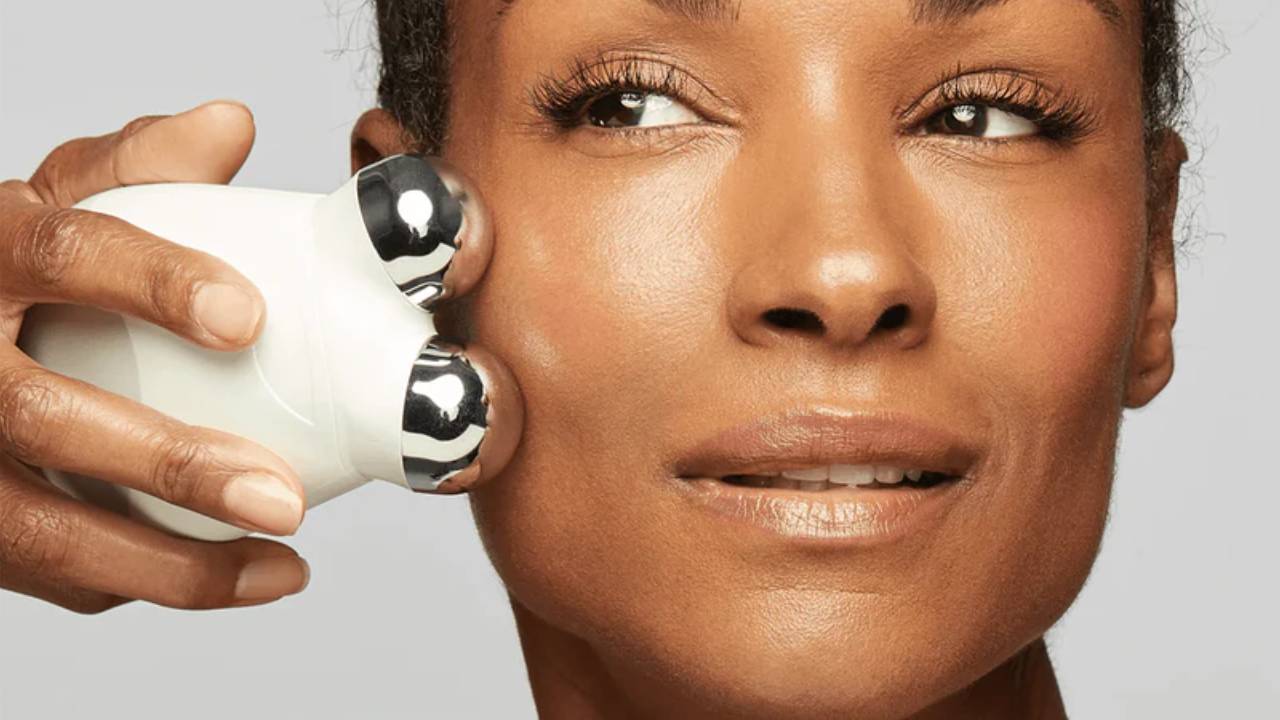
How to use a microcurrent facial device
Depending on the brand you choose, you should receive the microcurrent facial device, its charger and a conducting gel in your purchase. It’s always important to follow the products’ instructions, so make sure to read them thoroughly before you use your new device.
To give a brief explanation on how to use your microcurrent facial device, you’ll need to start with clean and dry skin before applying the conductive gel. Next, turn on your device to its lowest setting and move it up your skin in a sweeping motion. Focus on your cheeks, forehead and jawline to get that lifted look.
Typically, the microcurrent facial device will turn itself off after its completed a treatment, which takes anywhere from 3-10 minutes. Skincare experts recommend using your microcurrent facial device 4-5 times a week, but this will depend on the device you have, so again, read the instructions!
Using a microcurrent facial device: Pros
The main benefits of using a microcurrent facial device is to get lifted and toned skin. As it works to stimulate your facial muscles, you’re essentially giving your face a workout, so you should notice your cheeks, forehead, jawline and brow bone looking higher, more lifted and sculpted.
Aside from tighter and healthier looking skin, a microcurrent facial device can also address other skincare concerns, like improving your circulation and stimulating collagen production for fewer wrinkles.
Using a microcurrent facial device: Cons
Unfortunately, nothing is without its faults so a microcurrent facial device might not be for everyone. For safety reasons, you shouldn’t use one if you have heart issues, epilepsy or you’re pregnant. In terms of skincare, if you have chronic acne, sensitive skin or are experiencing a flare-up, you should avoid using a microcurrent facial device. Before you use one, make sure to talk to your doctor or dermatologist.
T3's Top 3 microcurrent facial devices
Best overall
+ Clear and visible results that look and feel amazing
+ Accompanying app gives helpful guidance
+ Can be used on the face, neck and other body parts
- Expensive
- Can be a little painful on sensitive skin
The nuFace Trinity+ is the best microcurrent facial device you can buy today. It lifts, contours and sculpts the skin, and gives visible results after a few weeks of use. It’s extremely comfortable to hold and can be used on multiple parts of the body, not just your face. It’s not cheap and it might sting a little for those with sensitive skin, but T3 are big fans of it, as you can see in our nuFace Trinity+ review.
Best for lifting and spot banishing
+ Lifts and clears skin from sagging and spots
+ Petite and easy to travel with
+ Quick treatments that are easy to fit into a routine
- Hard to hold
- Gel is drying
While microcurrent facial devices are typically designed for lifting the skin, the ZIIP Halo is also good for banishing spots. In T3’s ZIIP Halo review, I found that my spots went away quickly when I used it… and stayed away, too! The ZIIP Halo has a slightly different design compared to other microcurrent facial devices, so it can be tricky to hold at times, but it’s a cool gadget that’s easy to travel with and fit into your skincare routine.
Best for comfortability
+ Give tighter and fresher looking skin
+ Comes with multiple attachments, including LEDs
+ Nice to hold
- Instructions can be a little confusing
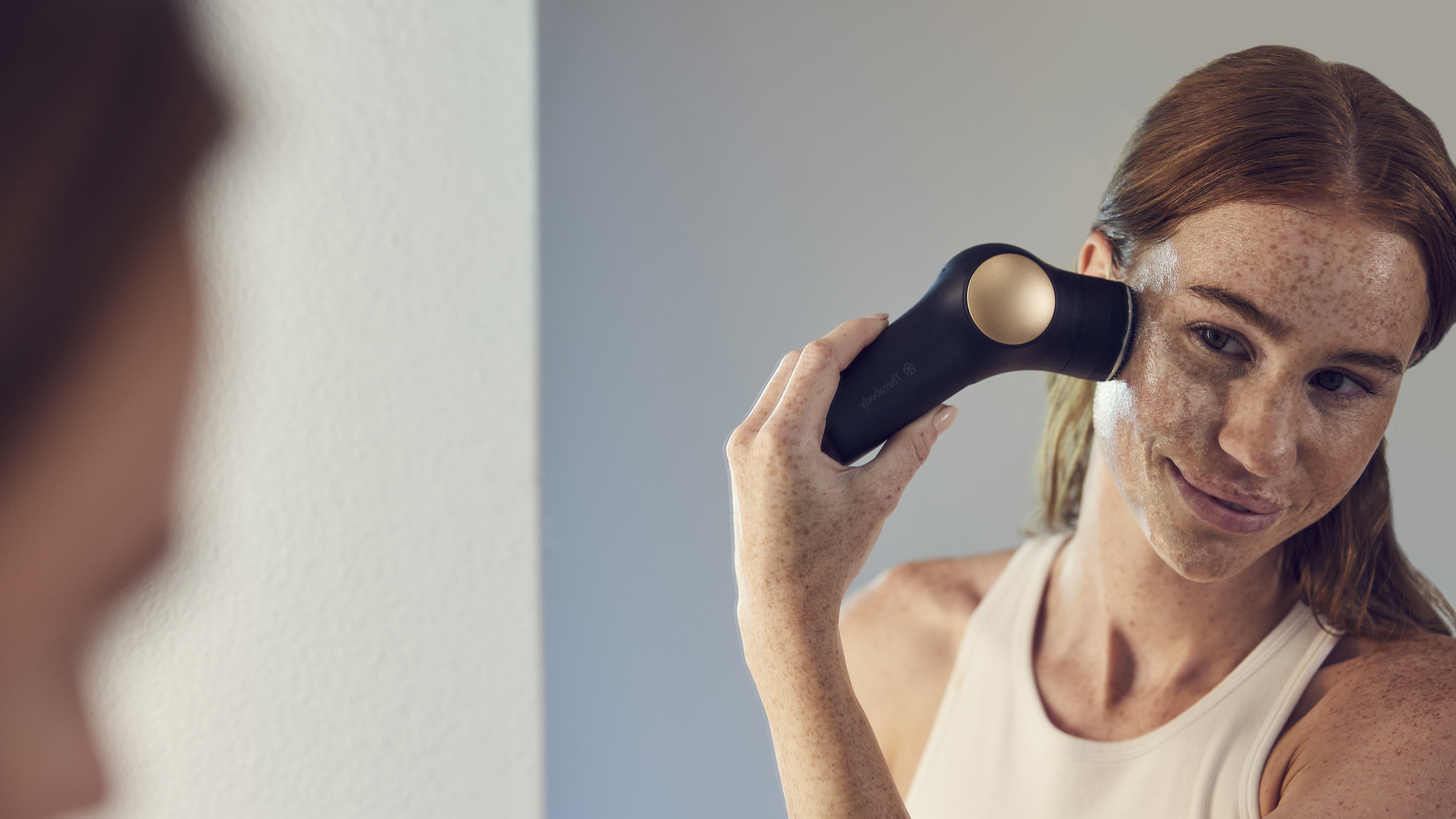
The TheraFace Pro isn’t just a microcurrent facial device. Instead, it’s a facial therapy tool that comes with multiple attachments to clean, cleanse and treat the skin. Its microcurrent attachment is thorough and feels nice on the skin, and the accompanying gel is the best we’ve tried, in terms of feel and not drying out the face. It’s easy to hold and use, thanks to its long handle, and you get a cleansing brush, massage tools and LED lights to treat other skincare concerns. Read our TheraFace Pro review for more details.