DETROIT — In storm after major storm in recent years, Michigan's two giant suppliers of electricity — Detroit-based DTE and Jackson-based Consumers Energy — insist they're doing all they can to reduce outages.
Yet, as of this week, 800,000 customers could be saying that whatever they’re doing, it’s not enough.
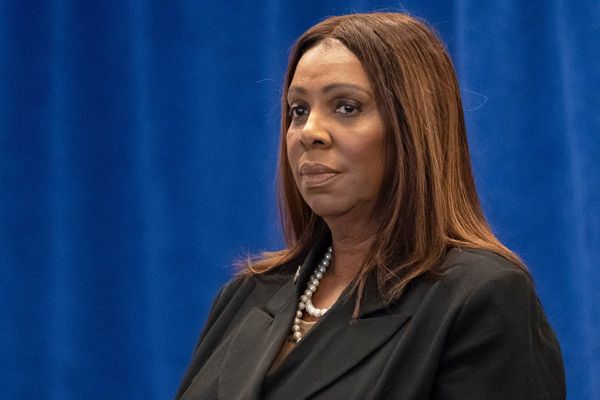
Michigan Attorney General Dana Nessel, the state's most outspoken attorney general in decades regarding utility rates, said Friday in a statement that Consumers Energy and DTE should voluntarily issue credits to customers affected by the outages, and they should provide greater credits to anyone showing major losses of ruined food or big added expenses such as motels and restaurant meals.
"In addition, the attorney general calls on these same utilities to create a fund to assist displaced customers" in future outages, said Lynsey Mukomel, a spokeswoman for Nessel.
Michigan’s utilities have admitted for years that they’re playing catch-up on two key challenges for reducing outages: tree trimming and improving the grid, the system of wires, poles and the equipment that feeds the wires.
The challenge is huge for both DTE and Consumers Energy, and others nationwide, for improving “reliability" — the term for having electric power that's always there, or nearly always, no matter the weather or chance of equipment failures. Michigan’s electric giants must boost reliability in an era of unprecedented change, as they’re pushed at the same time to revolutionize their power generation amid tightening environmental standards, and to meet the swelling demands of electric cars and computers.
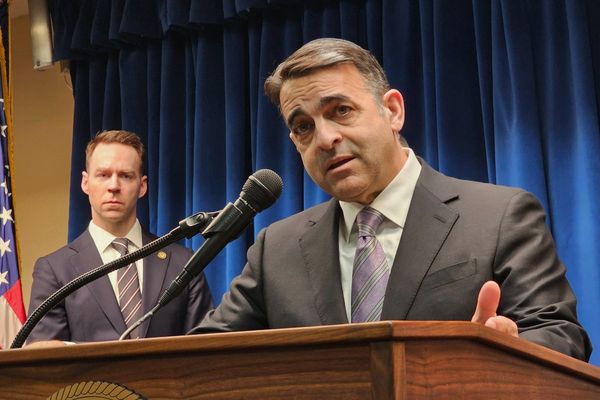
Most of all, they must deal with what seems to be an undeniable trend toward fiercer storms brought by climate change, said Dan Scripps, chair of the Michigan Public Service Commission, which regulates Michigan’s utilities.
This week’s storm wasn’t the worst ever, only the worst since the monster in 2017, “but it may end up surpassing that,” Scripps said Friday.
He chairs a three-person, full-time commission that rules on utility rate requests, contained in technical documents typically hundreds of pages long. In recent years, those requests contained pledges by management teams of engineers, lawyers and executives to use the additional funds to reduce outages — the number of outages and how long they last.
“If you look at where we are right now, on the maps, this was really all over. It was concentrated in Wayne, Oakland and Macomb, but it went way up into the Thumb” for DTE, Scripps said. And customers of Consumers Energy lost power in huge swaths around Grand Rapids and through the center of the Lower Peninsula.
“DTE is saying they have the most crews working for an outage in 10 years,” in part because the impact is so widespread, with winds gusts as high as 70 mph, Scripps said.
Since he was appointed by Gov. Gretchen Whitmer in early 2019, Scripps and the MPSC have given extra emphasis to details in DTE’s rate requests, “making sure that the money that’s allocated for tree trimming essentially gets spent on tree trimming,” he said. In May 2019, the MPSC approved DTE for a “surge of tree trimming, a focused effort to get them into the 5- to 7-year cycle … where states are that have had better reliability than Michigan.”
“Everyone thinks a lot about grid hardening,” the process of upgrading poles, wires and related systems, “but really, tree trimming is what will have the biggest effect” on improving reliability, Scripps said.
“The longer duration of outages is really where we lag behind other states. We’ve asked them to include metrics on that” in DTE’s next rate request, “and we want to start building into that some financial incentives and some penalties. By 2025, they should get through their backlog of tree trimming,” he said. And, by that time, the MPSC's new fiscal hammer should come down if DTE can't show improved reliability.
As for upgrading the distribution system, DTE executives said this week DTE is replacing some wooden poles with steel poles, replacing wooden cross-members atop poles with stronger fiberglass crossmembers, and taking other steps to harden the grid. DTE has one of the nation’s oldest electric systems, dating to the days of electric innovator and company co-founder Thomas Edison. A DTE spokeswoman said Friday that the company was unable to respond to the Free Press about its record of reliability.
Scripps, a former state representative who calls himself a “clean-energy lawyer," said he was unsure whether the state’s utilities will "ever be completely caught up” with perfecting state-of-the-art grids because “there is just so much to do,” and construction budgets are limited by what consumers can afford to pay for their power.
The utility says it has made significant progress in some areas. For example, the Woodward Avenue corridor of Oakland County is a heavily treed residential area with aging wires, poles and substations, so it was vulnerable to frequent outages in the last two decades. But investment in new equipment as well as the expanded tree trimming have reduced the frequency and duration of outages significantly in the Woodward communities, including Ferndale, Pleasant Ridge, Royal Oak and Huntington Woods. Still, the west side of Ferndale lost its power this week because that slice of the city is fed by a substation in neighboring Oak Park, where a majority of residents were in the dark this week in such a serious mishap — involving a huge tree and high-voltage lines — that DTE held a news conference Thursday in view of that vivid destruction.
As well, Berkley, also in the Woodward Corridor, had about half its homes in the dark this week, as well as the City Hall, library and public works offices, City Manager Matthew Baumgarten said. The outage included the air conditioning in Baumgarten's house.
"I've been on a fabulous weight-loss program from sweating," he quipped Friday. Still, Baumgarten acknowledged DTE's progress on tree trimming in the city.
"They really have done a lot of tree work. Things had improved here quite a bit from a few years ago," when outages were frequent and prolonged, Baumgarten said.
"But this storm — there wasn't much they could do" to prevent the outage, he said. "We had 60-mph winds and whole trees down, not just limbs. I have to give DTE credit. They did the work," he said.
Elsewhere, the view of DTE was decidedly less sanguine, and not just about this week's outage but about persistent and repeated outages, some apparently unrelated to bad weather.
In Farmington, 10 miles west of Berkley, "We've lost power four times in 35 days (and) five times in less than 11 weeks," said William Jones, in an email to DTE that Jones shared with the Free Press. Jones kept his email polite but unleashed some verbal digs.
"Since May, how often have the CEO (and other executives) at DTE lost power?" his email said. Jones sent his email on Thursday to half a dozen DTE executives, as well as to his state lawmakers and the governor's office.
In a reply sent just minutes later, and again in a second response two hours later, DTE Senior Vice President of Electric Distribution Heather Rivard replied (in these excerpts of two emails): "...The circuit you live on is in fact one of the worst performing circuits on our system. It is scheduled to be trimmed in 2022 but I am working to pull that into this year. In the meantime, we are doing multiple areas of trimming and equipment upgrades at nearly 100 locations on the circuit. I realize this is all little consolation at a time when you are experiencing so many lengthy outages. We will fix this."
One thing that DTE should do more of is bury its wires, said Mike Watza, a lawyer in Detroit who is general counsel of PROTEC, a consortium of more than 100 communities that file legal challenges against the electric, telecom and pipeline industries.
“These utilities, DTE in particular, asked for big rate increases a few years ago to fix the distribution system that keeps getting knocked down by big winds," Watza said on Friday.
"But, in their wisdom, what do they do? They take down old wooden poles and put up new wooden poles, which get knocked down again, especially with the increasing winds we’re seeing from climate change. I believe that at least some of this system needs to go underground," he said.
The MPSC has had a rule for decades requiring that all new subdivisions have their electric lines buried. "I would say that at least some percentage of the money allocated for improving their distribution system should go to undergrounding,” Watza said.
Both DTE and Consumers Energy have emphatically said for years that burying electric wires, a process called undergrounding, isn’t feasible for the existing grid, only for new construction.
———