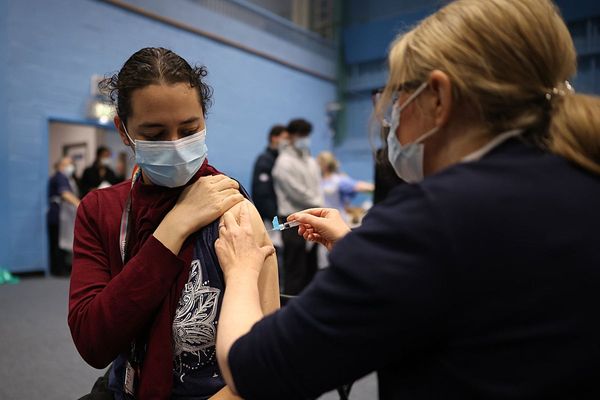
DETROIT — Michigan's abortion rate increased nearly 9% 2020 to to its highest level in almost three decades — an increase providers and other experts attributed to the COVID-19 pandemic.
The increase to 15.8 abortions per 1,000 women of child-bearing age from 14.5 in 2019 was the highest jump in the state's abortion rate since 2013, according to state data. It marks Michigan's highest abortion rate since 1993, although a portion of the increase is attributed to visitors from outside the state.
"We definitely saw a significant increase in the number of patients seeking abortion care," said Ashia George, nurse manager at Scotsdale Women's Center, an abortion clinic in Detroit.
"We saw an increase in both in-state and out-of-state. We’ve had several patients fly in from Texas for abortions."
The biggest double-digit percentage increases in abortion rates for women age 15 to 44 years old in 2020 occurred in rural, more sparsely populated northern Michigan counties, many of which have higher poverty rates than the state average of nearly 9% .
They included a 25% increase in Gladwin County and a 55% jump in Montmorency County, which a United Way measurement finds has the fourth-highest concentration of working poor households in Michigan, according to the University of Michigan. Alpena County had the largest increase at over 62%, going from 5.1 abortions per 1,000 women in 2019 to 8.3 in 2020.
Larger populated counties with urban centers had less dramatic but notable increases, many of which were above Michigan’s overall 8.9% increase in the abortion rate. They ranged from Genesee County’s 12% rise to a nearly 15% hike for Detroit, which is America's second poorest city of more than 300,000 people. Detroit contributed to Wayne County’s overall increase of 11%. Muskegon and Saginaw counties topped the list of larger urban counties with 22% and almost 23% increases, respectively.
Abortion providers said fears about pregnancy outcomes or financial insecurity led to increased demand for abortion services during the pandemic. But they also pointed to an influx of patients from other states, such as Ohio, that deemed abortion a nonessential service, shuttering clinics during pandemic-related shutdowns.
An executive order in March 2020 by Michigan Gov. Gretchen Whitmer required hospitals, freestanding surgical outpatient facilities, dental facilities and all state-operated outpatient facilities to postpone nonessential procedures. But the order made an exception for “pregnancy-related visits and procedures,” which were excluded from postponement, said Suzanne Thelen, a spokeswoman for the Michigan Department of Licensing and Regulatory Affairs.
Anti-abortion groups criticized Whitmer at the time for defending her continuation of abortion procedures in Michigan amid the COVID-19 ban on elective surgeries as “life-sustaining.”
Michigan has long had less restrictive abortion policies than Ohio and other states. Abortions are legal in Michigan through all nine months of pregnancy, though there must be a health reason for an abortion after viability, generally considered after 24 weeks gestation.
Ohio, by contrast, bans abortions after a fetal heartbeat can be detected. A baby's heartbeat can be detected by transvaginal ultrasound as early as three to four weeks after conception, or five to six weeks after the first day of the last menstrual period. But Ohio's abortion rate in 2020 increased slightly to 8.7 abortions per 1,000 from 8.5 in 2019.
National data on 2020 abortion rates is not yet available from the federal Centers for Disease Control and Prevention or the Guttmacher Institute, a leading provider of abortion data.
But the pandemic disrupted abortion services across the country, with the rates in some states going up while the rates in other states declined, said Sarah Roberts, an abortion researcher at the University of California at San Francisco.
Representatives of 103 independent abortion clinics from regions across the country were interviewed in April and May 2020 by Roberts, an associate professor, and Rosalyn Schroeder, a professor at a group called Advancing New Standards in Reproductive Health in the Department of Obstetrics, Gynecology and Reproductive Sciences at UCSF.
"Services were disrupted because of COVID itself — clinicians and staff were sick, or had symptoms. It was disrupted by the general public health response, things like people needing to quarantine, travel restrictions; schools or other caregiving centers being closed," Roberts said.
"In some places, abortions went up, and in some places, abortions went down. From this survey, there were some clinics reporting they were busier than ever and patients were coming from other states."
Eleven states limited abortions during the pandemic, according to UCSF researchers. Those included Ohio, Iowa, West Virginia, Oklahoma, Arkansas, Tennessee, Alabama, Mississippi, Louisiana, Texas and Alaska. The restrictive policies or laws were overturned in some states, but many of the affected clinics remain closed.
Among the more than 100 clinics studied, 35% of them in the U.S. South experienced temporary closures, as well as 21% of clinics surveyed in the Midwest, and 5% in the Northeast and West.
Roberts noted there also were interruptions in contraceptive care early in the pandemic, so it's possible that more women than usual became pregnant.
A "whole range of things" could have contributed to Michigan's abortion increase, "but the one that seems most plausible is that more people were traveling from out of state when they were unable to get an abortion in their own state," Roberts said.
Out-of-state patients
Data from the Michigan Department of Health and Human Services shows that 1,621 abortions performed in Michigan in 2020 were for women from out of state — or 5.7% of the 29,669 abortions performed in Michigan. That compares with 1,437 abortions performed on out-of-state women in 2019, or about 5% of Michigan's abortions, and 1,162 performed in 2018, or about 4% of Michigan's total.
Women traveled to Michigan from 33 other states for abortions in 2020, including 1,130 from Ohio, 311 from Indiana, 34 from Wisconsin, 17 from Texas, and 13 from Kentucky, among other states, according to state data.
Out-of-state patients accounted for about 8% of Michigan's overall increase in abortions last year, according to state health department data.
There was a direct relationship between states' policies on abortion during their pandemic shutdowns and the number of abortions that occurred in those states, said Anna Visser, spokeswoman for Right to Life of Michigan.
Abortions decreased substantially in Texas and Louisiana, which stopped most abortions during their shutdown by declaring that abortion was a non-essential service, Visser noted. The restrictions were successfully challenged and overturned in court in both states.
"Louisiana's abortions dropped 31% during the lockdown, and Texas dropped 5% because of their restrictions," Visser said. "But that was only during the months when each of those states had their lockdowns.
"Colorado, Nebraska, Kansas and Florida all saw an increase in abortions during their lockdowns. And you could attribute that to people feeling more hopeless about the future, and more inclined to go get an abortion.
"There was a difference between states that restricted abortions during the shutdown, and those that didn't shut them down at all."
A patient's perspective
Michigan's latest trend is a reversal from three decades ago. Michigan's abortion rate dropped dramatically after 1987, when state voters approved a ballot measure to ban taxpayer-financed Medicaid abortions.
The rate fell from 22 abortions per thousand women in 1987 until it bottomed out at 11.4 abortions in 2009. The rate has since been trending upward in small increments until the spike in 2020.
One Inkster mother who had an abortion in April 2020 said her decision was based in part on the precariousness of her financial situation during the pandemic. She spoke only on the condition that she would not be identified due to the stigma associated with abortion.
The divorced mother of an 11-year-old worked as a medical assistant at a doctor's office that was shuttered during the COVID-19 surge in southeast Michigan. Even after the office reopened, the woman said her hours were dramatically reduced. Most patients were being referred to hospital emergency rooms or scheduled for telemedicine visits.
Lara Chelian, vice president of external operations at Northland Family Planning Centers, which has three abortion clinics in Metro Detroit, described 2020 as "chaotic."
"We were constantly changing our protocols as we learned new information. ... We had staffing issues with people being very scared, especially at the beginning," Chelian said. "Our numbers did not slow down in the least; if anything, they increased.
"It felt like more work, especially in the beginning, because things were so compounded with the pandemic. But then we realized that the number of patients calling on us for services actually was going up."
Northland health care providers do counseling with every patient who requests abortion services and heard that many patients were concerned about the effects of the pandemic on their families, Chelian said.
"The majority of our patients are already mothers, and especially with someone who was experiencing an unplanned pregnancy, there was a lot of fear of the unknown," she said.
"There was a lot of fear about how COVID would even affect a pregnancy. People were concerned that it would cause a miscarriage."
Patients were also concerned about their financial stability and how they could continue to care for the children they already had, Chelian said.
"Every aspect of their lives, a great big spotlight was shown onto that, with job security being an unknown, financial security, school closings — how were they going to be able to take care of the children and work," she said.
"All of the things we heard people talk about were reasons why they thought this was just not the right time to bring people into this world."