Well, it sure was fun while it lasted.
It was fun seeing 111,156 fans bundled up and packed into Michigan Stadium again for a thrilling upset of rival Ohio State. It was fun tuning into English Premier League matches on weekend mornings and hearing that familiar sound of fans serenading their heroes at Old Trafford, Anfield, Stamford Bridge and Emirates Stadium.
It was fun seeing the return of Duke’s Cameron Crazies, decked head to toe in blue, heckling the Blue Devils’ opponents. And it sure was fun seeing more than 15,000 fans at FLA Live Arena cheering on the Florida Panthers as they tied an NHL record with an 11-0 home start.
After a disrupted, downright depressing 2020 sports year that will be remembered for cancellations, empty arenas, bubbles, and massive lost revenue, it was great to see the focus return to sports for a few brief months.
But just when it seemed things were almost back to normal for the first time in 21 months, here we go again with the Omicron variant.
In the past few weeks, hundreds of athletes across all sports have tested positive for some form of the COVID virus. Outbreaks have left some teams decimated.
Forty-nine NHL games have been postponed, and the league decided to begin its holiday break two days early. More than 70 NBA players are in “COVID protocol,” meaning they have tested positive or inconclusive for COVID. Any NBA player who tests positive must spend at least 10 days away unless he tests negative twice in a 24-hour window.
Nearly 200 of 2,200 NFL athletes have been placed on the COVID-reserve list since Dec. 13 as the league announced enhanced protocols and a new targeted testing strategy.
Last Saturday, more than 20 men’s college basketball teams canceled games due to positive tests – including Florida State. The University of Miami, which had to forfeit a women’s basketball game against Duke last weekend due to positive COVID tests, announced Tuesday that its football team is in COVID protocol but hopeful it can play in the Sun Bowl Dec. 31.
Of the 10 Premier League matches scheduled last weekend, only four were played.
Once again, the sports lexicon is back to those dreaded words: protocols, quarantines, positive tests, asymptomatic, symptomatic, postponements.
A cloud of uncertainty hangs over sporting events all over the world this holiday season. But this time, don’t expect complete shutdowns. This is not March 2020.
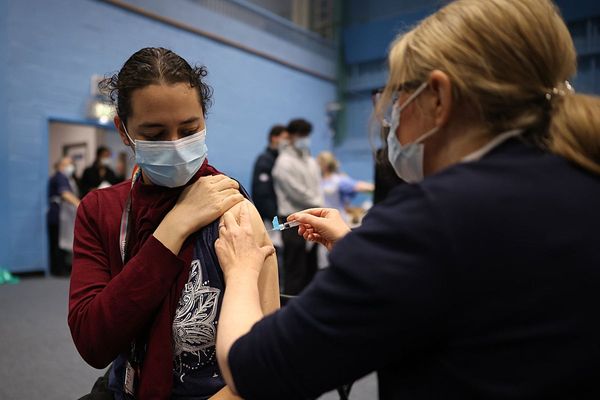
A lot more is known about the virus than when the pandemic began. Strict protocols have been refined. Most significantly, there are effective vaccines that, according to medical experts, greatly reduce the chance of severe illness, hospitalization, and death.
The majority of athletes testing positive have mild or no symptoms. Ninety nine percent of NHL players are vaccinated, 97 percent of NBA players are vaccinated, and 95 percent of NFL players are vaccinated, according to each league.
The fact that there is an uptick in positive cases among such a young, healthy, vaccinated population can be attributed to the Omicron’s contagious nature and to the fact that athletes get tested a whole lot more than the rest of the population — every day in some cases.
Unlike 2020, expect the sports world to power through with caution and re-evaluate policies rather than fold up its tents.
South Carolina men’s basketball coach Frank Martin, a Miami native, contracted COVID-19 twice last season. He said in a Zoom interview last Friday that policies need to be adjusted now that a vaccine exists.
“If you’re vaccinated, and you’re asymptomatic, you should not get tested because the vaccine doesn’t prevent you from being positive,” Martin said. “I’ve had this crap twice. I’m double vaccinated. Next week, I go get my booster.
“If they make me take a test, I’m not symptomatic and I’m positive…I’m out for 10 days. That’s what it was before vaccines. Why are we doing the same thing with vaccines? I don’t comprehend that. I don’t know how we (college basketball) are going to be able to play a season with policies that were in place pre-vaccination.”
Inter Miami coach Phil Neville and UM men’s basketball coach Jim Larranaga both feel sports can and should continue with increased vaccination levels and strict protocols.
“Everyone has to get vaccinated, that’s the most important thing, because the vaccination will keep you safe and people around us safe,” Neville said. “What we’ve seen in world sports at this moment is that those that are suffering the most are the unvaccinated. Then it’s the processes in and around the training ground and what you do in your life in terms of wearing masks, cleaning hands, making sure you stay socially distant when you are out and about, spending as much time outside as possible, taking every precaution possible.”
Larranaga agreed and equated getting a vaccine to wearing a seat belt.
“Everybody should get double vaccinated and a booster,” Larranaga said. “Just like seat belts, you protect yourself best you can against accidents. It makes absolutely no sense not to be vaccinated because it has been proven that people who get vaccinated, even though they’re not totally protected from getting the virus, they’re almost 100 percent protected from being hospitalized or dying.”
He said all his players and staff are vaccinated, and they have not had any positive cases last season or so far this season.
Now, more than ever, Neville said, the world needs sport to go on.
“In this time, where there’s financial problems, health problems, mental health issues because of all the anxiety, stress and worry, sport has a real big positive effect on the mental well-being of people,” he said. “I see it in America when you’re watching basketball, ice hockey, American football. In England, as well. The first thing the government did was bring back soccer because of the positive effect it would have on the nation.
“Sports is a great platform. We can help the nation in these difficult times.”
With the proper protocols in place, here’s hoping the games can go on.