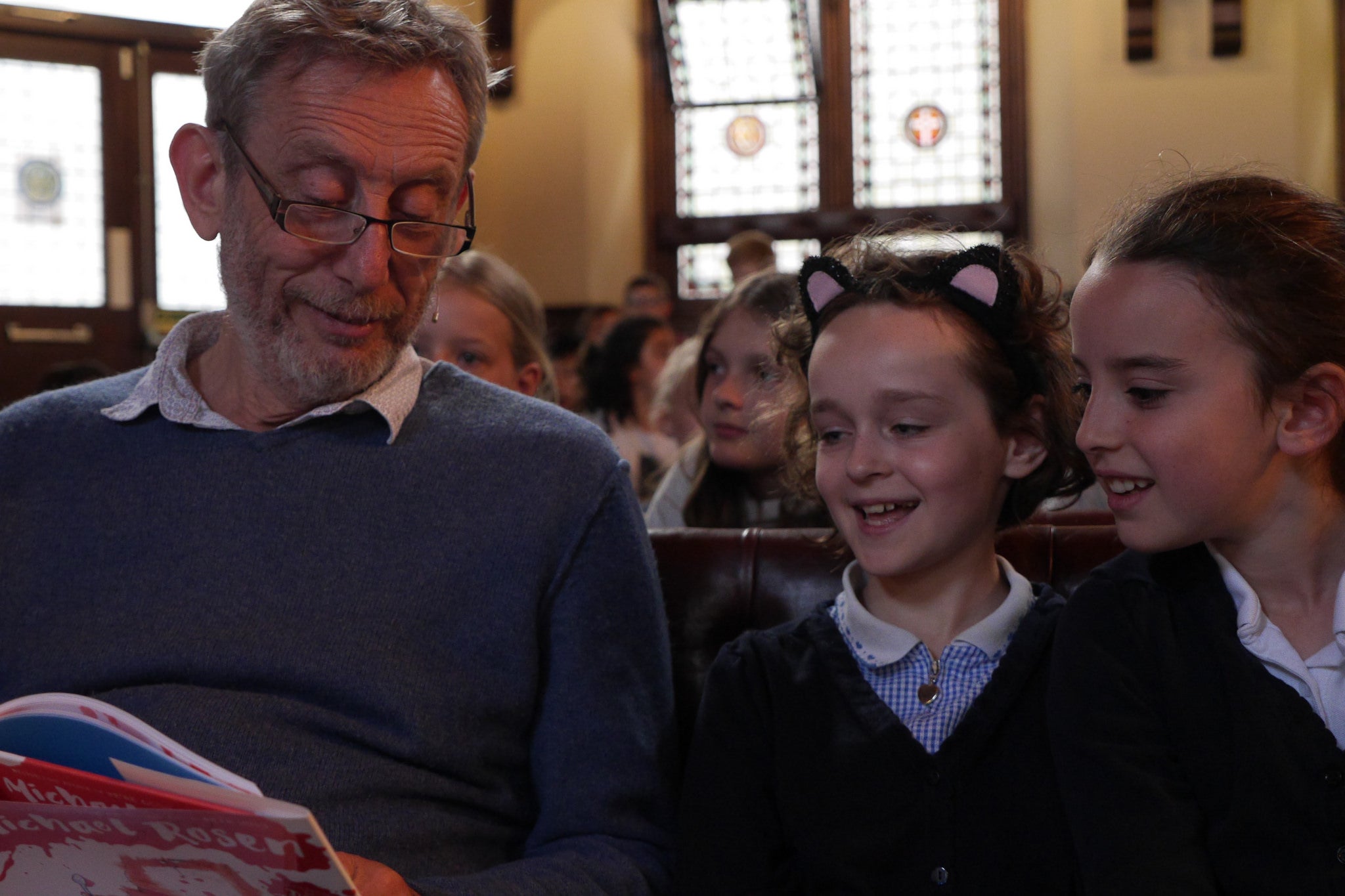
Poets visiting schools can effectively educate children about climate change without instilling feelings of "guilt or responsibility", according to acclaimed author Michael Rosen.
The 79-year-old is advocating for the integration of positive examples of climate action throughout the UK curriculum.
This vision is being realised through "Hot Poets Ignite", an initiative that pairs over 20 poets with climate scientists to deliver climate education in schools through the medium of poetry.
Rosen, who has contributed one of the poems, told the PA News Agency that the programme aims to engage pupils with climate change, focusing on "the urgency for us to be taking action and looking at wonderful initiatives that are taking place".
Crucially, the poems are designed to avoid "the pitfalls of someway or another making children feel guilty or responsible, because clearly they’re not," he explained.
Rosen added: "There’s an element of optimism, hope, and trying to avoid the sense of doom or guilt which sometimes hangs about in the air, not deliberately, in some of this talk about climate change."
The author of We’re Going On A Bear Hunt believes that while science and geography curricula address climate change adequately, its principles should be woven into other subjects.
"Poetry is basically another tool in your box to explain this, and the scientists we’ve met are very keen on it," Rosen said.
The initiative targets Key Stage 2 and younger Key Stage 3 pupils, addressing what Rosen describes as "clearly one of the key issues of the day, possibly the key issue of the day, because the human race is in danger."
Schools can apply for a visit from the Hot Poets, a roster that includes former Children’s Laureate Joseph Coelho, Vanessa Kisuule, Bohdan Piasecki, Kate Fox, Testament, Christian Foley, and Valerie Bloom.
Each poet has crafted an original children’s poem exploring diverse topics such as wind energy, cycling, and even whale poo. These works are compiled in a new book titled Wonder. Thunder. Blunder.
The initiative has also developed educational resources, including video lessons led by Rosen, in collaboration with Oxford University’s Climate Research Network and UCL’s Centre for Climate Change and Sustainability Education.
Chris Redmond, co-director of Hot Poets, highlighted the pressing need for such an approach, noting that children are experiencing "considerable climate anxiety and are starting their adult life with a sense of existential threat and a perception that it’s too late and there’s nothing to be done.
“We need to change that. It’s simply not true, but the current requirements of the national curriculum are focused on problems rather than solutions. Teachers want better information and different ways to teach it."
This initiative comes as the Government, following a curriculum and assessment review last year, confirmed that citizenship will become compulsory in primary schools, incorporating climate education. The new curriculum is set for full implementation for the first teaching from September 2028. The Government has also committed to reducing GCSE exam time by 2.5 to three hours for the average student.
Speaking more broadly about the curriculum, Rosen also expressed his concern that the current system involves "too much" standardised testing.
This sentiment contrasts with Labour’s announced plans to introduce a new statutory reading test for Year 8 pupils as part of its curriculum reform. Education secretary Bridget Phillipson, as reported by The Guardian, urged those opposing the reading test to "really think carefully about whether they can justify the shocking outcomes that we see for too many working-class kids in our country."
Rosen criticised this stance, stating: "They talk with one side of their mouth, saying that the system hasn’t worked. With the other side, they’re saying: ‘Let’s do more of the same’."
He questioned the necessity of additional testing, noting: "Nearly all secondary schools do a bit of formative testing when most children arrive in year 7. So there’s going to be testing, year 6, year 7, year 8… What’s the point of this? Why so much testing?" He instead advocated for lower-stakes formative testing to alleviate stress and reduce pressure on teachers to "teach to the test".
The poets are scheduled to perform at the Southbank Imagine Festival in February, with Michael Rosen set to deliver a special performance for National Poetry Day in 2026.
Christine Ozden, global director of climate education at Cambridge University Press & Assessment, affirmed the value of creative learning: "When students encounter climate education in creative, positive ways at school, for example, through poetry, they build awareness and understanding, strengthen communication and critical thinking skills, and develop a sense of agency and hope."
Firefighters call for funding boost as they prepare for Bonfire Night
Many seek health advice from AI chatbots and social media – poll
Government faces questions over tax rises after Reeves warns all must contribute
Prince Andrew latest: Virginia Giuffre says she was ‘a toy to be passed around’
BBC has ‘serious questions to answer’ amid Trump speech Panorama edit, MP says
Man who transformed modest family business into UK wealthiest empire dies