Alexandria Ocasio-Cortez shocked the political establishment by defeating a machine politician in a New York Democratic primary for Congress last June. Ever since then, Republicans and conservatives have been trying to smear her as a know-nothing socialist ditz unfit to sit in the House chamber with all those gray-bearded sages who have made the House such a model of reasoned and informed debate.
The latest such campaign erupted this weekend. I'm not talking about the unearthing of a dance video from her college years, which backfired spectacularly by making Ocasio-Cortez seem youthful and joyous, but an interview with the newly minted member of Congress broadcast Sunday on "60 Minutes" but released by CBS on Friday.
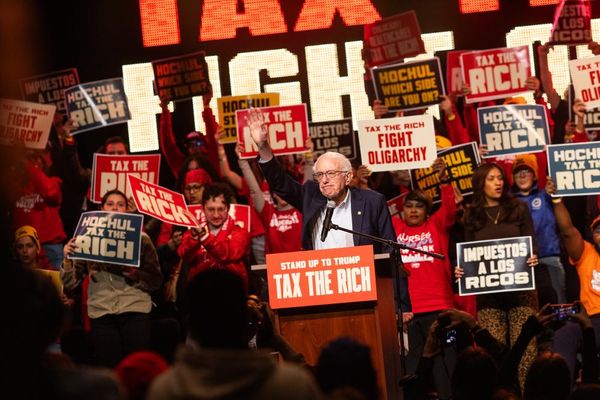
In the interview, Ocasio-Cortez argues for raising the top federal income tax rate on the richest Americans to as much as 70 percent from the current 37 percent and using the money to convert the country to renewable energy.
Conservative heads exploded. House Minority Whip Steve Scalise (R-La.) accused her on Twitter of wanting to "take away 70 percent of your income and give it to leftist fantasy programs." Right-wing anti-tax crusader Grover Norquist implied that the "expropriation" of 70 percent of "your production" was coming uncomfortably close to "slavery." Pro-Trump commentator Ryan Fournier declared that he was "not going to work my ass off for the rest of my life for 70 percent of my income to go to the government."
All three, and anyone else speaking out in this vein, displayed their rank ignorance of how the federal income tax works. That's the charitable explanation of their reaction. The only other explanation is that they know how it works, and they were lying about her proposal. (Ignoramuses or liars? You make the call.)
Let's examine the issue. That requires first understanding marginal tax rates, on which the federal income tax is structured. Taxpayers pay a given tax rate on income up to a certain level, then a higher rate on the next swath of income, a higher rate on income above that, and so on, until they reach the top rate on all remaining income up to infinity. We know of these chunks of income as "tax brackets."
In 2019, married taxpayers filing jointly will pay 10 percent of their first $19,400 in adjusted gross income (after certain exemptions and deductions), 12 percent of the next $59,550, 22 percent of the next $89,450, and four higher percentages on four further chunks of income up to the maximum of 37 percent on all income of $612,351 or more.
In other words, no one earning $612,351 or more is taxed at 37 percent _ they're taxed at a combination of all those lower rates _ the blended rate, for someone just hitting the top bracket, would be about 26.7 percent.
Ocasio-Cortez proposed to add a new bracket for income over $10 million, and tax everything over that ceiling at 70 percent. She wasn't talking about taxing all income of a $10 million earner at 70 percent, just the amount over $10 million. If that bracket were added to today's brackets, a taxpayer with income of, say, $11 million would have an overall tax rate not of 70 percent, but about 39.5 percent.
How many people are we talking about? According to the IRS, in 2011, the most recent full year reported, out of the 145.4 million returns filed, only 11,445 reported income of more than $10 million. Those taxpayers rank in the top 0.1 percent of all income earners in the country.
This isn't hard to understand for people who are experienced in the ways of tax policy, such as Rep. Scalise and Grover Norquist. It does seem to flummox many others. To be fair, that includes the New York Times, which wrote on Sunday that Ocasio-Cortez had "floated plans to tax the extremely wealthy by as much as 70 percent."
That's a slipshod way of describing her proposal, since one would have to have a truly stupendous income to bring the blended percentage anywhere close to 70 percent. Someone with $100 million in income would still only be paying about 67 percent; someone with a W-2 form showing annual income of $1 billion would pay 69.7 percent, but that seems stretching a point all the way to fiction.
Ocasio-Cortez's critics might offer the defense that she was vague about how her proposal would be applied to the wealthy, but that won't wash. She was absolutely precise in her interview on "60 Minutes" with Anderson Cooper, in referring to a marginal rate of 70 percent on income over $10 million, noting that her proposal "doesn't mean all $10 million are taxed at an extremely high rate." On the air, Cooper (a member of the Vanderbilt family, by the way) called her proposal part of "a radical agenda."
One other point overlooked by the New York Times and skated over by the tax warriors is that Ocasio-Cortez plainly was referring to the tax on earned income _ that is, mostly wages and salaries. "Unearned income" _ including capital gains and some dividends _ is taxed at a much lower rate, topping out in 2019 at only 20 percent.
That's important because the wealthy report a much higher share of their income as capital gains than does the middle- or working class.
On average, according to the 2011 data, taxpayers reporting income of $10 million or more reported more than 51 percent of their income as capital gains or dividends subject to the low rate; only 17 percent of their income was reported as wages or salary. For an average taxpayer reporting income in the $75,000-$100,000 range, about 79 percent was wages and salary taxed at ordinary rates, and only 1.7 percent qualified as capital gains.
That's another indication of how much less than 70 percent even the "extremely wealthy" would pay under Ocasio-Cortez's proposal.
Finally, it's proper to place Ocasio-Cortez's proposal in historical context. There's nothing especially radical or "socialist" about it. In fact, it's pretty conservative.
The top marginal rate in the U.S. was 70 percent from 1965 to 1981, a period that covers the presidencies of Lyndon Johnson, Richard Nixon, Gerald Ford, and Jimmy Carter, and for most of that period that rate was applied to incomes starting at about $200,000; that much income in 1974 is the equivalent of nearly $1.1 million today.
Going just a bit further back, the top rate was 91 percent from 1946 to 1963 (the Truman, Eisenhower and Kennedy years), applied to incomes of $400,000 or more. That income in 1956 would be the equivalent of $3.8 million today. Somehow the rich kept working, and the republic did not fall. Indeed, those years included periods of unexampled prosperity and the growth of a strong middle class in the United States.
So why all the heavy breathing today? One reason is that the wealthy have become used to getting their own way on tax rates ever since the top rate started to come down sharply under Ronald Reagan, and they now think they're owed what is virtually a free lunch. Another is an observation about progressive tax rates made in 1996 by Nixon's former chief economist, Herbert Stein, which I never tire of quoting. In a Wall Street Journal op-ed, Stein offered "one law derived from 60 years of observation....Whatever is the existing degree of progression, people who pay the top rate will think it is too much."