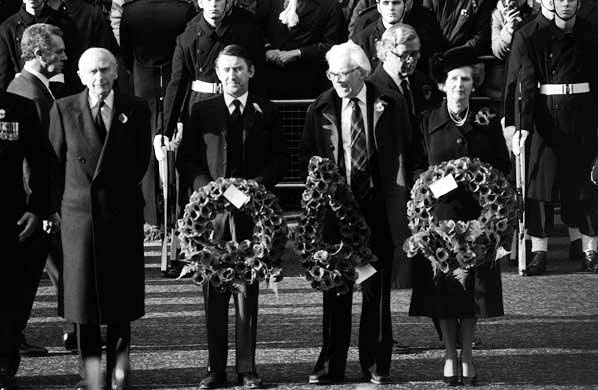
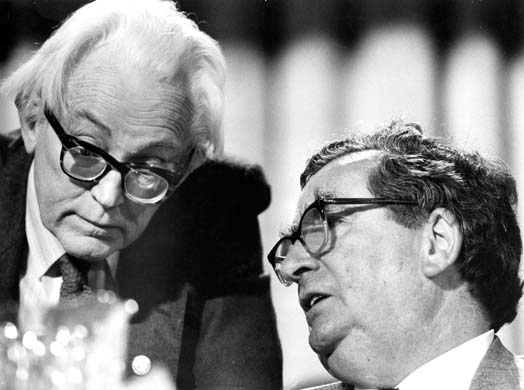
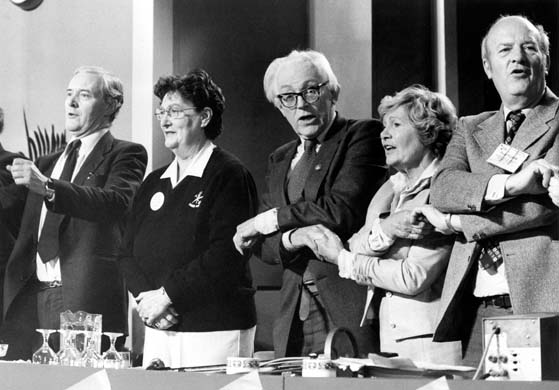
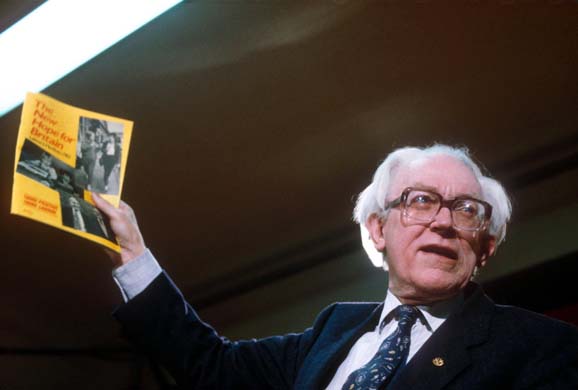
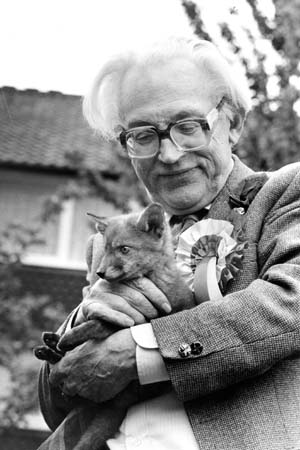
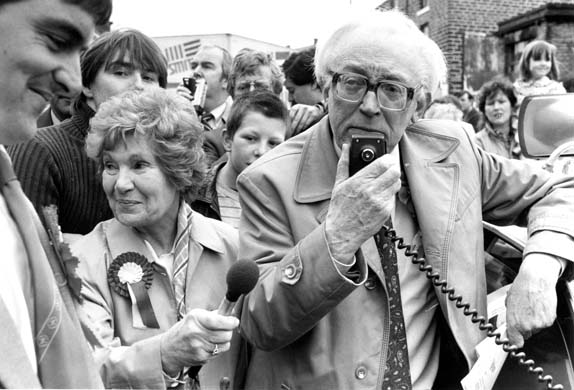
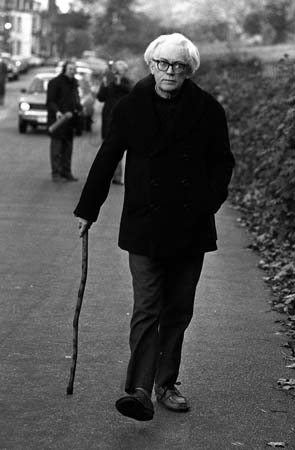
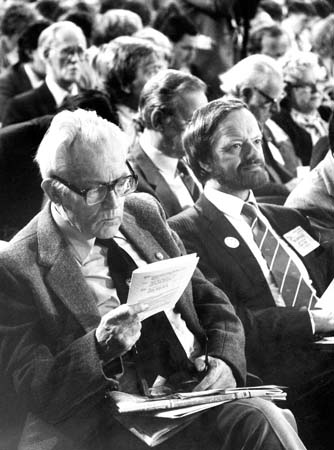
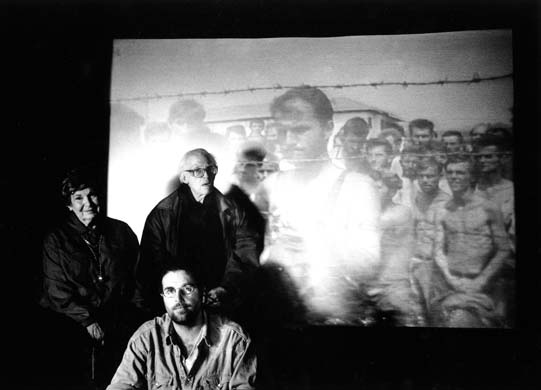
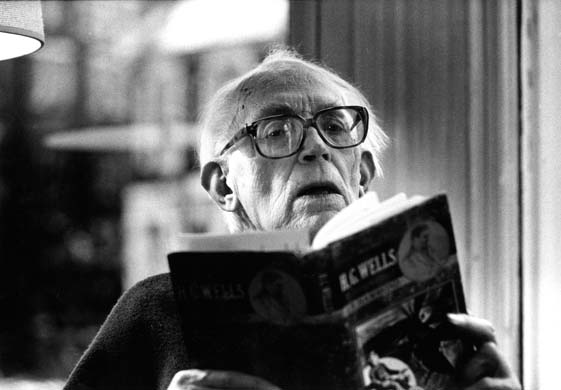
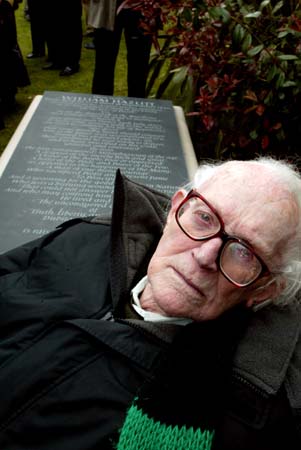
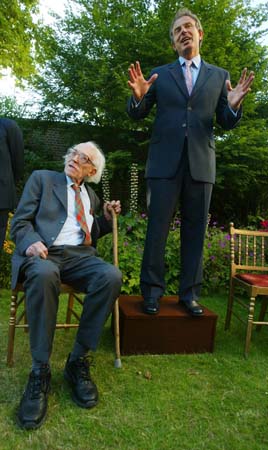
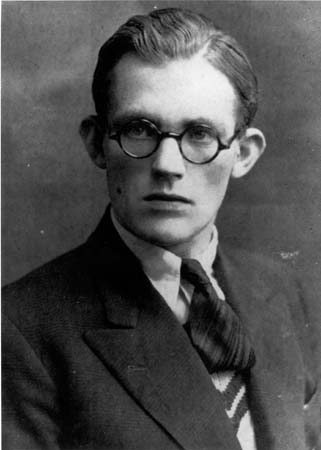
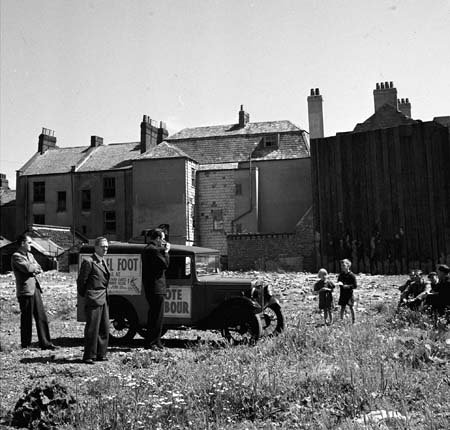
Michael Mackintosh Foot was born in Plymouth in 1913. In 1935, when this picture was taken, he stood for parliament for the first time, contesting the seat of Monmouth for Labour. He lost. Foot had graduated from Oxford (where he received his first mention in the Guardian) the year before, and begun to work as a shipping clerk in Liverpool, where the poverty and unemployment altered his previously Liberal political viewsPhotograph: GettyFoot campaigning in the Plymouth Devonport constituency in 1945, when he won the seat for Labour for the first time. He held it for 10 years before being defeated at the 1955 general election. Between 1935 and 1945 Foot had worked as a journalist for the New Statesman, Tribune and the London Evening Standard, for whom he was an influential leader writer throughout the second world warPhotograph: GettyMichael Foot, left, talking to his father, the solicitor and Liberal politician Isaac Foot, centre, and his brother, John Foot, in 1945. All three – plus another brother, Dingle – were standing for parliament in that year's election; only Michael wonPhotograph: Getty
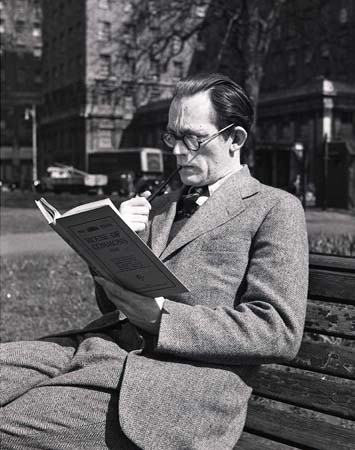
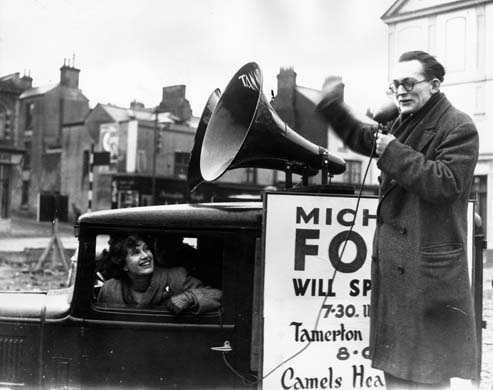
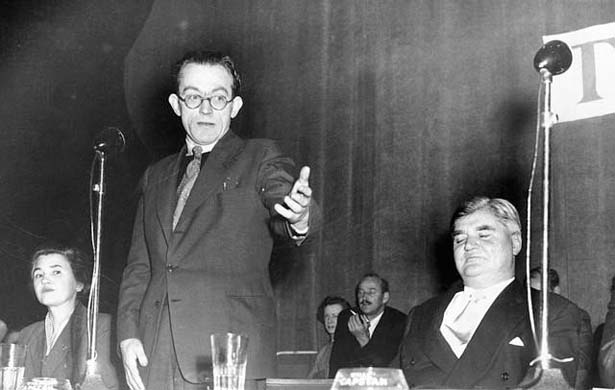
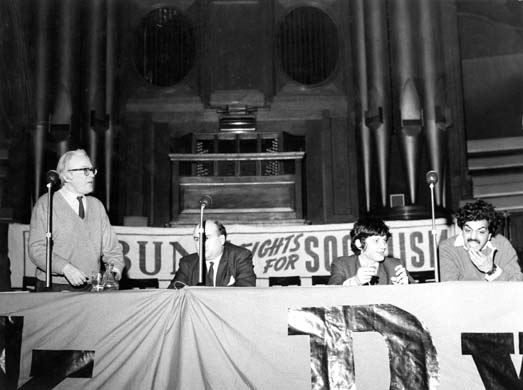
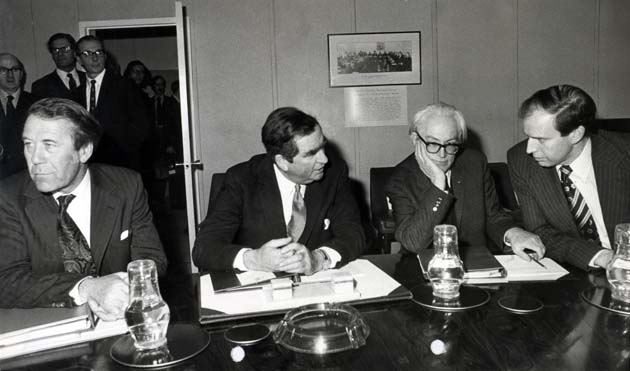
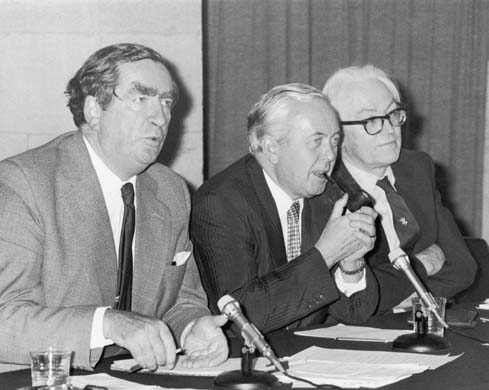
Foot as Labour MP for Plymouth Devonport in 1947. The following year he provoked outrage on the left by attacking Stalin's Soviet Union, writing in Tribune: 'Some are still gulled by the monstrous delusion that the Russians are the friends, not the enemies, of democratic socialism ... If they prefer the world view of the Communist party, let them clear out and no longer seek cover in our ranks'Photograph: GettyFoot addressing a meeting in a street in Devonport on February 9 1950. In the car is his wife, film-maker Jill Craigie. They met while she was directing her film The Way We Live in 1946, and remained married until her death in 1999Photograph: RJ Lewis/GettyFoot addressing a Tribune meeting during the 1953 Labour conference. He edited the paper from 1948 to 1952, and again from 1955 to 1960. Next to him is Aneurin 'Nye' Bevan, who as minister for health was responsible for the formation of the NHS. Bevan was Foot's mentor and the younger man replaced him as MP for Ebbw Vale when Bevan died in 1960. Foot said of Bevan: 'Ideas were his passion and he was interested in politics as a vehicle for ideas'Photograph: CorbisFoot pictured in his office in 1960, the year he returned to parliament as MP for Ebbw Vale in Monmouthshire. The byelection was somewhat controversial and Foot failed to make the original shortlistPhotograph: GettyFoot in 1961. That year he had the Labour whip withdrawn after rebelling over an armed forces issue. He returned to the parliamentary Labour party only when Harold Wilson replaced Hugh Gaitskell as leader in 1963Photograph: Jane Bown/guardian.co.ukFoot (centre, with stick) on the fourth Campaign for Nuclear Disarmament 'ban the bomb' march from the atomic centre at Aldermaston to London, on March 31 1961. With him are (right to left) politicians Sidney Silverman and Emrys Hughes, and Scottish journalists Ritchie Calder and James Cameron. Foot was a founder member of CNDPhotograph: J Wilds/GettyFoot in 1968. That year he spoke out against the Soviet invasion of Czechoslovakia that suppressed the so-called Prague spring liberalisation therePhotograph: GuardianFoot speaking during a meeting at the London School of Economics in 1969. Listening is Tariq Ali (far right), the historian, novelist and political campaignerPhotograph: GuardianFoot speaking on April 11 1972, the year in which he stood for the deputy leadership of the Labour party, but lost to Edward Short in the second round. The following year he visited dissidents and victims of torture in Francisco Franco's Spain, and was arrested and expelled by Franco's policePhotograph: Leonard Burt/GettyLabour returned to power in March 1974 with Harold Wilson once again prime minister. Foot became employment secretary, his first ministerial role. This picture shows a meeting of the National Economic Development Council, featuring (left to right) Ronald McIntosh, the director general of the NEDC, Denis Healey, the chancellor, Foot, and Eric Varley, the energy secretaryPhotograph: GettyHealey, Wilson and Foot hold a press conference in London in 1975. That year Foot helped lead the 'no' campaign arguing that Britain should leave the European Economic Community, which it had joined two years earlier under the Tories. The 'yes' campaign won the national referendum by 67.2% to 32.8%Photograph: Peter Cade/GettyFoot with the prime minister, James Callaghan, in 1977, at the Labour conference in Brighton. The year before, following Wilson's retirement, Foot and Callaghan had both contested the Labour leadership and post of prime minister, along with Healey, Tony Benn, Tony Crosland, the environment secretary, and Roy Jenkins, the home secretary. Foot won the first ballot, but lost to Callaghan 56.2-43.8% in the third. He became deputy leader and leader of the CommonsPhotograph: Press AssociationFoot and Benn during Labour's conference in October 1980, the year after Margaret Thatcher's election victory, which cast Labour into a period of opposition lasting 18 years. A month later, Foot was elected Labour leader, beating Healey, the Labour right's candidate. The Guardian's Peter Jenkins predicted: "He will preside over an interregnum between the Wilson-Callaghan era and whatever is to come"Photograph: Don McPhee/guardian.co.ukFoot in 1981. That year four senior Labour figures, Roy Jenkins, David Owen, Shirley Williams and Bill Rodgers, broke away from Labour to form a new centrist party, the Social Democratic party. The SDP formed an alliance with the Liberals, won byelections and soon led in the polls, but it won only 25% at the 1983 election, and the first-past-the-post system resulted in a haul of just 23 seats. The SDP and Liberals merged in 1988, becoming today’s Lib DemsPhotograph: Edward Hamilton West/guardian.co.ukFoot visiting Toxteth, Liverpool, in 1981. The riots there in July that year resulted from long-standing tensions between the black community and the policePhotograph: Don McPhee/guardian.co.ukFoot caused controversy by attending the Remembrance Day wreath-laying on 8 November 1981 wearing a so-called "donkey jacket". The Guardian noted: "Mr Foot was, without doubt, ill-advised to turn up at the Cenotaph looking as if he had just completed his Sunday constitutional on Hampstead Heath,” but his critics were “far more distasteful” for making cheap political capital out of itPhotograph: Press AssociationA portrait of Foot in 1982, the year of the Falklands war, which provided a substantial boost to Margaret Thatcher's popularity as prime minister. Foot backed the war as a battle against Argentina's fascist juntaPhotograph: Jane Bown/guardian.co.ukFoot and Healey at the Labour conference in Blackpool in 1982. Throughout Foot's leadership there was constant speculation that Labour would replace him with his more rightwing colleaguePhotograph: Don McPhee/guardian.co.ukAn undated photograph of Foot and Craigie. Benn is standing on the far left. He fell out badly with Foot over what he felt was the Labour leader's compromising of leftwing ideals in order to achieve powerPhotograph: Don McPhee/guardian.co.ukFoot holding the Labour manifesto for the 1983 election. Labour stood on a far-left platform, arguing for higher taxes, unilateral disarmament, bank nationalisation and withdrawal from the EEC. Labour MP Gerald Kaufman described the manifesto as 'the longest suicide note in history'Photograph: Nils Jorgensen/guardian.co.ukFoot campaigning in Brixton in 1983. The June 9 election was to result in a landslide victory for Thatcher's Tories. Among the new Labour MPs elected in the election were future prime ministers Tony Blair and Gordon BrownPhotograph: Martin Argles/guardian.co.ukFoot campaigning in Croydon with a fox cub in 1983. The SDP-Liberal Alliance ate away at Labour's vote in the election. The result was Conservatives 42.4%, Labour 27.6% and SDP 25.4%. It was Labour's worst result since 1918, but because of the British electoral system the number of seats won was drastically different: Con 397, Lab 209, SDP 23Photograph: Garry Weaser/guardian.co.ukFoot and Craigie campaigning in 1983. Asked during the election whether he would ever use a nuclear bomb if he became prime minister, Foot replied: 'I cannot conceive of any such circumstances in which it would be anything other than criminal insanity ... To say you are going to use a weapon which is going to involve mass suicide for this country and mass genocide as well ... is itself incredible'Photograph: Don McPhee/guardian.co.ukFoot on June 12 1983, the day he resigned as Labour leader, three days after Labour's disastrous performance in the general election. He was succeeded by Neil Kinnock, who began to move the Labour party towards the political centre groundPhotograph: guardian.co.ukFoot with Robin Cook, the future foreign secretary, in 1984. Foot remained an MP until 1992, and was oldest sitting MP from 1987 to 1992. Cook had been campaign manager for Kinnock, and was a key figure in his modernisation of the party. Cook died of heart disease in 2005Photograph: Don McPhee/guardian.co.ukCraigie and Foot with producer Jason Lehel in 1994, at the first showing of Two Hours from London, Craigie's documentary about the Balkans conflict. Foot was a firm opponent of Slobodan Milošević's Serbian presidencyPhotograph: Richard Smith/guardian.co.ukFoot reading a HG Wells book in February 1995. He published a biography of Wells – H. G.: The History of Mr Wells – in 1985, and was one of the vice-presidents of the HG Wells SocietyPhotograph: Martin Argles/guardian.co.ukMichael Foot unveiling the restored grave of writer William Hazlitt in the churchyard of St Anne's church, Soho, London, in April 2003, the year he turned 90. Despite his hatred for despotic regimes, Foot opposed the Iraq war of that year, telling the Independent on Sunday: 'The pre-emptive strike is a terrible, terrible idea. The dangers of this idea spreading are just appalling'Photograph: Graham Turner/guardian.co.ukMichael Foot with Tony Blair at Foot's 90th birthday in the garden of 10 Downing Street, in July 2003. Foot said of Blair and supposed Iraqi weapons of mass destruction: 'He was obviously sincere and he obviously made up his mind on the evidence. It doesn’t justify what they did in my opinion … It was a terrible mistake, but it was a mistake honestly made'Photograph: Martin Argles/guardian.co.uk
Sign up to read this article
Read news from 100’s of titles, curated specifically for you.






-by-Don-McPhee--9699.jpg)

-7532.jpg)