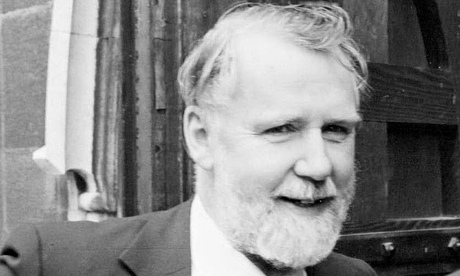
Michael Faber, who has died aged 85, was an influential development economist whose work made a measurable difference in many poorer countries, especially in Africa.
Not the least of his contributions came as an adviser to the nascent government in Zambia, a few months before that nation’s independence in 1964. As Northern Rhodesia, the country had paid £160m in royalties for copper mining rights over a number of years to the British South Africa Company, based on the fact that representatives of Cecil Rhodes had persuaded a few Barotse chiefs to sign over the rights to the company. Faber smelt a rat, and with Robert Oakeshott, a friend and Financial Times journalist, he asked the new government to open the archives.
These revealed that the original treaties underpinning the royalties had been signed in the most dubious of circumstances and, more importantly, related to a part of Zambia where there was no copper. Instead of the government paying £50m in compensation to the company for taking over the royalties, as was being demanded, Faber was able to show that there was no case for any compensation at all. In the end, a few hours before independence, the Zambian government made a goodwill payment of £2m, with the UK also providing £2m. In present values, Faber had saved the country nearly £1bn.
Born in London to George, who worked in the City as managing director of the Save and Prosper Group, and Kathleen (nee Campbell), a nurse, Faber had been evacuated to the US during the second world war, where he attended Avon Old Farms school in Connecticut. When he returned to Britain he went to Eton and served in the 11th Hussars during national service before studying philosophy, politics and economics at Oxford and gaining a master’s in economics at the University of Michigan. He then moved to east Asia, working as a claims adjuster in Japan and Korea before spending six years as a foreign correspondent for the Financial Times, the Observer and the Economist (1954-60), travelling widely in the far east, Middle East and north and central Africa.
In 1956 he married Didon Howard, an art student, and they moved to Northern Rhodesia, where their four children were born and where together they developed many of their contacts with nationalists of southern Africa. After spending a year as a development worker with the Italian social activist Danilo Dolci in Sicily in 1961, Faber moved to the Caribbean to teach economics at the University of West Indies in Jamaica, and in 1964 returned to Northern Rhodesia.
Following Zambian independence, he stayed on in the country for the best part of four years as a senior economist and under-secretary in the ministry of finance as part of Kenneth Kaunda’s administration. His house became a lively centre for discussion and parties – and a welcoming base for refugees from Southern Rhodesia (now Zimbabwe) and South Africa.
Faber’s influence was critical in helping to direct Zambia’s new-found wealth into a big expansion of education, a priority for a country that had come to independence with barely 100 graduates and only 1,000 people who had completed secondary school. The University of Zambia was established, along with a dramatic expansion of secondary schools, and when routes south were closed after Southern Rhodesia declared unilateral independence in 1965, Faber found new avenues for copper exports.
In 1968 he took up a post with the department of applied economics at Cambridge University and a year later moved to the newly founded Overseas Development Group (ODG) at the University of East Anglia, by which time his negotiating talents were internationally recognised. As a result he was invited to help Papua New Guinea, Ghana and other newly independent countries with talks over minerals and debt. He became director of the Commonwealth Secretariat’s technical assistance group (1972-5 and 1978-82), making the unit one of the most successful and valued in the golden years of the Commonwealth.
In 1982 he was appointed director of the Institute of Development Studies (IDS) at Sussex University, where he ran a series of seminars for African and Latin American officials on structural adjustment. After the IDS he became a board member of the Commonwealth Development Corporation and was president of the UK chapter of the Society of International Development. He wrote or co-wrote a number of books on the need for a different approach to encouraging economic independence in developing world countries, including Conciliatory Debt Reduction (1988).
Didon died in 2004, but he is survived by their four children, Rory, Laura, Charlotte, and Guy, and by six grandchildren.
• Michael Leslie Ogilvie Faber, economist, born 12 August 1929; died 26 February 2015