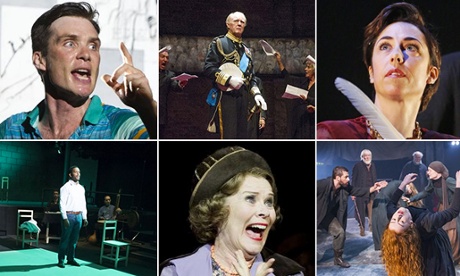
1. King Charles III | Almeida, London
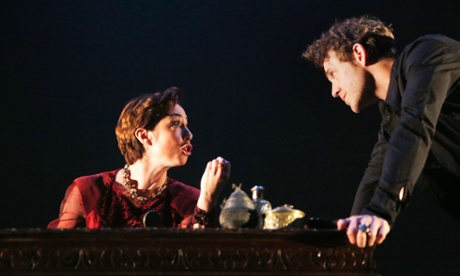
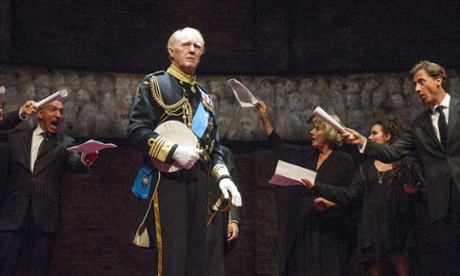
Mike Bartlett’s play was the popular hit of the year – and deservedly so since, in speculating obout the consequences of Charles’s accession to the throne, it raised any number of big questions. Can we reasonably expect a man of strong opinions to curb his interventionist tendencies when crowned? Do we need a written constitution to define the role of the monarchy? And what machinery exists to replace a king who exceeds his powers?
But the virtue of the play lay in the complexity of its portrait of Charles. In Tim Pigott-Smith’s superb performance, he became a man who seemed uneasy in his own skin, apprehensive about the burden of monarchy and yet deeply and steadfastly principled. “Without my voice and spirit,” he declared, “I am dust.” There was also much wit in Bartlett’s use of a parodic iambic pentameter and in the tissue of references to Shakespeare’s plays: to Richard II in the image of deposition, to both parts of Henry IV in the portrait of a rogue Prince Harry rejoicing in, and ultimately rejecting, low life and even to Hamlet in the idea of Diana’s ghost as an instrument of prophecy.
It was a play that repaid endless discussion and analysis. After seeing it a second time at Wyndham’s and talking about it to exceptionally bright American students, I was forced to revise my opinion that Lydia Wilson’s Kate was a quietly manipulative Lady Macbeth in the making. I was sharply reminded that she is the character who sees most clearly that, if a hereditary monarchy is to endure, it has to adapt to the modern age and acknowledge feminist principles.
The text was so rich that Rupert Goold’s production – for once – didn’t get the attention it deserved. The show could have been all flummery and fuss. Instead it was staged, with remarkable clarity, on an empurpled dais designed by Tom Scutt and made its points about power and status through carefully choreographed grouping. The play had the voyeuristic fascination of a peep behind the scenes. At the same time, it posed serious, still-to-be-answered questions about the future of the monarchy and the extent to which its survival depends on the benign neutrality of its incumbent.
2. Ballyturk | Black Box, Galway
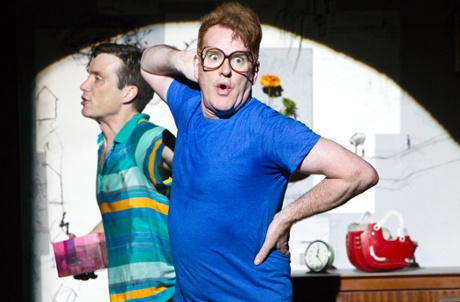
Another show many critics casually dismissed but audiences loved. I saw it a second time at the National and am still haunted by Enda Walsh’s text, the viscerally inventive performances of Cillian Murphy and Mikel Murfi and the sombre beauty of a speech in which Stephen Rea reminded us that”everything is here and we are here to lay down legacy.”
3. The Valley of Astonishment | Young Vic, London
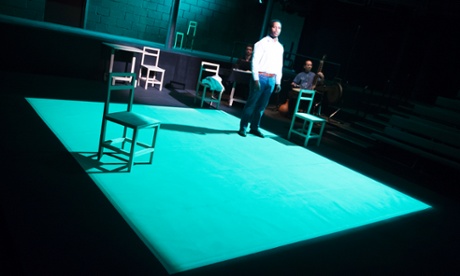
“Maturity, calm, aesthetic grace”: these were the qualities I found in this riveting show, written and directed by Peter Brook and Marie-Helene Estienne, that explored the mystery of the human brain and the curse and blessing of mnemonic power. Minimalist theatre making maximum impact.
4. 2071 | Royal Court, London
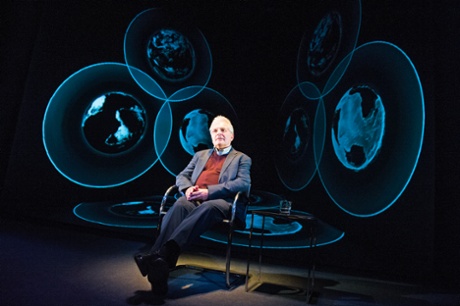
I was dismayed by the level of the attacks on Chris Rapley’s lecture on climate-change, co-written by the playwright Duncan MacMillan. Some critics even fretted about his drab clothes. I’d have thought the fact the man was warning us that it will take “the greatest collective action in history” to avoid the destruction of our planet was more important than his choice of sports jacket.
5. Gypsy | Chichester festival theatre
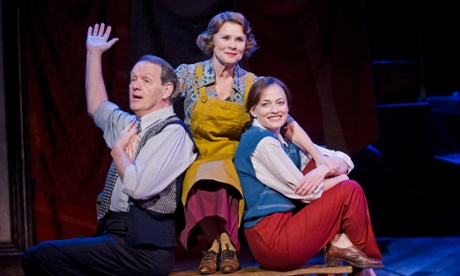
The musical revival of the year. Jonathan Kent’s production this evocation of the rackety world of American vaudeville – with music by Jule Styne, lyrics by Stephen Sondheim and book by Arthur Laurents – boasted a breathtaking performance from Imelda Staunton, who played Mama Rose not as some implacable monster but as a jaunty, defiant woman seeking surrogate stardom through the showbiz success of her two daughters.
6. Skylight | Wyndham’s, London
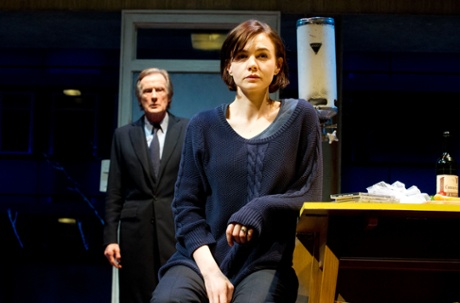
David Hare’s 1995 play seemed even richer on a second viewing, and Stephen Daldry’s near-flawless revival made you believe that Bill Nighy’s needy restaurateur and Carey Mulligan’s puritanically idealist teacher really shared a complex emotional and sexual past.
7. The Crucible | Old Vic, London
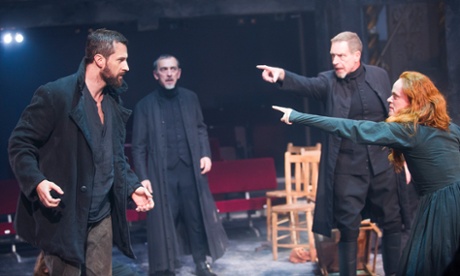
In a big year for Arthur Miller, Yael Farber’s revival gave this flinty, hard-edged study of the Salem witch-hunts a strange dream-like quality and, headed by Richard Armitage and Anna Madeley as the fractious Proctors, showed a community already on the edge of disintegration.
8. Fathers and Sons | Donmar Warehouse, London
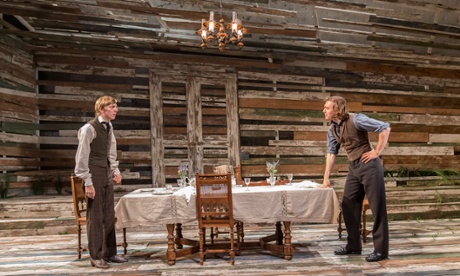
Brian Friel’s adaptation of Turgenev’s novel offered some of the best ensemble acting of the year in Lyndsey Turner’s production. Every performance was perfect from Tim McMullan’s secretly heartbroken Europhile dandy to Susan Engel’s ratty Russian princess with an illogical hatred of accordion players.
9. The Two Gentlemen of Verona | RSC, Stratford
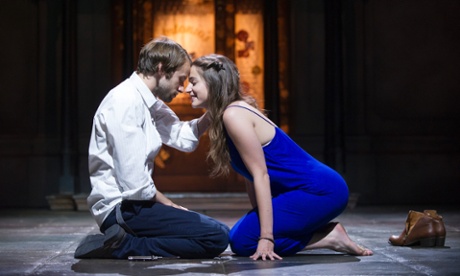
Simon Godwin, in an outstanding RSC directorial debut, took an unfamiliar Shakespeare comedy and treated it as a hypnotic study of the identity-transforming power of love. Mark Arends’s self-torturing, complex Proteus ensured that for once the dog didn’t run off with the show.
10. The James Plays | Festival theatre, Edinburgh
Rona Munro’s epic trilogy about three 15th-century kings dipped in the middle section but, in the year of the independence referendum, put Scottish nationalism in bracing historical perspective. Laurie Sansom’s National Theatre of Scotland production, later seen in London, also boasted a killingly good performance from Denmark’s Sofie Gråbøl.