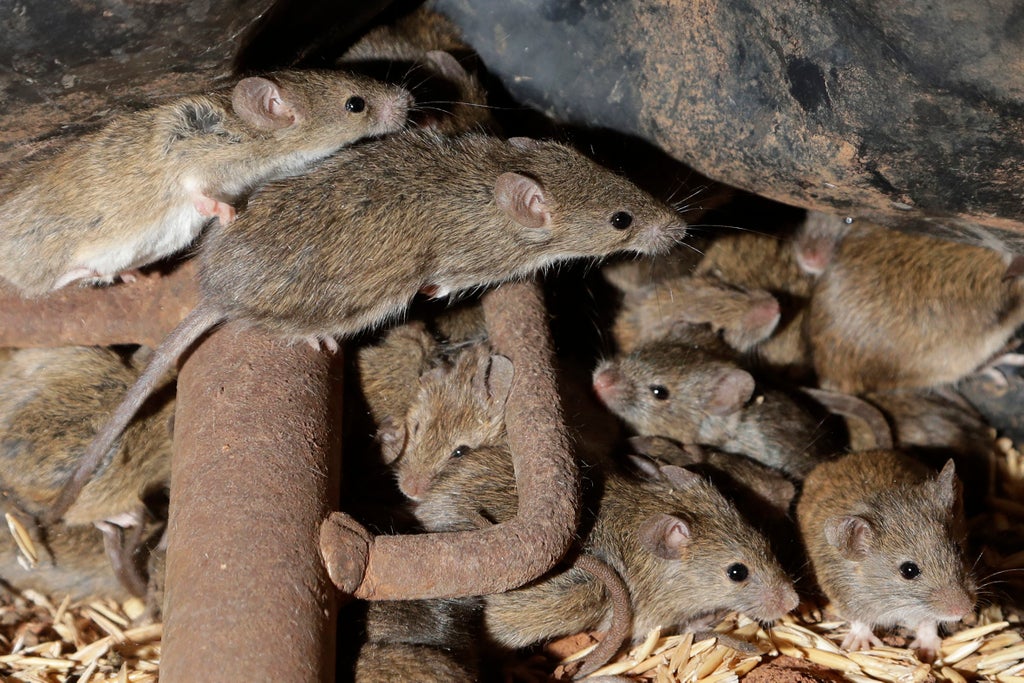
A farmer from Australia has shared a trick to dealing with the mice plague currently impacting the country, using only household items.
New South Wales cattle rancher Glen Daley, 48, devised the solution that has culled hundreds of mice now and during a similar outbreak in 1984.
Currently, the area is going through an infestation of mice and its farmers, like Mr Daley are coming up with ways to tackle it. Previous outbreaks have cost the farming industry over AU$100m (£55m), as the mice eat their way through crops.
He says anyone can use his method by creating a hole in a bucket of water, inserting a wine bottle with peanut butter around the rim, and then securing an old pair of trousers to the end of a bottle to create a tunnel, capturing the mice as they run for the peanut butter in the bucket. If no jeans are going spare, use an old pair of tights or a sock.
“It works great – it‘s very simple to make and really cheap,” he told NCA. “You just set it and forget it – leave it for a few days and when you go back and check there might be four or 40 mice [drowned in the water].”
Recommended
He also reminisced about how he coped during the 1984 mice outbreak, calling the situation a “nightmare”.
Mr Daley said the mice would “devastate all of the hay bales. You’d pick up a bag of grain and there’d be at least a couple of hundred mice on the ground” and how it looked “like a moving carton of grey”.
“We’d need to wash all dishes before and after use because they were crawling around cupboards everywhere. It was just a nightmare.”
Last month, Steve Henry, from Australia’s national scientific agency CSIRO told The Independent about why these outbreaks happen, citing dry weather and crops being food for mice.
He said this creates an environment “favourable for mice to breed” and there is “lots of food there because farmers were growing lots of crops”.