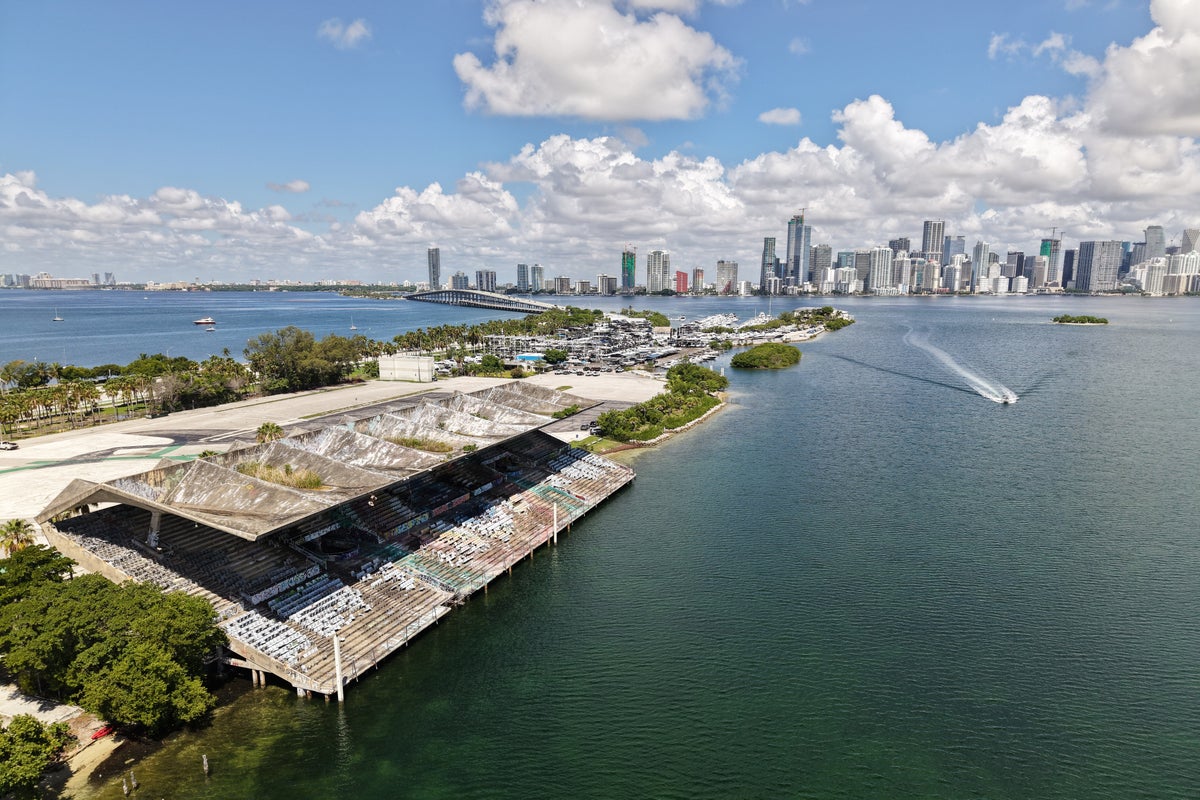
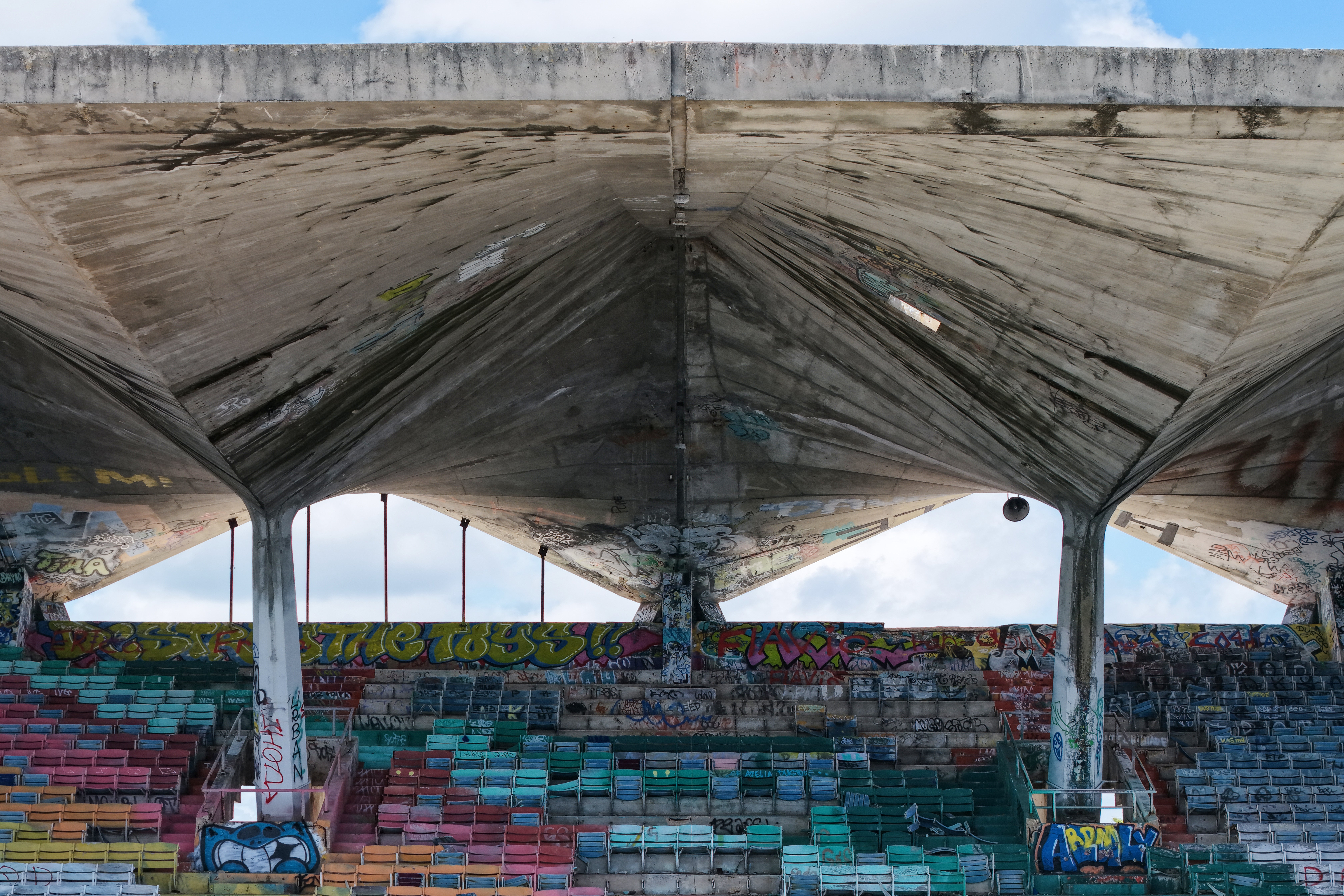
The Miami Marine Stadium, a landmark of midcentury Brutalist design distinguished by its sweeping cantilevered roof and views of the city skyline, opened in 1963 as the nation’s only venue built specifically for powerboat racing.
Designed by a young Cuban refugee, the historic structure famously served as the backdrop for Elvis Presley’s 1967 movie Clambake and hosted memorable performances on its floating stage by artists including Gloria Estefan and the late Jimmy Buffett.
However, after suffering severe damage from Hurricane Andrew in 1992, the 6,500-seat facility was closed. It has since fallen into disrepair, surrounded by security fencing and covered in graffiti, despite its inclusion on the U.S. National Register of Historic Places.
On Tuesday, voters will decide on a measure that would permit the city to team up with a private firm to restore the waterfront stadium, located on Virginia Key across Biscayne Bay from downtown Miami.
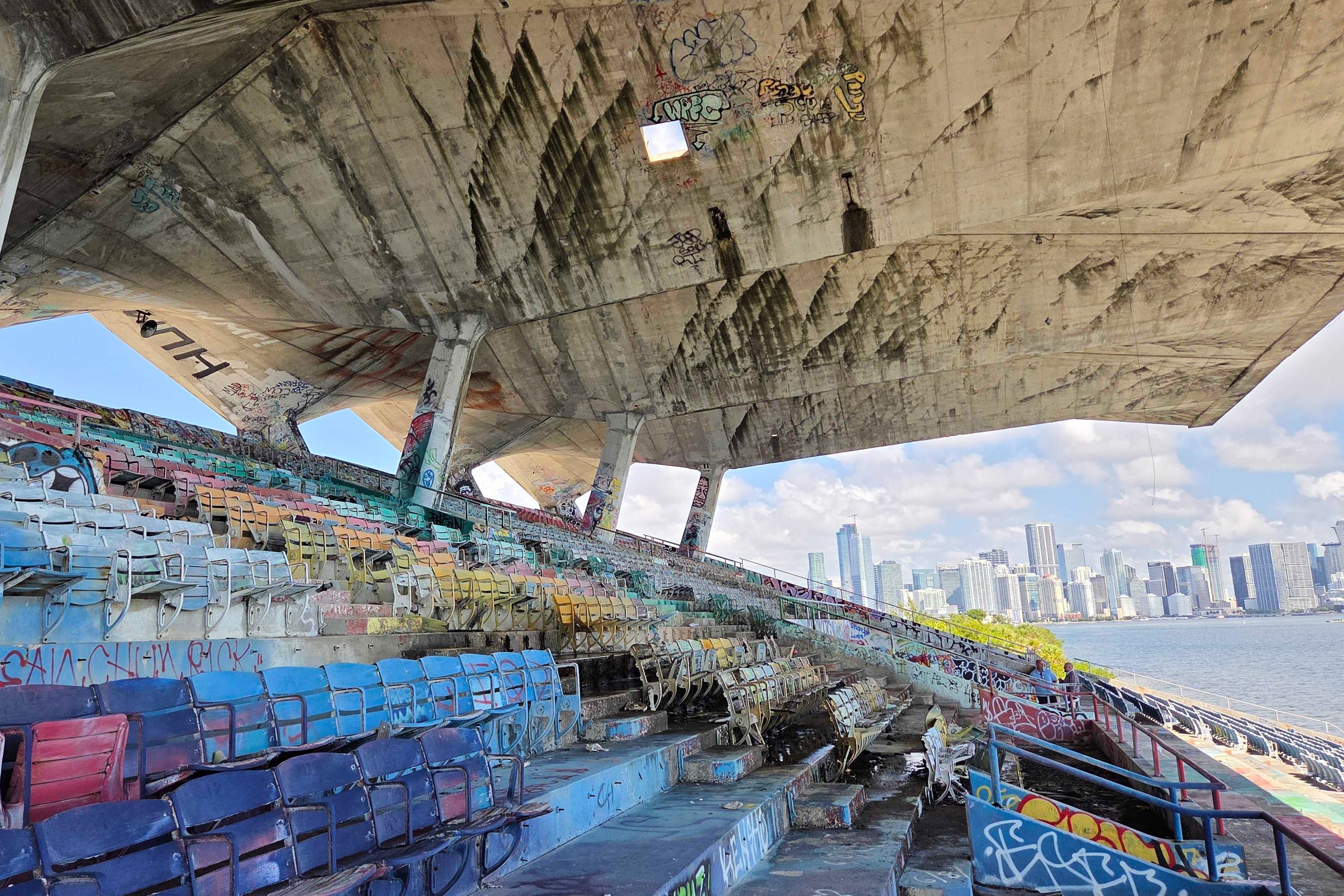
Over the years, the venue played host to notable civic and political gatherings. President Richard Nixon and Sammy Davis Jr. shared the stage there during a 1972 campaign rally, and local residents regularly gathered for Easter sunrise services as well as celebrations honoring Our Lady of Charity, a figure deeply revered by many Cubans and Cuban Americans.
"It encapsulated a time period in Miami that’s incredibly unique with an incredible story that touches all Miamians," Miami Commissioner Damian Pardo said. "So this is really a place that connects with Miami at a very deep and personal level."
Architect Hilario Candela was in his late 20s and recently arrived from the Cuban Revolution when he designed the stadium. He went on to spend decades shaping Miami’s architectural landscape and led community efforts to restore the site until his death in 2022.
When the stadium was added to the National Park Service’s National Register of Historic Places in 2018, then-Secretary of State Ken Detzner praised it as "one of the state of Florida’s most unique architectural and historic resources," calling it "an ambitious example of mid-century Modernist architecture" that captured the "multi-cultural influences evolving in the city of Miami during the 1960s."
In 2022, a year prior to his death, Buffett submitted a letter to city leaders advocating for the preservation of the "little cathedral of musical fun." He recalled a 1985 performance that concluded with him diving off the floating stage into the water to join fans in boats and in the bay.
"Those were the ‘Miami Vice’ days, and Don Johnson introduced us," Buffett wrote regarding the star of the popular 1980s television drama. "WITCO Desperadoes from Trinidad opened the show, and the Coral Reefer Band finished the night with what I think was one of the most fun shows, for band and fans, that I have ever done."
Buffett's daughter, Savannah, remains active with Restore Miami Marine Stadium. The advocacy group was co-founded in 2008 by Donald Worth, who launched the preservation effort after city officials proposed demolishing the site.
"The architecture gives it the wow, the history gives it its soul," Worth said. "It’s just a special, magical place, and so many people in Miami have had such memorable experiences there."
Emi Guerra, co-founder of Breakwater Hospitality Group, which is partnering with the selected development team, suggested the stadium’s prime location on Biscayne Bay could turn it into an iconic venue comparable to Colorado's Red Rocks Amphitheatre.
"There’s just something here that can’t be duplicated, and that’s the view," Guerra said.
Addressing public skepticism, Guerra stressed that the proposal is not a real estate play for residential development. The city of Miami will retain full ownership of the venue and surrounding grounds, while the management firm will serve as operators under the city's oversight.
"When it’s something that’s historic, you have two options: restore it or let it rot," Guerra said.
Not everyone favors the proposal. Ernesto Cuesta, head of the Brickell Homeowners Association, noted that while members support historical preservation, they are concerned that noise and traffic from large events will negatively affect residents across the bay and disrupt local wildlife. He advocated instead for converting the site into a green park.
Despite remaining dormant for more than 30 years, engineering assessments show the stadium’s structure remains sound. Project architect Richard Heisenbottle, who has led other prominent restoration projects in Miami, said reviving the venue will honor Candela's legacy.
He noted that while updates must incorporate modern amenities and accessibility standards, the original construction’s galvanized steel rebar prevented serious structural decay. Completed restoration documents have already secured municipal permits, he added.
Miami Commissioner Pardo acknowledged that past revitalization attempts foundered because the city lacked the operational capacity to manage a major venue. Tuesday’s ballot question would authorize the city to finalize a management contract.
Under the plan, the private manager would transform the stadium's parking lot into a flexible space featuring public recreational areas and event space. Revenue generated from events would fund the stadium's repairs and upgrades, with the private firm receiving a management fee. Pardo emphasized that taxpayers will not bear the project's costs.
"It’s the right time to finally do this," Pardo said.