
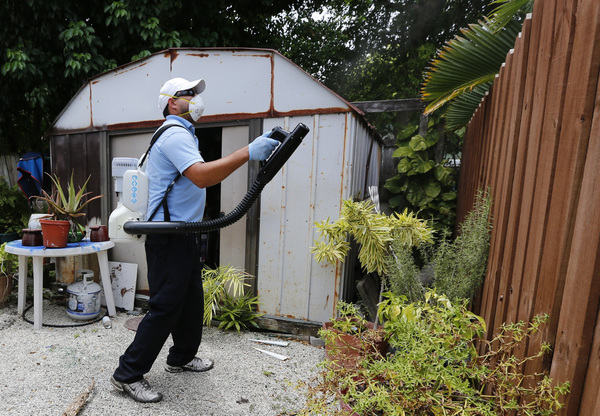
MIAMI _ A year after getting caught off-guard by the first outbreak of the Zika virus in the continental U.S., Miami-Dade County aims to enter this mosquito season armed and ready.
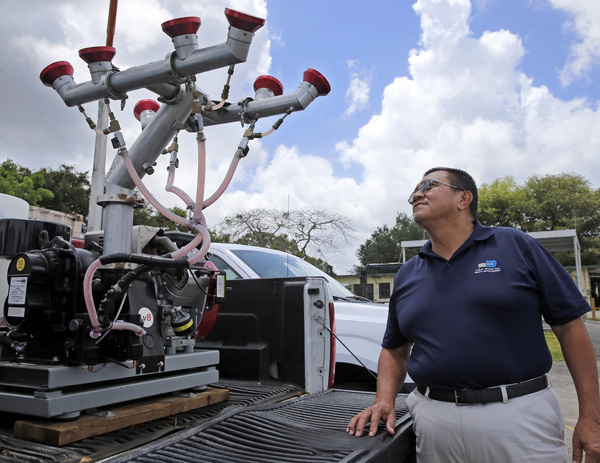
The small mosquito-fighting division has been shored up with $25 million _ most of it covered by the state _ and tripled in size to 59 positions, including a medical entomologist. The number of surveillance traps, which last year was just six at the height of the season, has grown to 150, posted from the Broward County line to Florida City and checked weekly by inspectors. The division's website was redesigned and a mini fleet of truck foggers assembled.
And for the first time, the Aedes aegypti mosquito that carries the virus linked to severe birth defects is being treated as a year-round problem, with larviciding ongoing through the winter and spring.
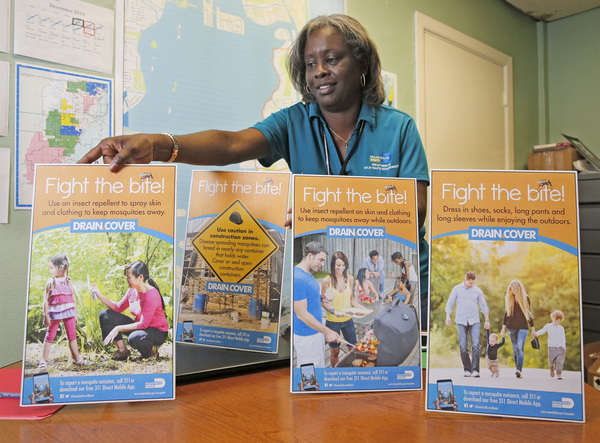
The county is also pouring another $1 million into a drain-and-cover ad campaign to ready its best weapon: its citizens.
"Last year at this time we didn't know anything about the mosquito population in this county," said Chalmers Vasquez, operations manager for the mosquito division. "Now we have a very good idea of what's going on."
The county may also catch a break outside its borders: Zika cases across South America and the Caribbean are down so far this year, meaning fewer infected travelers likely to arrive in South Florida. That drop already appears to be playing out in Miami-Dade, where the Florida Department of Health had referred just 21 travel cases as of mid May, said Paul Mauriello, the county's deputy director of waste operations who now oversees the mosquito division. At the same time last year, more than 80 cases had been referred.
A new study published in the journal Nature on Wednesday also concluded that the virus in the county largely originated in the Caribbean, not South America, which could help scientists forecast likely transmission. Scientists suspect that like with other mosquito-borne illnesses, communities will start to develop immunity to Zika. If true, numbers in the Caribbean will likely fall, said Derek Cummings, a University of Florida epidemiologist and co-author of the study that sequenced the genes of infected patients and mosquitoes in South Florida to determine the source.
"My expectation is there will be a lot fewer introductions of Zika than last year," he said.
The study also confirmed that the size of the mosquito population _ and not the number of infected people _ drives the spread of the Zika virus.
"You need introductions and then you need high numbers of mosquitoes to give rise to new cases," Cummings said.

That finding could help managers be more surgical in controlling mosquitoes, and concentrate their efforts when mosquito counts are highest.
County officials, however, are not standing down, especially after last year's uneven response and the intense criticism it generated in Wynwood, Miami Beach and Miami's Little River neighborhood.
"We seem like we're on a trajectory for much lower (numbers), but we only have one year of experience," Mauriello said.
In the months leading up to the outbreak, despite repeated warnings that the virus would likely arrive first in South Florida and recommendations by the Centers for Disease Control and Prevention to prepare, county officials carried on mostly with business as usual, focusing on a drain-and-cover campaign that experts say typically don't work, and keeping watch for marsh mosquitoes. No advance larviciding was done and monitoring for Aedes aegypti was not expanded. The county wasn't entirely to blame: when the state received a shipment of hard-to-find BG Sentinel traps that monitor for the Zika mosquitoes, it sent only nine to Miami-Dade for a total of 21. Volusia County wound up with 45.
This year, however, is all about advance work, based on lessons learned last year that has led to a better understanding of the urban biters.
So far, the county has been reimbursed for $19 million of the $25 million it has spent and is approved for up to $29 million in reimbursements. However, there is growing concern that states could be cut off from Zika funding if proposed cuts to the CDC are approved that include $160 million to help states deal with health emergencies.
Unlike native, seasonal marsh mosquitoes that hatch when rainy weather raises the water in their breeding grounds _ and which don't carry diseases _ the invasive Aedes aegypti lives among humans and likes to breed in dirty water. Flower pots, tarps, trash can lids and other common household items that catch water can provide ready nurseries. But last year two other major culprits popped up last year: construction sites and bromeliads.
"Those were the common denominators," Mauriello said.
At one construction site on Lincoln Road, inside Miami Beach's transmission zone, inspectors collected nearly 200 mosquitoes in a single night breeding in about an inch of water on a concrete slab, Vasquez said.
This year, the county is requiring any builder pulling a permit to create a mosquito control plan. The county is also planning on increasing penalties for repeat offenders, Mauriello said.
The county is also working with South Miami to secure federal permission for a pilot project that releases lab-bred male mosquitoes infected with the Wolbachia bacteria. When the males mate with wild females, they produce eggs unable to hatch, knocking down the population. Mauriello said the county hopes to get the permit in time to release the mosquitoes, which are already being released in Monroe County this season.
Ordinary citizens also remain a big part of the effort, despite past evidence that getting people to be on the lookout for standing water can be a tough sell. Over upcoming months, the internet, newspapers, buses and billboards will be plastered with warnings urging people to dump pots and lids and cover anything that can collect water.
If the past month is any indication, the public is already starting to worry. After the first wave of marsh mosquitoes hatched in mid-May, calls flooded the department, said division director Gayle Love. About 2,100 were received in less than a week between May 12 and last Thursday. Many, like a homeowner near Kendale Lakes, worried that mosquitoes were breeding near her home and wanted inspectors to visit.
When they arrived, inspectors quickly found the source among a garden filled with nearly 100 flower pots, gnomes and fairy statues: a dripping fountain that turned out to be the mosquito version of the Fontainebleau. One squeeze from a turkey baster pulled up dozens of mosquito larva.
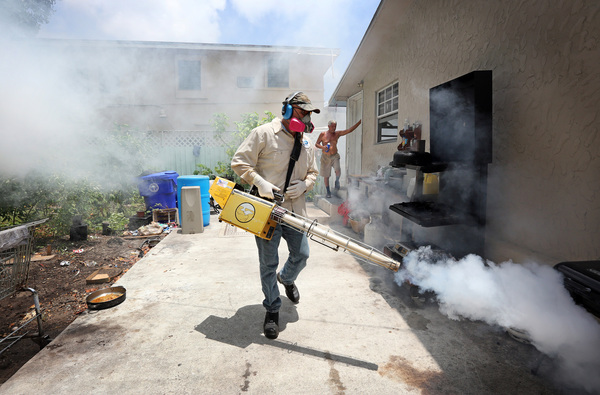
"The water doesn't move enough," inspector Jazz Campagines said before his partner Carlos Lanzas strapped on a backpack fogger and doused the yard with larvicide.
"People want you to give them the magic bullet. They want you to just go out and handle it, to spray something and get rid of it and end it. But it's not like that," Mauriello said. "Everybody has to do their part to protect themselves."