The 6 reasons why Labour lost the election, according to British Election Study
There was some good news for Jeremy Corbyn and his supporters on the BBC at lunchtime. The World at One reported on some research showing that Labour did not lose the election because it was too leftwing.
It was based on the latest piece of research from the British Election Study, a long-running academic study that investigates voting. The BES is heavy-duty political science. It is not just based on the odd YouGov poll. It tracks a large number of voters over time, using regression analysis to explore what the factors are that change the way people vote.
The findings are very relevant to Labour because the party is broadly split between those like Tony Blair who think the party was too leftwing at the general election and those like Corbyn who think it was not leftwing enough.
Superficially (and on the basis of the BBC headline) Corbyn and his supporters should welcome the analysis.
But if you read the full report, a long article for the IPPR’s Juncture journal by the BES’s Jane Green and Chris Prosser, you’ll see that the BES analysis is probably more valuable to Labour moderates. If if finds that Labour did not lose the election because it was too leftwing, it also finds that there is “not much [evidence] to support the argument that Labour was not leftwing enough”. It argues that economic credibility was a fundamental problem for the party (a Blairite argument). And it says non-voting was a particular problem for Labour. Corbyn thinks Labour can make big gains by getting non-voters to turn out, but the report suggests they might not vote whatever the party does.
The report identifies six reasons why Labour lost. I’ve summarised them here.
1 - The financial crash damaged Labour as badly as the ERM crisis damaged the Tories in 1992. That is because it “fundamentally altered the public perception of which party could be trusted on the economy”. The article suggests this was a fatal problem.
Given how long it took the Conservatives to recover a lead, it must be questionable whether Labour could have undone this shock to its ratings between 2010 and 2015.
2 - Ed Miliband was a problem. Even though Miliband was perceived as having a better campaign then David Cameron, research found that “Miliband accounted for fewer vote gains and more vote losses than the other party leaders did for their parties”.
3 - Winning votes from the Lib Dems harmed Labour. This is paradoxical, but it helps to explain why Labour increased its vote share in England by 3.6%, but gained just 15 seats, while the Tories increased their vote share in England by 1.4% but gained 21 seats
Labour’s gains in taking votes away from the Lib Dems helped secure Conservative victories against the Lib Dems in these vulnerable seats. That is to say, it was Labour’s vote gains that helped to deprive Labour of an overall majority or largest party status. There was a tactical unwind that cost the Liberal Democrats seats but delivered those seats to the Conservatives.
Examining in greater detail those seats which switched from Lib Dem to Conservative, of the votes the Lib Dems lost, around 43 per cent went to Labour and 31 per cent to the Conservatives. We estimate (using calculations of vote change in these seats) that the gains by Labour from former Lib-Dem voters alone delivered seven former Lib-Dem seats to the Conservatives. This tactical unwind will obviously have made a contribution in a larger number of seats also. Simplistically, Labour needs to lose votes to the Lib-Dems to cut into the Conservative majority, or it needs to defeat the Conservatives in seats where it was previously not in contention.
4 - The collapse of Labour support in Scotland. Labour will have “a very difficult time recapturing its lost voters in Scotland” because loss of support to the SNP was not just related to the independence referendum, the report says. “The referendum provided a rallying point for voters who were already dissatisfied with Labour.”
5- Labour had a problem with its supporters not voting.
One of the problems for Labour in 2015 was that a proportion of potential voters did not get to the polls. We think it is very likely that many of these voters were never going to vote, irrespective of the party’s efforts, but it certainly seems the case that part of Labour’s problem was that it increased its support among non-voters.
6 - The Tories did better than Labour at winning over Lib Dem and Ukip voters in Conservative/Labour battlegrounds.
The report also dismisses what it says are two red herrings about the reasons for Labour’s defeat.
Labour did not lose because it was too leftwing, it says. The evidence for this is research comparing the probability of someone voting Labour with how they perceived Labour on a left/right axis. Generally, the more they thought the party was leftwing, the more likely they were to vote for it.
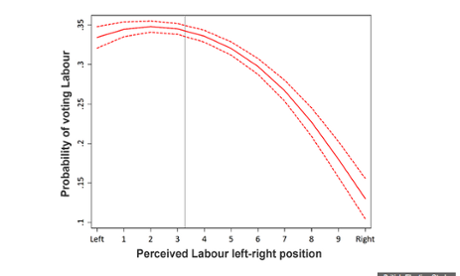
But the report says this does not mean that Labour would have done better if it had been more leftwing.
This suggests there is very little to the argument that Labour was too left-wing to attract voters. At the same time there is not much to support the argument that Labour was not left-wing enough. There was very little difference in the likelihood of voting Labour between someone who thought Labour sat at the left-most end of the scale (0) and someone who saw it as just left of centre (4) – it is only when people saw Labour as sitting to the right of this point that support really drops off.
The report also says it is not clear whether a party can be seen as leftwing and competent on the economy.
Fear of the SNP does not seem to have been a factor in the Tories gaining votes or Labour losing them, the report says. But it does not say that this definitely wasn’t a factor; just that it cannot find any proof.
We cannot say for sure that this didn’t matter, but our explorations suggest it is a difficult effect to pin down.
This claim seems questionable, because during the election there was a considerable amount of anecdotal evidence suggesting that the prospect of a minority government being dependent on the SNP did alarm voters. This is from Philip Cowley, who is co-writing the official Nuffield study of the general election.
This looks v interesting, but the idea the SNP in 2015 is a red herring is just crazy... http://t.co/JmfGV3nOA7
— Philip Cowley (@philipjcowley) September 17, 2015
And there is a real problem trying to identify this using polling that we know is flawed...
— Philip Cowley (@philipjcowley) September 17, 2015
That’s all from me for now.
I will be launching another blog tonight, just after 10pm, to cover John McDonnell, the new shadow chancellor, and Alex Salmond, the former Scottish first minister, on BBC’s Question Time.
Thanks for the comments.
Updated
Here’s this week’s Guardian Politics Weekly podcast. It features Andy Beckett, Anne Perkins, Gary Younge and Tom Clark talking about Jeremy Corbyn and what his victory means.
Jeremy Corbyn has been appointing more shadow ministers today. Here are some of the appointments that have emerged.
Sarah Champion - shadow minister for preventing abuse
I'm now the Shadow Minister for preventing abuse, part of the Home Affairs team. WhooHoo & TY, you know I'll put my heart & soul into this!
— Sarah Champion MP (@SarahChampionMP) September 17, 2015
Steve Reed - shadow local government minister
I'm delighted to accept Jeremy Corbyn's offer to be Labour's shadow minister for local government. Now we take the fight to the Tories.
— Steve Reed (@SteveReedMP) September 17, 2015
Emily Thornberry - shadow employment minister
Emily Thornberry becomes number 2 at DWP in Labour shadow team
— Laura Kuenssberg (@bbclaurak) September 16, 2015
RESHUFFLE: Emily Thornberry becomes Shadow Employment Minister http://t.co/uvEQ8X3y7j
— LabourList (@LabourList) September 17, 2015
LabourList has revived its shadow cabinet reshuffle live blog to cover today’s developments.
The writer Michael Rosen thinks it is a bit rich for Jack Straw to talk about boosting the Lib Dems.
@AndrewSparrow Jack Straw's contribution to the Iraq War did more to help the LibDems than Lloyd George.
— Michael Rosen (@MichaelRosenYes) September 17, 2015
Jack Straw says election of Corbyn as Labour leader likely to help Lib Dems
Jack Straw, the Labour former foreign secretary, was on the World at One a few minutes ago talking about the standards committee report. Mostly he repeated the points he made in his statement earlier (see 11.47am), but there were also some fresh lines.
- Straw said he thought the election of Jeremy Corbyn as Labour leader would boost the Lib Dems. Tim Farron, the Lib Dem leader, is making a similar claim in the Evening Standard. Straw said:
On the other hand, I did say a few weeks ago that this election was having the effect of Lazarus being raised from the dead for the Liberal candidate. And I suspect that that may be the case.
- He said that Corbyn did better than he expected at PMQs yesterday.
I thought Jeremy Corbyn actually did really well yesterday at parliamentary questions, surprising me, amongst others. We’ll just have to see how it works out.
But he said that Corbyn faced a huge political challenge in the coming months. Asked if Corbyn would succeed, he said time would tell.
- He said he thought it was “very unlikely” that there would be defections from Labour as a result of Corbyn’s victory in the leadership contest.
- He suggested that he would like to go to the Lords. There were suggestions that he was not included in the dissolution honours list because of the lobbying allegations covered by today’s report. Asked if he would like a peerage in the future, he replied.
So far at that’s concerned, let us see on that. I have been enjoying seeing more of my family, and I’ve been enjoying my life outside parliament. But I remain, at heart, a parliamentarian.
Jack Straw: Very revealing that Channel 4 "failed to co-operate with the independent commissioner" #wato pic.twitter.com/TORxcRsfqQ
— The World at One (@BBCWorldatOne) September 17, 2015
📺 The full interview with Jack Straw on lobbying and Jeremy Corbyn is here: http://t.co/GpNzGWAYMm #wato
— The World at One (@BBCWorldatOne) September 17, 2015
Updated
Lunchtime summary
- MPs on the Commons standards committee have criticised Dispatches and the Daily Telegraph for the “sting” that led to Jack Straw and Sir Malcolm Rifkind being accused of inappropriate lobbying. In a report, the committee said both former MPs had done nothing wrong.
- Tim Farron, the Lib Dem leader, has said that Labour’s move to the left under Jeremy Corbyn presents a “quite staggering opportunity” for his party. He also said in an interview in the Evening Standard that Labour MPs distraught at what had happened to their party had been in touch with him.
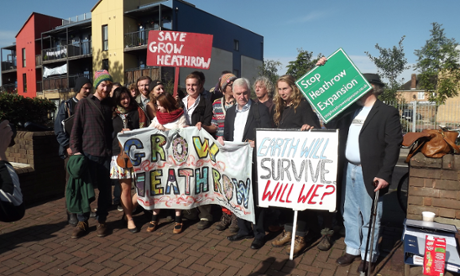
John McDonnell, the new shadow chancellor, has reaffirmed his opposition to a third runway at Heathrow. He has just issued a press notice saying he was at Uxbridge county court this morning to back the anti-runway group known as Grow Heathrow who are occupying a community garden.
McDonnell issued a statement saying:
Members of Grow Heathrow have become part of the local community, making a valuable contribution to the life of the local villages. Grow Heathrow is part of a fierce community resistance to Heathrow’s expansion that won’t go away easily for any government. I commend this group to you and hope that its members will be able to continue to remain on this site and part of our community.
A property company is trying to remove the occupation. But the residents won a stay of execution because the hearing was delayed until next year, McDonnell said.
Updated
Telegraph says its Straw/Rifkind sting 'was in the public interest'
The Daily Telegraph has defended its investigation into Jack Straw and Sir Malcom Rifkind. A spokesperson issued this statement.
The Daily Telegraph conducted an investigation that was in the public interest and accurately revealed matters which were of concern to millions of voters. We raised a number of serious questions about the conduct of members of parliament. We suspect voters will find it remarkable that, despite the scandal of MPs’ expenses, parliament still sees fit for MPs to be both judge and jury on their own conduct.
Updated
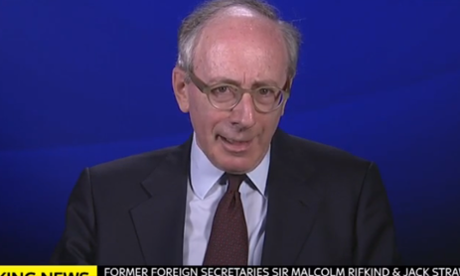
Sir Malcolm Rifkind has been talking about the standards committee report. Here are the key points.
- Rifkind said he was “disappointed” that the Conservative party decided to suspend the whip from him when the allegations were first aired. But he understood why the party acted liked that, he said. At that stage, the full facts were not known.
- He said the reporting was “grotty, cut-and-paste journalism of a pretty shoddy kind.”
- He criticised Dispatches for not giving him a transcript of his encounter with the undercover reporters. If they had made that available, he could have cleared his name more quickly, he said.
- He said that he had been considering standing down as an MP before the sting operation. He is 69. In the event, he decided to stay on. But, after the allegations came out, he changed his mind because it was clear that the inquiry into his conduct would not be over before the election. He said he knew he had done nothing wrong, but that he thought it would be unfair to stand for election when his innocence had still not been established by the inquiry, he said.
- He said he was not interested in getting an apology from Channel 4 or the Telegraph.
Frankly, I couldn’t care less whether Channel 4 or the Daily Telegraph apologise. I doubt if they would ever dream of doing so. It is not in their nature, even when they behave disgracefully. I don’t expect it and I don’t actually care whether they do or not.
Dispatches says its report was 'fair and accurate' and 'in the public interest'
Here is the full statement from Channel 4.
Channel 4 Dispatches stands by its journalism; this was a fair and accurate account of what the two MPs said. This investigation was in the public interest and revealed matters which were of serious public concern.
Channel 4 is standing by its journalism.
Channel 4 stands by the journalism in the programme about Straw and Rifkind
— Laura Kuenssberg (@bbclaurak) September 17, 2015
Straw says he was victim of a 'deliberate and meticulously planned deception'
And Jack Straw has issued a statement, also thanking the standards committee for clearing him, and saying he was the victim of a “deliberate and meticulously planned deception”.
I am naturally delighted that the independent Commons’ standards commissioner has cleared me of all wrongdoing. Throughout my 36 years’ parliamentary career I took great care to act with probity and to treat the rules of the House of Commons with the greatest respect. I am most grateful to the committee on standards for confirming this. They say that I had been ‘particularly at pains to keep his business work separate from his Parliamentary resources’, and that I had ‘made declarations even when such declarations were not technically required’.
Straw said that he regretted “ever having fallen into the trap” and that he had made serious efforts to check on the bogus company used by the undercover reporters as cover in their sting “but these checks were not enough to expose what was a deliberate and meticulously planned deception”. He went on:
At the time of this sting I said that I felt mortified that I had fallen into this trap but that I had not acted improperly in the meetings, nor more widely in respect of my parliamentary duties and the rules of the House.
I have been fully vindicated in this. The commissioner’s report gives the full context of what happened, which was not available to the public at the time.
It has been very sad that the final chapter of my long period in the Commons has been overshadowed in this way. The whole episode has taken a huge toll on my family, my friends, and on me, but the commissioner’s conclusions and the committee’s findings will now enable me to get on with my life.

Sir Malcolm Rifkind has welcomed the standards committee’s decision to clear him. In a statement he said:
I thank the standards commissioner and the standards committee for their very full examination of the allegations by Channel 4 Dispatches and the Daily Telegraph, and their conclusion that these allegations had no substance and were unjustified.
Channel 4 Dispatches and the Daily Telegraph must recognise the judgment of the standards commissioner and the standards committee that they were responsible for ‘distortion’ and for misleading the public in making these allegations.
It has been for me, for my family and for my former parliamentary staff a painful period which we can now put behind us. My public life has continued over the last seven months with the support of colleagues. I am looking forward to the years ahead in very good spirits.

Here is a statement from Kevin Barron, the Labour MP who chairs the Commons standards committee, about the standards report. (See 11.19am.)
The committee has not hesitated to take action in the past when a media investigation has revealed the rules have been broken. The debate about whether or not MPs should have outside interests is a legitimate subject for media scrutiny, but the rules currently permit it provided that these are registered in the register of members’ financial interests, and the lobbying rules are not breached. Everything Jack Straw and Malcolm Rifkind said about their earnings was already published on line in the register of members interests. What was said in the interviews should have been reported accurately and measured against the rules of the House Jack Straw and Sir Malcolm Rifkind were presumed guilty before any authoritative investigation had taken place.
MPs criticise Dispatches/Telegraph 'sting' as Straw and Rifkind cleared of misconduct
The Commons standards committee has just published its report into the allegations that Sir Malcolm Rifkind, the Conservative former foreign secretary, and Jack Straw, the Labour former foreign secretary, inappropriately offered their services for lobbying. These allegations led to Rifkind standing down as an MP, and it is suspected they stopped Straw being offered a peerage.
The committee has cleared both men. The committee backed this finding, from Kathryn Hudson, the parliamentary commissioner for standards, who investigated the two cases. (The main report from the committee also includes Hudson’s report as an appendix.) Hudson said:
As is clear from my inquiries concerning Sir Malcolm and Mr Straw, although several allegations were made about each of them, arising from interviews recorded by undercover reporters, neither was in breach of the Code of Conduct or the Rules of the House other than—in Mr Straw’s case— by a minor misuse of parliamentary resources. The use of carefully selected excerpts from the recordings does not necessarily give the viewer a detailed understanding of the circumstances and the full evidence behind the interviews. This may result in the viewer being led to conclusions which do not stand up to detailed scrutiny.
But the report is very critical of the Daily Telegraph and Channel 4 News’s Dispatches, which carried out the undercover sting operation that “exposed” the two MPs.
This is what Hudson said:
If in their coverage of this story, the reporters for Dispatches and the Daily Telegraph had accurately reported what was said by the two Members in their interviews, and measured their words against the rules of the House, it would have been possible to avoid the damage that has been done to the lives of two individuals and those around them, and to the reputation of the House. However, it is not for me to investigate or make any judgement on the actions of the reporters or programme makers. This is for others to consider.
And this is what the committee said:
We are very concerned that the matter should have been reported in this fashion. By selection and omission the coverage distorted the truth and misled the public as to what had actually taken place. The Commissioner rightly draws attention to the continuing debate around MPs’ external interests, and notes some of the complexities involved. This is a legitimate subject for media scrutiny but it places a responsibility on the media to ensure fair and accurate reporting. The debate about what MPs should or should not do is not assisted by the conduct of the reporters in this case.
If the media fail to report fairly and accurately, the consequences can be profound, as in this case. As the Commissioner says, both Mr Straw and Sir Malcolm Rifkind suffered adverse publicity and were presumed guilty before any authoritative examination of the facts had taken place. This damage would have been limited if the Commissioner had had the opportunity to investigate before people rushed to judgment.
The committee said this was the third time in recent years that it has had to deal with the findings of a sting operation against MPs. In one case the allegations were justified, but in the other two cases (including this one) the MPs had not broken any rules, it says.
The committee also said it would “further consider the role of the press”.
Alex Salmond, Scotland’s former first minister, said today that he thought that a second independence referendum would happen more quickly than he originally thought - possibly as a result of Jeremy Corbyn’s election as Labour leader. He said:
There is now a much more compressed timescale in my opinion, the factors bearing down on that are the non-delivery of the vow, the austerity economics, Cameron’s gambling with Scotland’s European future, and the un-electability of a divided Labour party - these are things bringing the likelihood of a further referendum in to a much sharper timescale than I thought previously possible.
As for the timing of that, that’s a matter for Nicola Sturgeon my successor and of course the Scottish people because, of course, Nicola can put what she wants in her manifesto but the people of Scotland have to vote for it. Support for independence is rising further than the high-water mark of last year, that’s not a tenable situation for a Prime Minister with one MP in Scotland.
Alex Salmond, Scotland’s former first minister, has got involved in the anthemgate row. He thinks Jeremy Corbyn should have sung God Save the Queen at the Battle of Britain commemoration.
Alex Salmond just told me Corbyn was wrong not to sing GSTQ. "I always did. It was infantile not to"
— Harry Smith (@stvharry) September 17, 2015
My colleague Severin Carrell previewed this morning’s speech from David Mundell, the Scottish secretary, here. Mundell is accusing Nicola Sturgeon, Scotland’s first minister, of hypocrisy, because, having said she would accept the results of the independence referendum, she is now talking about holding a second one.
Sev has also been tweeting from the speech. Here are some of his posts.
.@DavidMundellDCT says indy not inevitable but admits #indyref & #GE2015 showed "indy is possible & the pro-indy message has resonance"
— Severin Carrell (@severincarrell) September 17, 2015
.@DavidMundellDCT says pro-UK camp were "culturally complacent" for decades; #yes camp were "laser-like & professional" #indyref
— Severin Carrell (@severincarrell) September 17, 2015
Scotland's history in #UK "has been one of individuality, evolution & adaptation"; a "double win" with UK security plus own institutions.
— Severin Carrell (@severincarrell) September 17, 2015
.@DavidMundellDCT predicts @theSNP will use same arguments No camp used to back UK when it campaigns to stay in EU: "be on the (big) team"
— Severin Carrell (@severincarrell) September 17, 2015
.@DavidMundellDCT says will amend Scotland bill in Oct to improve it after challenged on disability/welfare powers: honour spirit of #Smith
— Severin Carrell (@severincarrell) September 17, 2015
.@DavidMundellDCT hints more delay & consultation by @scotgov before #abortion law is devolved, but implies it's on the cards #Smith
— Severin Carrell (@severincarrell) September 17, 2015

Back in the world of Jeremy Corbyn, it has emerged that the privy council ceremony is that latest piece of establishment theatre he would like to modernise. My colleague Jamie Grierson has a story with the details. Here’s how it starts.
Jeremy Corbyn raised the prospect that he would push for a change to the ceremony in which the Queen makes him a privy counsellor after he was told he would have to bend his knee to the monarch.
Corbyn, a republican, balked at the prospect when he was informed that kneeling was part of the process, saying he was unfamiliar with the protocol and he would have to discuss the best response with his advisers.
In a BBC interview, Corbyn, who was elected as Labour leader on Saturday with a landslide 59.5% of the vote, said he had not been invited to join the privy council, a largely ceremonial body of advisers to the Queen, contrary to a Downing Street statement released on Monday.

Andrew Parker, head of MI5, was on the Today programme this morning. It was a first for the programme, because there has never been a live interview before from the head of any of the intelligency agencies. Parker was talking about the threats facing Britain, but he did not mention Jeremy Corbyn, which means that perhaps he did not get the memo from David Cameron.
Instead Parker seemed to be engaged in an exercise in what Cameron calls “pitch rolling”, softening up public opinion, in this case to help make the case for an overhaul of surveillance legislation. The government plans to publish new legislation soon.
MI5 head Andrew Parker leads drumbeat for Snooper's Charter saying internet companies need to comply with security requests for peoples data
— Alan Travis (@alantravis40) September 17, 2015
Andrew Parker's unprecedented appearance on @BBCr4today is a sign of how important MI5 believes it is to update communications data powers
— Danny Shaw (@DannyShawBBC) September 17, 2015
Here are the key points Parker made.
- Parker said that the terror threat was “growing” and that the police and the intelligence agencies had foiled six plots in the last 12 months.
That is the highest number I can recall in my 32-year career, certainly the highest number since 9/11. It represents a threat which is continuing to grow, largely because of the situation in Syria and how that affects our security.
- He said surveillance laws needed to be updated. It was also important to make them clearer, he said. (The current legal framework has been described as almost incomprehensible.) Parker said:
For me, perhaps the most important thing is that there is clear and transparent explanation of the sort of thing we do.
- He said MI5 does not spy on ordinary people.
We do not have population-scale monitoring, or anything like that. We are focused, on behalf of the public, against those who mean us harm. And the powers that government is considering ... will be powers about doing that in the modern age.
- He sidestepped questions about whether he agreed with David Anderson, the independent reviewer of terrorism legislation, that a judge should be responsible for signing interception warrants, not a cabinet minister. That was for parliament to decide, he said. Number 10 has hinted that it opposes this recommendation, contained in a wide-ranging report from Anderson this year containing proposals to overhaul surveillance legislation.
- He said that it was important to have an international agreement about what data internet companies have to make available.
It is important into the future that not only is there a framework of clear law in countries like Britain as there is now, updated, but also that there is international agreement and arrangements whereby companies have a confident basis on which to cooperate with agencies like mine, and the police, in order to protect society, and of course their customers, from people who mean them harm.
- He suggested that internet companies should be cooperating more with the security services.
There is a real question there about responsibility for those who carry this information. Some of the social media companies operate arrangements for their own purposes under their codes of practice which cause them to close accounts sometimes because of what is carried. I think there is then a question about why not come forward. If it is something that concerns terrorism or concerns child sex exploitation or some other appalling area of crime, why would a company not come forward.
Andrew Parker says social media companies [he doesn't name any] have an "ethical responsibility" to alert agencies to potential threats
— Dominic Casciani (@BBCDomC) September 17, 2015
- He played down suggestions that the influx of refugees from Syria was bringing jihadis to Europe.
As far as the flow of migrants and refugees go, of course it is something we are aware of. It is not actually as we speak today the main focus of where the threat is coming from.
- He rejected claims that MI5’s interest in Mohammed Emwazi helped to radicalise him and turn him into “Jihadi John”.
MI5 chief totally dismisses claims that his agency's interest in Mohammed Emwazi helped turn him into Jihadi John
— Sean O'Neill (@TimesONeill) September 17, 2015
Andrew Parker on @BBCr4today rejects accusations MI5's work radicalises some targets. Pays tribute to his officers "unrecognised" work.
— Dominic Casciani (@BBCDomC) September 17, 2015
- He said that he loves James Bond films - because they are so unlike his work.
Mi5 DG Andrew Parker "loves" #JamesBond films cos they're "so far from reality" he tells @BBCr4today
— Danny Shaw (@DannyShawBBC) September 17, 2015
Andrew Parker on @BBCr4today rejects accusations MI5's work radicalises some targets. Pays tribute to his officers "unrecognised" work.
— Dominic Casciani (@BBCDomC) September 17, 2015
Here is the agenda for the day. We may also getting more appointments from Jeremy Corbyn to the Labour front bench.
9am: David Mundell, the Scottish secretary, gives a speech marking the first anniversary of the independence referendum.
11am: David Cameron holds talks with Liu Yandong, the Chinese vice-premier.
11am: The Commons standards committee publishes its report into Sir Malcolm Rifkind and Jack Straw, and the claims that they inappropriately offered their services for lobbying.
Morning: David Anderson, the annual reviewer of terrorism legislation, publishes his annual report into the operation of the Terrorism Acts 2000 and 2006
As usual, I will also be covering breaking political news as it happens, as well as bringing you the best reaction, comment and analysis from the web. I will post a lunchtime summary and another in the afternoon.
If you want to follow me or contact me on Twitter, I’m on@AndrewSparrow
MI5 Director General Andrew Parker, live now, being interviewed by @MishalHusainBBC. Listen: http://t.co/ZAGKL2pr4z pic.twitter.com/i2AzgwYxnO
— BBC Radio 4 Today (@BBCr4today) September 17, 2015
Updated