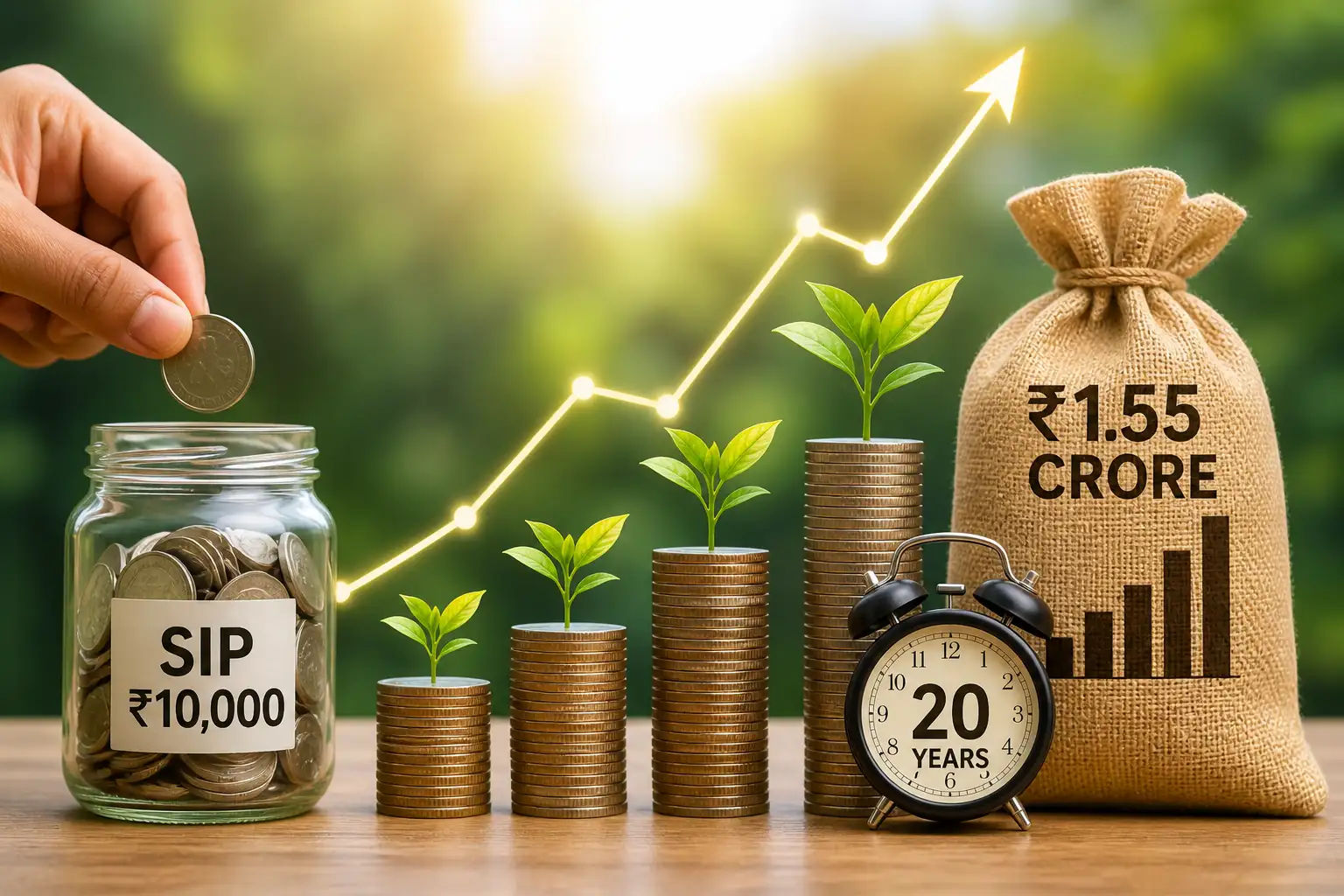
Baroda BNP Paribas Mid Cap Fund turned Rs 10,000 monthly SIP to Rs 1.55 crore in the last 20 years since its inception, an analysis by ETMutualFunds showed.
Launched on May 2, 2006, this mid cap fund is given three star rating by Value Research and four star rating by Morningstar.
If an investor invested Rs 10,000 in this fund through SIP in the last 10 years, the current value would have been Rs 28.65 lakh with an XIRR of 16.90%. If the investor made the same SIP investment seven years ago, the value would have been Rs 16.24 lakh now with an XIRR of 19.09%.
Also Read | Planning a 15-year mutual fund investment? Here’s a simple 4-scheme portfolio approach
A monthly SIP of Rs 10,000 made three years ago would have been Rs 4.16 lakh with an XIRR of 11.97% and in the last five years would have been Rs 8.62 lakh now with an XIRR of 15.44%.
What the fund house says on performance
Sanjay Chawla, CIO – Equity :It is very heartening to see Baroda BNP Paribas Midcap Fund completing 20 years. The most satisfying part is that the fund has delivered returns over multiple cycles. It is during this time that the definition of midcaps changed, new sectors emerged and saw multiple business cycles.
Despite the everchanging investment landscape the only common factor was the fundamental bottoms up investment approach. This has ensured the fund has delivered returns aligned to investors interest. I am happy that I could help the investors of Midcap Fund meet their financial goals in the last 20 years.
If an investor made a lumpsum investment of Rs 1 lakh at the inception of the fund, the value would have been Rs 10.65 lakh now with a CAGR of 12.55%. If the same lumpsum investment was made 10 years ago, the value would have been Rs 4.32 lakh now with a CAGR of 15.76%.
How an expert analyse the performance of this mid cap fund
Shweta Rajani, Head - Mutual Funds, Anand Rathi Wealth Limited analysed the performance of this fund and shared with ETMutualFunds that the 16.43% return over 20 years is a strong outcome, but investors should understand the reason behind this outperformance. A major part was due to being invested through powerful mid-cap rallies, especially after the 2008 crash and again after the sharp correction in 2020, Nifty Midcap 150 delivered around 23% CAGR over the last 3 years and about 19% over 5 years, showing how strong the overall mid-cap cycle has been.
Shweta further said that at the same time, the fund manager’s role also played a crucial role. Mid cap funds, on average, delivered an average of 21.5% CAGR over 3 years and 18% over 5 years, highlighting the broad-based performance. Going forward, returns will be dependent on underlying earnings growth and disciplined stock selection along with the movement of the broad market.
Baroda BNP Paribas Mid Cap Fund vs benchmark vs category average
Based on the trailing returns, in the shorter horizon the fund has managed to outperform its benchmark and category whereas in the longer horizon the fund gave returns at par with the category average but failed to beat its benchmark (Nifty Midcap 150 - TRI)
In the last three months, the fund delivered a return of 3.38% against a return of 2.52% by the benchmark and 2.99% as the category average. In the last six months, the fund delivered a return of 2.77% compared to a loss of 0.44% by the benchmark and a loss of 1.89% as the category average. The fund delivered a return of 12.85% in the last one year against 11.40% by the benchmark and 10.31% as the category average.
The fund delivered a return of 21.04% in the last three years against a return of 23.25% by the benchmark and 21.21% as the category average. The fund gave a return of 17.56% in the last five years against 20.06% by the benchmark and 16.35% as the category average.
In the last 10 years, the fund delivered a return of 15.78% against 18.55% by the benchmark and 16.35% as the category average. Since its inception, the fund has delivered a CAGR of 12.55%.
In the last 10 calendar years, the fund has delivered negative returns in 2016 and 2018 where the fund lost 1.22% and 17.49% respectively.
According to a report by Tata Mutual Fund, headline valuation premium for Nifty Midcap 100 vs Nifty 50 has come down to 40% by the end of March 2026 from the highs of 71% in July 2024 and current valuation metrics suggests relatively attractiveness of large caps over mid and small caps as they offer better risk-reward.
Nifty is now trading at reasonable PE of 20x and with earnings growth of 15-17% visible next financial year. This sets the tone for better equity returns in the next 12-18 months. Midcap and small cap premium has come down but risk reward and flows will still favor large caps more, the report further said.
Are mid-cap valuations currently stretched, fairly valued, or still attractive?
Shweta said that mid-cap valuations look more reasonable today than they did during the peak seen in 2024. The Nifty Midcap 150 is currently trading about 9.6% below its fair value, suggesting there is no major froth in the segment at the moment.
For long-term investors, it would serve as a good entry point as current levels look closer to fair value rather than overheated territory, she further said.
Being a mid cap fund, the fund holds 6.64% in large caps, 65.59% in mid caps, 8.87% in others, and 18.9% in small caps. In comparison to the mid cap category, the fund is overweight on others and small caps.
Risk ratio parameters of fund
The PE and PBV ratio of the multi asset allocation fund were recorded at 47.66 times and 10.02 times respectively whereas the dividend yield ratio was recorded at 0.83 times as of March 2026.
ETMutualFunds analysed the other key ratios of the fund in a three year period. Based on the last three years, the scheme has offered a Treynor ratio of 1.71 and an alpha of 0.06. The sortino ratio of the scheme was recorded at 0.64.
The return due to net selectivity was recorded at 0.02 and return due to improper diversification was recorded at 0.04 in the last three years.
Also Read |MF Tracker: Bank of India Small Cap Fund tops 5-year returns. Should you chase the winner?
Time to choose mid caps?
Shweta said that mid-cap exposure should match your risk comfort and overall portfolio mix, they offer higher growth potential, but they can also see sharper corrections during economic slowdowns or tight liquidity phases that is why they work best as the growth engine within a diversified portfolio.
She further said that investors should maintain a 55% allocation in large caps and the rest in mid and small caps. Large caps help anchor the portfolio during volatile phases, while mid and small caps provide the growth over longer periods and if they have funds available then they go ahead with lumpsum investment, and stagger it across 6-8 weeks. If one has regular income, they can do SIP.
Other mid caps available and outlook
Around 20 mid cap funds have completed 10 years of existence in the market. Among these 20 funds, Nippon India Growth Mid Cap Fund gave the highest return of 19.04% in the last 10 years.
Aditya Birla SL Midcap Fund gave the lowest return in the last 10 years of around 14.01%. These 20 mid cap funds gave an average return of 16.35% in the last 10 years.
Commenting on the outlook of mid caps, Shweta said the outlook for mid-cap funds remains positive, especially after the correction in 2025 and the mid and small-caps will possibly see a strong comeback similar to the post-2022 period.
“On the index front, earnings for Nifty Midcap 150 are expected to grow by around 18% in FY27 and 16% in FY28, which is stronger than the expected growth for Nifty 50. Mid-sized companies' benefit from domestic consumption, digital expansion and infrastructure-led growth. FII participation returning is another positive contributing factor, with the expectation of FII returning to the Indian market.”
Mid-cap funds saw net inflows of about Rs 6,000 crore in March 2026 and nearly Rs 50,000 crore during 2025, which is about 14% of total equity mutual fund inflows seen in that year. Overall, the long-term opportunity remains strong, supported by growth potential and consistent investor interest, she further said.
One should always consider risk appetite, investment horizon, and goals before making any investment decisions.
(Disclaimer: Recommendations, suggestions, views and opinions given by the experts are their own. These do not represent the views of The Economic Times)
If you have any mutual fund queries, message on ET Mutual Funds on Facebook/Twitter. We will get it answered by our panel of experts. Do share your questions on ETMFqueries@timesinternet.in along with your age, risk profile, and Twitter handle