WASHINGTON _ Mexico refuses to pay for President Donald Trump's wall, but advocates representing another group of foreign workers legally in the U.S. say they would eagerly raise billions for the barrier if it'd help them get green cards faster.
Who? Under the proposal, Indian and Chinese tech workers would step up and kick in $2,500 each or more in fees if it meant they could get their green cards after five or six years instead of waiting decades as some do now.
"The Indian high-skilled workers will gladly, enthusiastically and happily pay for the wall if given an opportunity to do so in order to get fair treatment on green card waiting times," said Leon Fresco, an attorney for Immigration Voice, an advocacy group working with members of Congress on the measure.
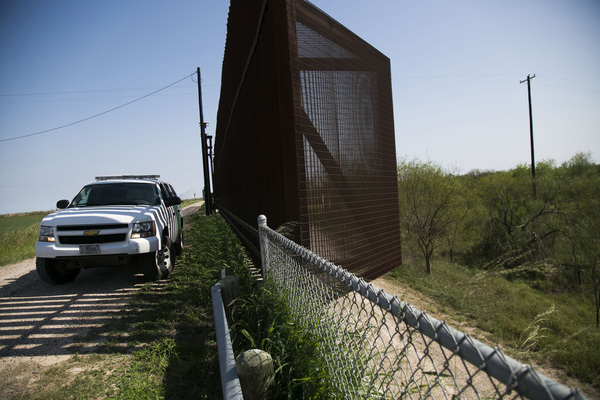
The offer comes as a bipartisan group of congressional members is pressing the White House and Congress on a new proposal that would help raise $4 billion toward payment of the $25 billion border wall and security package in a deal to protect so-called "Dreamers" who were brought to the country illegally as children.
Indian and Chinese workers make up a large chunk of the green card applicants in the United States, far exceeding the per country annual cap on permanent residency approvals. As a result, there is a significant backlog for the much-coveted residency permits.
More than 1 million Indian and Chinese nationals who arrived on H-1B tech worker visas are awaiting green cards, according to congressional estimates. In fact, the wait to get a green card for some Indian applicants can stretch upward of 70 years, according to those estimates.
Trump administration officials announced in September they would completely shut down the Deferred Action for Childhood Arrivals or DACA program on March 5. Members of Congress are working doggedly to reach a compromise to protect the DACA recipients, but also fulfill Trump's border security requirements.
Reps. Kevin Yoder, R-Kan., and Tulsi Gabbard, D-Hawaii, have shared details of their plan, which would include the fees-for-green cards deal for tech workers, with the White House and Republican leaders. They're now collecting signatures on a letter to Senate and House leaders that outlines the proposal. Yoder told McClatchy they're leaving what type of border security measures the funding would provide up to the negotiating teams, but said the goal is to help the negotiators reach a deal that would protect the Dreamers, but not leave out H-1B holders.
The new proposal would be added to their own popular high-skilled worker proposal that would eliminate country-based quotas within the employment-based immigration system that limits how many Indian and Chinese can get green cards each year.
Despite having more than 300 congressional supporters on the legislation, Yoder said the challenge is that it's still not a "household issue."
"They're obviously aware this is a fix that they support, but I don't know how many of my colleagues know of the injustice that is occurring and how fixing DACA without fixing this would create a new layer of injustice," Yoder said.
Yoder said he met with White House Chief of Staff John Kelly and Legislative Director Marc Short last month about the legislation and since then has shared more details about security funding. He's also met with House Speaker Paul Ryan, House Majority Leader Kevin McCarthy and House Majority Whip Steve Scalise to discuss the proposal. But he said the response has largely been that they're interested in the proposal but fear it will only complicate an already difficult negotiation process by adding new elements.
To raise awareness of the issue, Yoder has invited Sunayana Dumala, the widow of a slain foreign tech worker, to join him at the State of the Union address on Tuesday. Dumala, whose husband Srinivas Kuchibhotla was killed at a Kansas bar in February, lost her immigration status when her permission to reside in the U.S. was tied to Kuchibhotla through marriage. She has since been able to get a H-1B status with Yoder's help, he said.
"My fear is that if this per-country cap is not listed in the upcoming DACA security compromise, my fear is that Sunayana will never become an American citizen no matter how hard she tries," Yoder said. "And that's a little bit hopeless. Merely for one reason. Because she is from India."
The proposal's authors say the plan could raise up to $4 billion over 10 years if the green card fee is $2,500, but Fresco said the workers would gladly play twice as much or more. The money could be appropriated now by Congress but paid back as the green cards are processed and fees are collected.