
Tapachula, Mexico - The Mexican government said the deployment National Guard members to the southern border region began this week, but there have been no visible signs of the force's presence on the ground, and an official from the secretariat overseeing the force told Al Jazeera that such a deployment will not begin until June 30.
The announced deployment has created confusion in Tapachula near the Mexico-Guatemala border, where migrants and asylum seekers say increased militarisation will not stop migration.
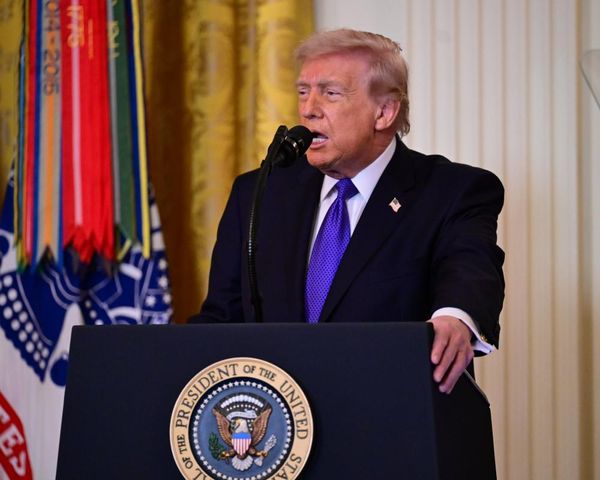
Earlier this month, the government announced plans to send 6,000 National Guard troops to southern states to stem the migration of Central Americans and others heading north overland. The news came amid immigration deal negotiations with the United States following threats by US President Donald Trump of escalating tariffs on Mexican goods.
Mexican Secretary of Foreign Affairs Marcelo Ebrard has made several public statements announcing National Guard deployment this week, with support from the Army and Marines. Deployment began Wednesday and will be quickly increasing every day, Ebrard said during a press conference on Wednesday, without elaborating on the specifics.
According to a Secretariat of Security and Citizen Protection official, however, no deployment has occurred.
"There is not yet any National Guard deployment," said the official, who was authorised to speak to the press but who requested not to be named for security reasons. The official added that the deployment will not begin until June 30, when the first round of National Guard recruits graduate.
An official from the Secretariat of Foreign Affairs clarified to Al Jazeera that the National Guard has not yet been deployed to southern Mexico. The official did not say if the deployment will take place before or after June 30. It will be part of an escalating rolling deployment that started with members of other security forces and decisions on which forces will be deployed when will depend on strategy and other factors, the official added.
Some members of the first group of the National Guard have already deployed to Minatitlan and Coatzacoalcos in the Veracruz department, the Secretariat of Security and Citizen Protection official said. The official did not clarify whether or not they have graduated training. No National Guard members have been deployed to any other state, the official added.
The creation of the National Guard, which was championed by President Andres Manuel Lopez Obrador, was approved by Congress in February. The force's official launch has long been set for June 30.
More than half of National Guard recruits were drawn from military forces, but the controversial new force falls under the purview of the Secretariat of Security and Citizen Protection.
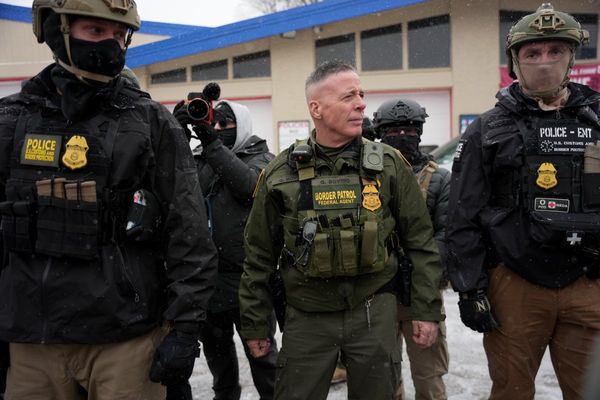
There are already 6,000 law enforcement officers across various southern states, according to the official. Forces currently on the ground include the Marines, the military, federal police, and immigration, said the official, who added that "the deployment will be increased".
'Will not stop migration'
The announced deployment generated some confusion and uncertainty in Tapachula, a mid-sized city 40km north of the busy Tecun Uman border crossing with Guatemala. But Honduran asylum seeker Nerlin Perdomo is sure of one thing: National Guard deployment will not stop the exodus.
"It will not stop migration," Perdomo told Al Jazeera. "We do not leave because we want to but because we have to."
Perdomo, 32, has been a coffee farmer his whole life. After his parents died, he inherited their two hectares of land in a mountainous rural area in the Santa Barbara department in western Honduras. But lately, life as a coffee farmer in the region has become untenable.
"In these past few years, we have had no money left from it," said Perdomo.
First, it was an outbreak of coffee rust, a quickly spreading fungus-caused disease that devastates coffee plantations. He and other local farmers tried planting two other coffee varieties but the rust hit those too, said Perdomo. Then the price of coffee plummeted.
No longer able to keep food on the table for his family, Perdomo left Honduras last month with his 10-year-old son. They have run across many others from the same region of Santa Barbara in Tapachula, he said.
The Mexican government has increased the number of checkpoints from the border to Tapachula and further north over the past several days, following the US-Mexican immigration deal announced Friday and ensuing international attention.
But there has been a lower-intensity crackdown in the area by immigration, police and military forces for months, and the true uptick was roughly two weeks ago, according to many migrants and asylum seekers in Tapachula, including Daisy Lorena Alvarado.
Alvarado has been in southern Mexico for several months. She left home in Puerto Cortes, a port city in northwestern Honduras, with her 13-year-old son and 3-year-old daughter, fleeing violence and unemployment.
"We are hoping for a better life," she told Al Jazeera. "There is always hope."
Alvarado is waiting for a resolution in her case from the Mexican Refugee Assistance Commission, COMAR. She found work for a while in Ciudad Hidalgo, down by the border, and has kept track of the shifting operations by security forces in recent months.
Over the past two weeks or so, immigration agents and police officers often surround or sweep the park at night and take people into custody pending deportation, a group of Honduran, Salvadoran and Guatemalan migrants who requested anonymity told Al Jazeera in the plaza.
"They do not care if you have papers," said one Honduran, referring to an immigrant document showing proof of initial application for a humanitarian visa. "They rip them up."
A spokesperson for the National Immigration Institute was not available for comment at the time of publication.
Along with other migrants and asylum seekers, the Central American group still often congregates in the plaza during the day, but generally clear out by evening, migrants said.
Immigration authorities, police and military operations already make them feel unsafe, and do not expect much to change if the National Guard shows up.