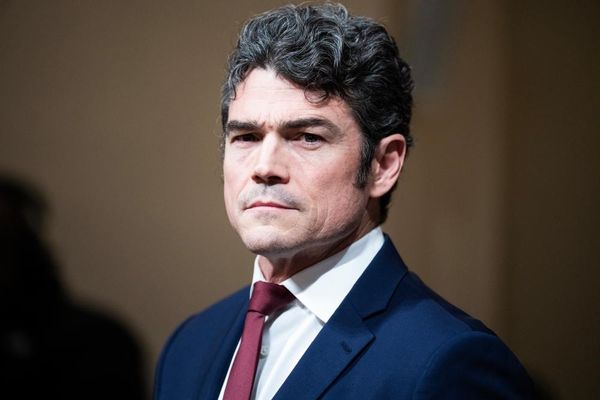
Until recently, Arne Aus den Ruthen roamed one of Mexico City’s more affluent boroughs on the lookout for bad civic behaviour, broadcasting it on Periscope to an outraged population. He exposed people parking on sidewalks, tossing bags of trash out into the street and dumping pylons, bricks and buckets in the street to save parking spots.
He even confronted bodyguards blocking a wheelchair access ramp with their SUVs and refusing to move – only to discover they were waiting for a member of the president’s inner circle to finish a workout at a nearby gym.
Aus den Ruthen carried out a one-man public shaming crusade, exposing rich and poor alike for the failing to follow the rules and tapping into a sense among citizens that the law is applied unequally.
Thousands would tune in at a time for his takedowns of residents – something he attributes to the novelty of public officials actually applying the rules in a country with widespread impunity and where an estimated 99% of crimes go unpunished.
“There’s no penalty for those breaking the law,” Aus den Ruthen says. “When someone imposes order, it suddenly becomes news.”
In late June, however, inspectors with the Mexico City government turned the tables on Aus den Ruthen by closing a building belonging to his family for violating zoning rules.

Aus den Ruthen, who resigned his city manager position to address the allegations, said his family had the proper permits, including an inspection in 2013, and he alleged revenge.
The head of Mexico City’s inspection agency, Meyer Klip, denied the allegation, describing the enforcement as routine – although barely two weeks earlier, Klip had appeared in one of Aus den Ruthen’s Periscope broadcasts by intervening on behalf of a neighbour.
Analysts saw it as a culmination of a conflict in which Aus den Ruthen had embarrassed the local government one too many times.
“Social networks have turned Arne into an avenger, who exposes a [local] government that doesn’t apply the law and allows all these abuses by powerful people,” says Adrián Rueda, city columnist with the newspaper Excélsior. “What the city government is worried about is that this character comes from one of the borough governments to mete out justice – justice the city government doesn’t deliver.”
Aus den Ruthen has taken his public-shaming shtick citywide as he awaits a decision on the zoning dispute. On a recent weekday, he and a team of volunteers armed with bolt cutters, pickup trucks and Periscope prowled a middle-class neighbourhood in a northern borough collecting impromptu parking pylons.
Some residents said they needed the spots due to disabilities, old age or security issues. Others got angry, though Aus den Ruthen showed no sympathy.
“Rich or poor, everyone uses the same excuse: apply the law to somebody else,” he says. “This is Mexico. Everyone wants the country to change, but nobody is willing to change themselves.”

Aus den Ruthen’s campaign against “abusive neighbours” arrived as Mexican society shows fatigue with corruption and individuals showing off social status to gain an unfair advantage in a country where political connections can carry more weight that correctness and facts in resolving conflicts.
Mexicans have also turned to social media to shame the excesses of elites – and occasionally ordinary people – acting inappropriately, lampooning them online as “lords” and “ladies”.
Aus den Ruthen’s take-no-prisoners approach, however, has brought criticism from the chattering classes, who accuse him of vigilantism, invasions of privacy and showboating instead of proposing policies which would improve civic culture.
Aus den Ruthen attributes the criticisms to opponents unsettled by the success of a “rightwing popular project” in a city where the left has wielded power for almost 20 years. “This is what scares them,” he says.
His confrontations with bodyguards – commonly spotted in posh parts of the city – has made him a social media sensation with more than 88,000 Periscope followers.
But Aus den Ruthen regularly carried out a Periscope campaign in less-affluent areas and even cleared out improperly placed pylons from behind a police station. It prompted the police to ask for his contact information so they could call him to assistance in enforcing similar situations.
“This is very revealing about what is happening in Mexico: the police asking for help from a group of neighbours to enforce the law,” he says. “They don’t know the limits of the law because they have never lived under the rule of law. They’ve never applied the rules necessary for basic social harmony.”