Allergy season is underway after a red hay fever alert was issued for most of the UK.
The Met Office has forecast “very high” levels of pollen in the air, which hit England and Wales on Monday and are expected to last until the weekend. Much of Scotland and Northern Ireland are also under an alert, with pollen levels due to decrease later in the week.
Symptoms of the common allergy include frequent sneezing, a runny nose, or itchy eyes, throat, mouth, or ears. Some people also experience a loss of smell, facial pain, sweating and headaches.
“Hay fever is the most common name for pollen allergy and is most commonly caused by grass pollens, although other pollens can also trigger the symptoms. The symptoms are caused when immune system reacts to pollen in the body to produce histamine and other chemicals,” the Met Office said.
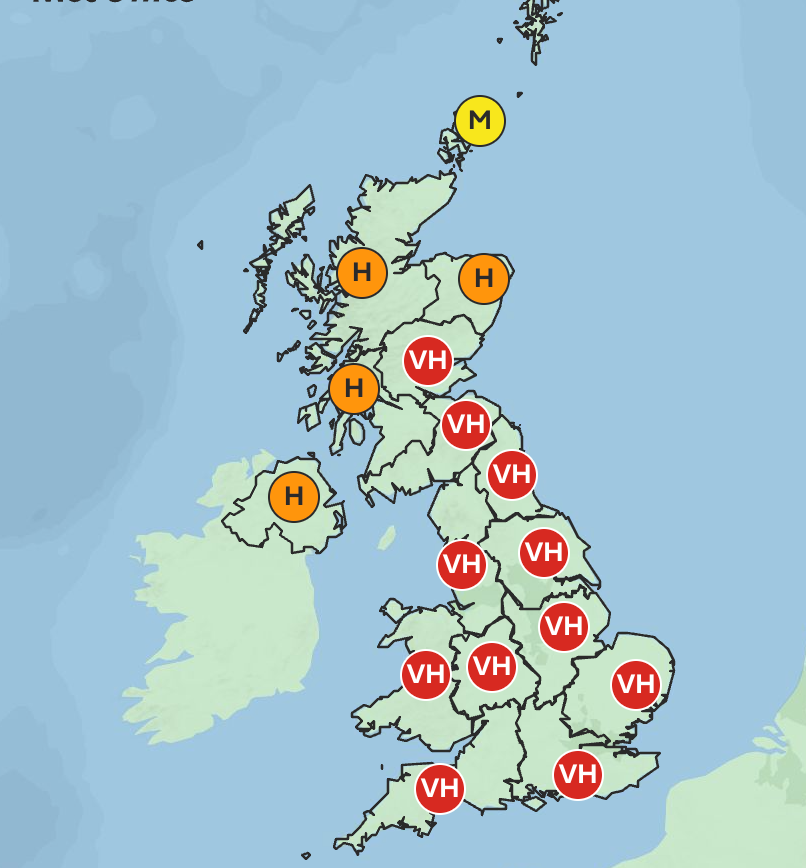
The agency has forecast that levels of birch pollen and ash pollen will be very high in the south of England all week, as well as in Wales, northern England, and Scotland on Tuesday and Wednesday. There will also be high levels of plane pollen in these areas.
Pollen is made up of tiny particles, which are released by plants and trees as part of their reproductive cycle. Pollen season in the UK generally lasts from March until November.
Around 10 million Britons suffer from hay fever and it typically develops in childhood, although can be triggered at any age.
Pollen triggers the antibody immunoglobulin E, which creates mucus and leads to symptoms such as congestion and sneezing in people who suffer from hay fever.
The Met Office said that weather plays a significant role in the production, distribution and dispersion of pollen, with warmer temperatures often causing a higher pollen count.
Parts of the UK are set to reach 19C on Tuesday and Wednesday, and London could see temperatures hit 24C, which would mark the hottest day of the year so far.
It comes after Storm Dave brought snow, wind, and rain to parts of the country over the Easter bank holiday weekend.