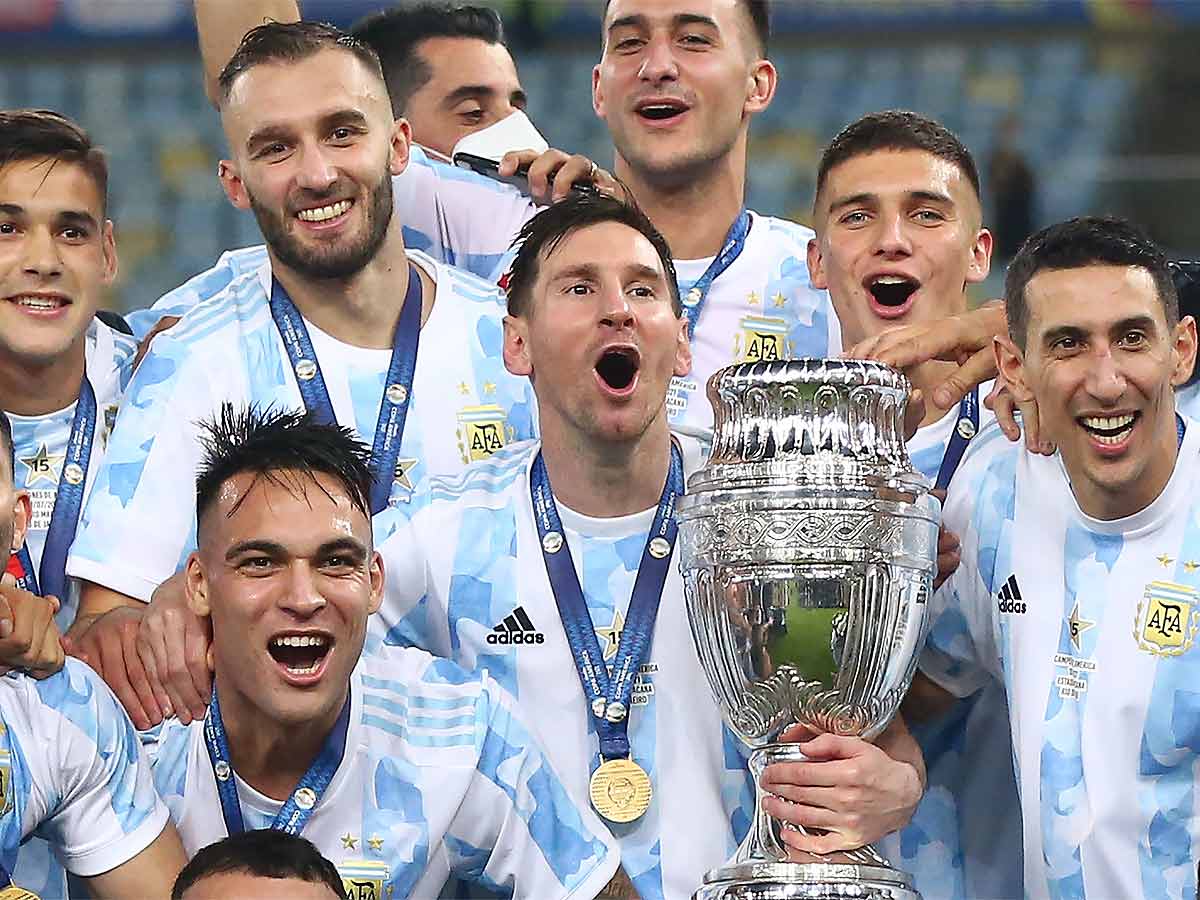
The whistle blew and all of Argentina, and those in the blue and white stripes present at the Maracana, converged on Lionel Messi. Literally and in imagination.
His comrades in arms jumped alongside him, laughing, trying to grasp the immensity of their achievement. They wanted to seize a moment that took 28 years to come. Reeling in joy, they threw Messi, the greatest of his generation, up in the night sky over Rio de Janeiro, as if to consecrate him in the firmament as the brightest star.
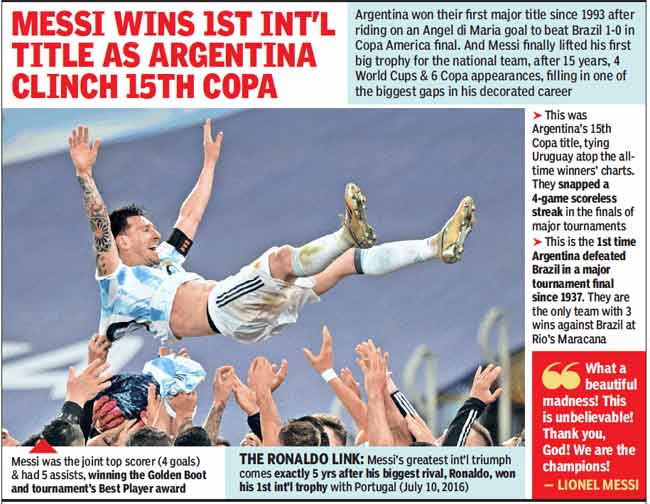
Rodrigo de Paul wasn't even born when Argentina last won a continental title. Messi was barely six years old then.
Neymar, Messi's friend, found a corner of the famed Maracana pitch and cried, just like a six-year-old. Both hands over his face, more to cover up the tears than to hide the frustration of coming second best in the Copa America final, a trophy that he will have to still wait for. However, the long, arduous, tortuous, debilitating wait has come to an end for Messi, all of 34 now and finally at peace with himself.
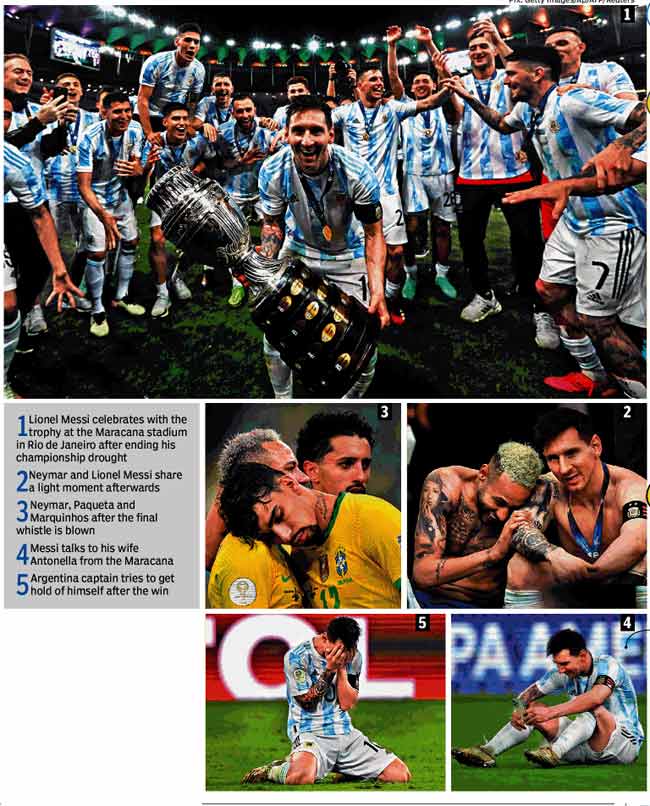
It could not have been a more sacramental sight on a football pitch. The master of the game finally got his hands on the biggest prize in South America, exorcising the ghosts, the tribulations, the detractors and doubters who chased him all along his sparkling career, diverting all conversation towards the one missing link for Argentina. The thorn of unease won't burden his crown anymore.
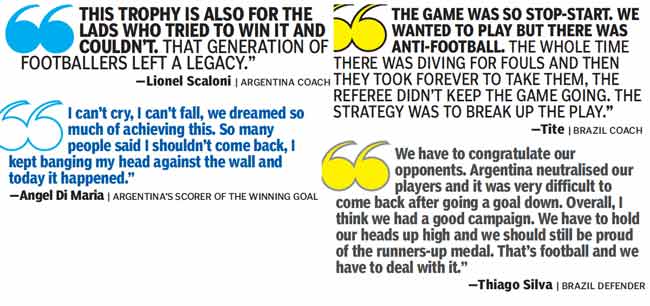
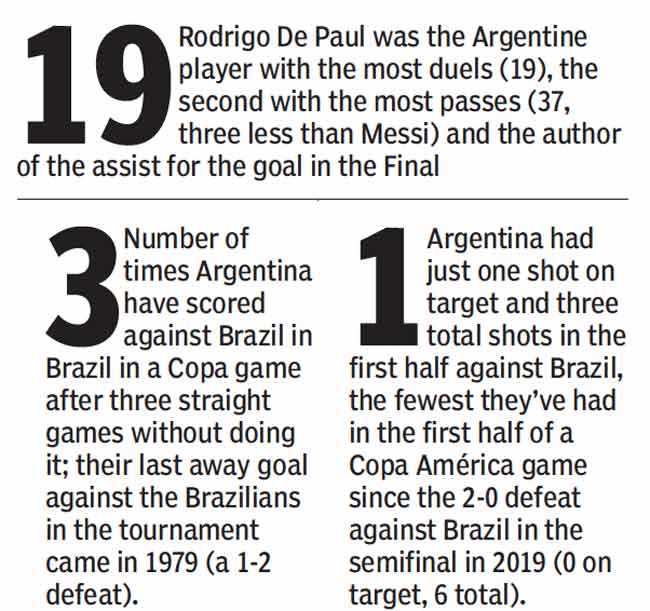
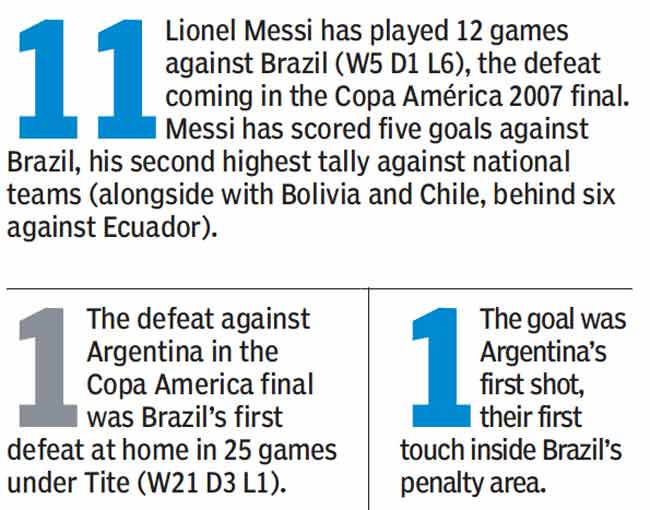
A dream cross field pass from De Paul early in the first session, curving past a retreating Renan Lodi, carved its way through a history of denial for Angel di Maria to control it with his favoured left and clip it over Brazil goalkeeper Ederson. The highest scorers in the tournament, Brazil, could not find another when it mattered most. Neither could Messi. Seeds of victory were sown by Di Maria in a match fraught with shackled movements and intermittent fouls, so much an integral part of the Superclassico tradition. After all, it is never just a game of football when Brazil play Argentina. Images from an evening, seven years young, must have flashed through Messi's mind as he led Argentina out on the Maracana once more. It was full house then, unlike the few thousand that were in attendance on Saturday night (early Sunday morning IST) and the World Cup was on line. Messi had to walk past the trophy, grim faced and with an embattled soul after Mario Goetze snatched it away in extra-time before he could plant his kiss on it.
Undemonstrative to a fault, forever letting his dribbles and turn of speed past markers to do all the bidding as a leader, Messi played a rather peripheral role in his fourth Copa final. He even slipped in front of a helpless Ederson, the Brazil goal staring blank in his face. Perhaps it was a reminder that frailties, though rare, are as much part of Messi as the rest.
The match was almost won by then as Brazil could not shed their defensive cloak just as Neymar never could get his feints right. His dribbles were clumsy, his mind cluttered with the sense of occasion. And his support cast, suffering from performance anxiety, were themselves looking for support. Chances still came Brazil's way. Finding space inside the box, Richarlison's shot was parried by Emiliano Martinez. Details of the match would dissolve in the space of time. What will be discussed over years to come will be Messi's monumental quest for the trophy, for redemption, for destiny. "A beautiful madness" as he said on his Instagram post.
Not to overlook the irony as it all happened on the stage, the Maracana, that had returned him broken and empty-handed. Now, when it was his time to enjoy the slice of history, his friend Neymar was crying in the far corner. Finally, they got together and hugged. An embrace that could have been framed for eternity.