After more than two decades, public awareness of the Fairtrade movement is high. Here in the UK, more than three in four adults say they recognise the FAIRTRADE Mark, and most of them know it provides an independent assurance that the farmers and workers who grew their produce got a fairer deal. What they may be less clear about, is whether Fairtrade - which benefits 1.5 million farmers and workers in more than 70 developing countries - is a form of aid, a way of giving to those who are less fortunate, or whether it is simply a different way of doing business. When I joined the Fairtrade Foundation last year, with 25 years’ under my belt in commercial and leadership roles in the fast-moving consumer goods (FMCG) sector, I was keen to confirm the answer to that question, too.
Travelling in Kenya at the start of this year, I was able to see first-hand the difference that Fairtrade makes to the lives of farmers and workers who grow everyday produce such as tea, coffee and flowers, for export to the UK and other international markets. One of the tea communities that I visited was Sireet Outgrowers Empowerment Project Company Ltd, a co-operative of more than 8,000 small-scale farmers in the Nandi Hills region, which supplies tea for brands including Cafédirect and Traidcraft, and own-label ranges sold by Sainsbury’s and the Co-operative, among others.
As well as earning a better price and enjoying more stable, long-term contracts, selling produce on Fairtrade terms means these farmers earn a little extra, a premium that they can invest as they choose to benefit their business or their community - and they’re putting it to good use.
Since 2006, Sireet OEP has earned around $2.3m (£1.5m) in Fairtrade Premiums, and like many other co-operatives within the Fairtrade system it has chosen to invest some of this in social projects such as new classrooms and school equipment, dispensaries, and the construction of water tanks, which store and pipe water to several local villages and irrigate farms.
But Sireet OEP is a business and like any commercial organisation, it wants to ensure it can operate in the long-term. That’s why it has also invested a substantial proportion of its Fairtrade Premiums to purchase a 12.8% share in a tea factory, enabling the organisation to move higher up the value chain and earn a dividend income that can be reinvested. It has also diversified by investing funds in offices and commercial property unrelated to the tea sector, which generates a rental income.
Meeting the management committee and seeing how astutely they allocate Fairtrade Premiums - a small amount to each project at first, until they can see it’s a sound investment - it was clear to me that these farmers do not view Fairtrade as a handout, or something they want to be dependent on in the long-term. They simply want to earn a fair return for what is often physically demanding work. By selling some of their tea on fairer terms, these industrious, well-organised tea farmers are being enabled to build a strong, sustainable business that could ultimately become self-sufficient.
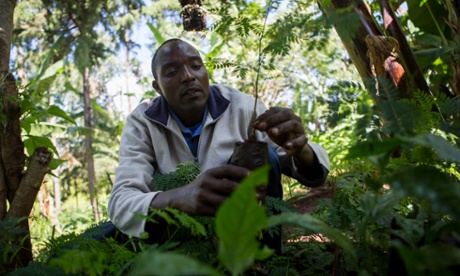
“It gives an opportunity for organisations to grow as high as they would like to grow,” says Victor Biwot, Sireet OEP’s operations manager. In addition to mechanisms such as the minimum price and a premium, Fairtrade and commercial partners including Cafédirect have also provided farmers at Sireet OEP with access to training on issues such as environmental management and climate change adaptation. “Fairtrade has really, actually empowered the farmers,” adds Wilson Tuwei, Sireet’s chairman.
As a co-operative, Sireet OEP operates for the benefit of its farmer members, enabling them to have greater influence, bargaining power and market access than they would have individually. But globally, most tea is grown on large plantations by hired workers, who are dependent on their employer for everything from housing to healthcare.
The tea sector is notorious for low prices, low wages and poor working conditions. Fairtrade Standards aim to ensure that workers are paid at least the national minimum wage, enjoy decent working conditions and have their rights respected. Last year, Fairtrade introduced a new hired labour standard that strengthened workers’ rights to freedom of association, empowered workers to decide how the Fairtrade Premium is spent, and gave them the flexibility to allocate up to 20% of the premium to workers as cash. It also requires plantations to progress towards paying a living wage over time.
While it might seem like a “no-brainer”, introducing the living wage for tea workers is not quite as simple as it sounds. First, there is the challenge of establishing a benchmark for every tea-growing community around the world. Working in collaboration with other certification schemes, Fairtrade has already established a living wage benchmark for tea workers in Malawi (and for banana workers in the Dominican Republic, wine growers in South Africa and flower growers in Kenya), but there is still some way to go.
The far greater challenge is ensuring that companies are supported to move towards paying a living wage without unintended consequences. Tea companies and traders in Kenya told me that while they agree with the concept of a living wage, margins in the tea industry are so small that if they were required to bear the cost, it would put them out of business or mean they could no longer afford to remain Fairtrade certified. In Kericho, estates employing workers to hand-pluck the tea leaves, sit side-by-side with mechanised estates and it doesn’t take too much of a leap of imagination to see how increased wage costs could lead to lay-offs.
What’s clear is that at present, there is not enough value in the tea supply chain. If we want to make a greater difference to the lives of the millions of tea farmers and workers we depend on every day, we all need to be prepared to pay a little more for our tea. Here in the UK, about two-thirds of tea is sold on special offer at any one time, and that means that despite being a nation of tea-lovers, we just don’t value our favourite cuppa as much as we should.
I have seen for myself that Fairtrade makes a difference, but even farms and estates that are Fairtrade-certified only sell a small fraction of their tea on Fairtrade terms - usually less than 10%. Almost every farmer and worker I spoke with in Kenya had the same message for me: “We need to sell more Fairtrade tea.” I returned from Kenya in no doubt that Fairtrade is not aid; it is a more sustainable model of trade that takes into account the triple bottom line of people, planet, as well as profit - and that’s why it works.
Content on this page is paid for and provided by Fairtrade Foundation