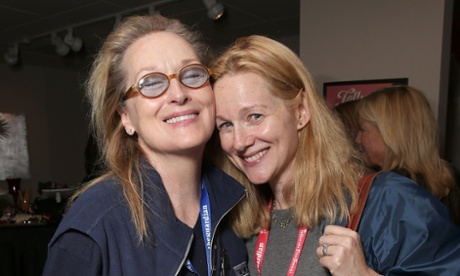
Meryl Streep just has a few minutes of screen time in Suffragette, Sarah Gavron’s deeply-felt period drama, but it’s small wonder the three-time Oscar-winner signed on for the project.
Over the past couple of years, the actor has won new fans not just for her performances, but high-profile calls for action over gender equality. In a 2014 tribute to Emma Thompson, she slammed Walt Disney as sexist; she led the whoops and cheers following Patricia Arquette’s rousing Oscar acceptance speech, during which the Boyhood star demanded equal pay in Hollywood.
In Suffragette, which has premiered at the Telluride film festival, she plays Emmeline Pankhurst, leader of the British civil rights movement which helped secure the vote for some women in 1918. Despite just one scene, Streep is shouldering much of the star advocacy for the film, as leading actor Carey Mulligan is otherwise engaged giving birth.
Streep has taken to the task with evident gusto. On the first night of the festival, she chatted excitedly with audience members at the film’s premiere party. On the second day of the event, you couldn’t walk down the main street in the ski town without running into the actor, who made a number of appearances at screenings and panels throughout the day.
And as Gavron revealed during a Q&A following one screening, it was Mulligan who encouraged her initially sceptical director to lobby for Streep to consider such a minor role.
“I can’t tell you how wonderful that was for us,” Gavron said of Streep’s eventual casting. “To get supported by someone of that caliber - also, that she’s an advocate in her own right for women’s issues.”
Streep previously collaborated with Suffragette screenwriter Abi Morgan on The Iron Lady, which won the actor her third Oscar. Streep said she was familiar with the British movement but “the fact that it was violent” surprised her greatly. “The Americans were very well behaved in comparison, and that’s not the way it usually plays out,” Streep said, to big laughs.
Asked to cite the biggest female influence in her life, Streep chose her grandmother, after whom she named her own daughter, Mamie. “She was the mother of three before she was allowed to vote,” Streep recalled. “She didn’t care who was president, but she really cared who was going to be on the school board. There was no smarter person, but she couldn’t vote.”
Streep continued: “I think that women of that generation felt that lack – they had it built into them. They felt lesser than; and it’s a very difficult thing to dislodge from your mind once it’s placed there. And the people who shake it off and realise that we are all human beings and equal – it doesn’t mean you all have the same upper body strength, because there isn’t a man in this audience who could out-lift Serena Williams.”
As reported last month in a study conducted by the University of Southern California’s Annenberg School for Communication and Journalism, only two of the top 100 highest-grossing films of last year were directed by women. “Why?” Streep demanded, after mentioning the figure. “Hundreds of thousands of kids go to film schools – girls and boys. And the girls very often take the prizes in film schools. In fact, I just finished a film directed by Stephen Frears who taught Sarah Gavron and he said, ‘She is absolutely the finest student that I ever had.’ So they do exist, they graduate, they’re good – and then they don’t get hired... Why?”
The director defines the film, and therefore the future, said Streep, drawing a comparison late Northern Irish trade unionist Inez McCormack. “After peace was made in Ireland, everybody was sort of defining who would make policy – and she brought in three cleaning ladies from Belfast, and everyone laughed. She said, ‘You have to look at who’s not at the table before you know you’re making fair government.’ I would say that’s true in cultural affairs.”
In June, it was reported that Streep sent a letter to each member of Congress, urging them to revive the battle to add the equal rights amendment, guaranteeing parity for women under the law, into the US constitution.
As she made clear at an open air talk later in the day, the actor remains positive about the fight for equality worldwide.
“I’m optimistic because pretty much in every profession now, except directing, we’re between 17 and 30 percent. Now that’s not at the leadership level of corporations, the senate, the congress, decision making bodies … we are still a minority - but we’re there, and we weren’t even there before. So I’m hopeful.”