
Enjoy our content? Make sure to set Windows Central as a preferred source in Google Search and find out why you should so that you can stay up to date on the latest news, reviews, features, and more.
2025 was the year of AI. Billions of dollars were invested in AI tech, and the biggest names in several industries have integrated AI at every level.
TIME's "Person of the Year" was actually a group of people, "The Architects of AI." That cover issue featured Mark Zuckerberg (Facebook), Lisa Su (AMD), Elon Musk (xAI and Grok), Jensen Huang (NVIDIA), Sam Altman (OpenAI), Demis Hassabis (Google DeepMind), Dario Amodei (Anthropic and Claude), and AI researcher Fei-Fei Li. All the big names were there, except for anyone from Microsoft.
Today, AI gained another claim to fame, though it's not exactly an honor. Merriam-Webster named "Slop" as the 2025 Word of the Year. The company's editors define slop as "digital content of low quality that is produced usually in quantity by means of artificial intelligence."
YouTube, Facebook, TikTok, and Instagram are full of AI slop. YouTube had to update its policies to try to combat slop from gaining traction. A recent report claims that OpenAI spends $15 million per day creating AI videos, at least some of which meet Merriam-Webster's definition of slop.

Merriam-Webster discussed fake videos, propaganda, fake news, and AI-written books in its post announcing slop as its word of the year.
"Like slime, sludge, and muck, slop has the wet sound of something you don’t want to touch. Slop oozes into everything. The original sense of the word, in the 1700s, was “soft mud.” In the 1800s, it came to mean “food waste” (as in “pig slop”), and then more generally, “rubbish” or “a product of little or no value," said Merriam-Webster.
"In 2025, amid all the talk about AI threats, Slop set a tone that’s less fearful, more mocking. The word sends a little message to AI: when it comes to replacing human creativity, sometimes you don’t seem too superintelligent."
Another phrase that stood out in Merriam-Webster's data was "touch grass," which is at least tangentially related to AI. The phrase encourages people to do activities in the real world rather than spend so much time online.
Many told ChatGPT users to touch grass when critics complained about GPT-5. That newer model was considered less personable than GPT-4o, causing concern among users who had become attached to the older AI model.
Millions reportedly use ChatGPT like a therapist. Some call ChatGPT their "soul companion" or "best friend." OpenAI CEO Sam Altman discussed people's over-attachment to previous ChatGPT models and the "heartbreaking" reality that leads people to rely on the tool in such a way.
Is AI slop?
While I do think AI is used to produce more than a fair amount of slop, there are genuinely helpful uses for the technology. AI can be used to spot bugs in code, analyze and summarize data, and automate specific tasks.
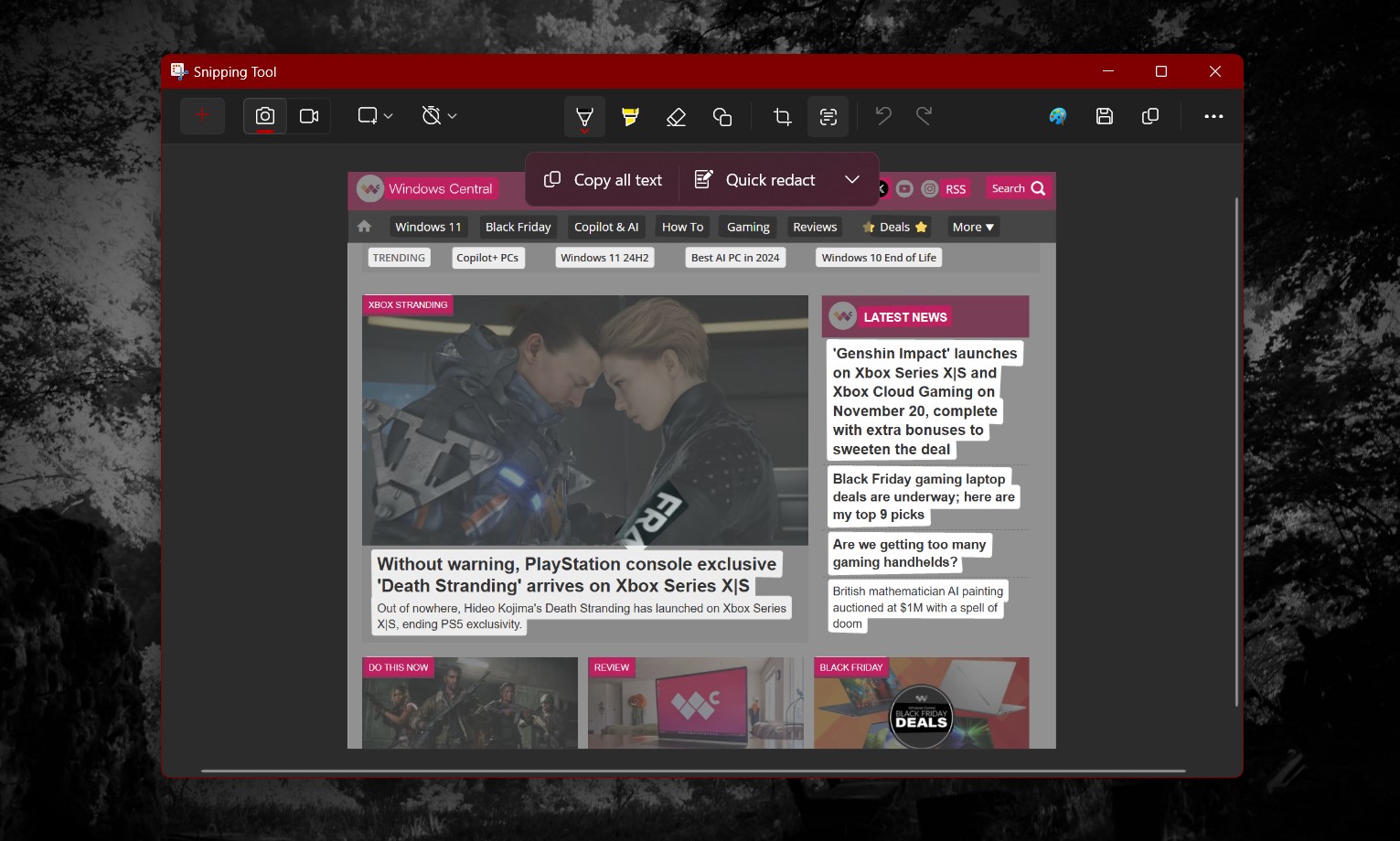
AI is used to improve accessibility in several ways, such as captioning text and describing images. OCR tech can recognize text in images, which is a useful accessibility feature that can also help a wider range of workflows.
I think it's overkill to integrate Copilot into Notepad, but the addition of AI has boosted several popular apps.
So, is there AI slop? Of course. You can find fake images, poorly written social media posts, and low-effort books easily in 2025. But there are positive aspects of AI too. I just hope we see even more of the latter in 2026.

Follow Windows Central on Google News to keep our latest news, insights, and features at the top of your feeds!