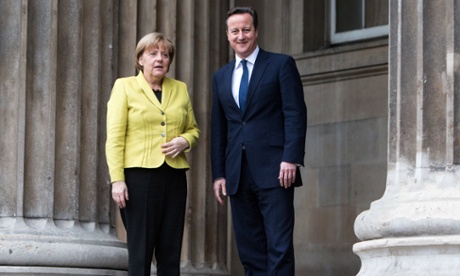
Cameron/Merkel press conference - Summary
For David Cameron, that was a moderately good result. Angela Merkel sounded fairly optimistic about the prospect of his proposed EU renegotiation succeeding. But the most significant answer might have been the one in which he hinted that he is dropping one of his demands.
Here are the key points from the press conference.
-
Cameron hinted that he may be dropping his demand for EU migrants to be prevented from coming to the UK to work unless they have already got a job. He did not say this explicitly, but it was very striking that he chose to omit this when he was spelling out his list of requirements from EU reform. He told the press conference.
The very clear things I’ve set out is saying that if you come here you should not be here for unemployment benefit; if you come and you haven’t found a job in six months, you should return to your country of origin; if you haven’t paid in to the system for four years, you can’t start to get out of the system; and, if your family and your children are back at home in another European country, you shouldn’t be getting child benefit here in Britain. Those are four of the welfare and immigration steps I’ve set out.
But in his immigration speech last year he said, among other things:
We want EU jobseekers to have a job offer before they come here and to stop UK taxpayers having to support them if they don’t.
-
Merkel said she thought a solution could be found that would enable the UK to remain in the EU. The UK and other EU leaders had managed to resolve apparently intractable problems before, she said.
I can only build on what I said earlier on; where there’s a will, there’s a way, to find common solutions. Issues were discussed here in Downing Street on the financial perspective, for example, and it was not at all clear at the time that we would find a way. But we stuck together and we brought about a solution, we found a way. And it is in this spirit we address all of the outstanding issues.
She also said that there had already been talks with the UK about this and that they had been “intense” (I think she meant thorough, not highly-charged) and “friendly”. And she reaffirmed her wish for the UK to remain in the EU.
I don’t want to hide from you that I very much like having the UK in a strong and successful European Union and like working together with Britain for a better future.
-
Merkel said that she accepted that the EU had to deal with the issue of the abuse of benefits. She was committed to preserving the freedom of movement in the EU, she said. But she went on:
But we also have to look at abuse of [freedom of movement]. We are looking at the legal, we are looking at legislation here. We want to see how this plays out at local level. We want to also say to our local authorities that abuse needs to be fought against so that freedom of movement can prevail. And one has to take a very close look at the social security systems of individual member states ... to what extent they have to be adjusted to this situation.
- She would not be drawn specifically on whether she favoured stopping EU migrants receiving benefits for children living abroad. She said a recent European Court of Justice ruling on this had been helpful. But this was a matter that needed to be considered alongside other issues, she said.
-
Cameron said he was confident that he could get a satisfactory deal for the UK in his EU renegotiation.
I want to fix the problems in Britain’s relationship with the EU which the British people can find very frustrating. I’m convinced this can be done. As the chancellor said when she last stood in this room, where there’s a will, there’s a way. And that’s very much my attitude too.
- Merkel refused to speculate on whether the UK would need to allow freedom of movement for EU workers if it left the EU as the price for having a free trade deal. ITV’s Tom Bradby said this was the case with Switzerland. Cameron conceded this was a flaw in the argument presented by those in favour of leaving the EU. He said:
I don’t think that the right answer is for Britain to leave the EU ... As for those people who argue from now its time to leave the European Union, it’s for them to answer your question about what that means. I think the answers they give are often very contradictory in respect of the points you make about Switzerland and Norway.
- Cameron revealed that he and Merkel had been briefed by MI6 on the attack on Paris.
- Cameron said Western countries should never give up their commitment to freedom of speech. The countries that succeeded would be those that stuck to the values of freedom and the rule of law, he said.
-
Nigel Farage has accused Cameron of supporting open-door immigration.
Mr Cameron made big overtures last month. But 48 hours with Mrs Merkel and he's already repeatedly committing to open door immigration again
— Nigel Farage (@Nigel_Farage) January 7, 2015
That’s all from me for today.
Thanks for the comments. AS
Updated
Cameron’s last answer was significant. Spelling out his demands, he did not mention one of the proposals including in his immigration speech last year - that people should only come to the UK from the EU if they have a job.
- Cameron hints that he may be dropping his demand for EU migrants to be prevented from coming to the UK to work unless they have already got a job.
The press conference is now over. I will post a proper summary shortly.
Q: [To Cameron] The Swiss are outside the EU, but they have to accept free movement. Do you accept the UK would have to accept this if it left the EU?
Cameron says he does not think the right answer is for Britain to leave the EU. He has set out the changes that need to take place.
He has said that if you come to the UK, you should not be eligible for unemployment benefit. If after six months you have not got a job, you should leave. You should not get benefits unless you have paid in. And benefits should not be paid for children abroad.
He says he has set out his views very clearly.
For those who support exit, it is for them to answer what they expect to happen.
Merkel says she very much likes having the UK in a strong and successful union.
She does not respond to speculative questions.
Q: [To Merkel] Are there any UK demands for EU reform you support? Such as stopping child benefit being sent to children abroad?
Merkel says the last European Court of Justice ruling on this was helpful.
But these issues must be considered in the round, with other issues. We will look at this, she says.
In each member state there is a necessity to address this.
Q: [To Cameron] Does the French attack require a different style of response?
Cameron says he and Merkel have had a briefing from M16. The level of alert is already very high. The police and intelligence agencies will be looking at what more can be done here.
There is no one single answer to these terrorist attacks, he says.
But we must be very clear about one thing; we should never give up the values we defend, a free press, and the right of people to say what they want. These values are not sources of weakness; they are sources of strength.
The countries that succeed will be those that stick to the values of freedom and the rule of law.
Merkel says it is important to show that intelligence services work together. One nation alone cannot address this.
Q: [To Merkel] Would you concede treaty change? Or change on EU benefit rules?
Merkel says she has no doubt about freedom of movement being questioned [ie, she does not think Cameron is questioning, I think.] But abuses must be tackled. That is something that needs to be addressed.
Cameron says he supports freedom of movement. But he does not support abuse of freedom of movement.
Merkel is still speaking.
She says this is her first trip to a G7 country ahead of the G7 summit she is hosting. Germany and Britain have a shared agenda.
The fight against Ebola is working, but the world has not been prepared for this catastrophe. More needs to be done to find out what precautions need to be taken.
The G7 will look at protecting the marine environment, and helping women to become self-employed.
She and Cameron talked about the sustainable development goals, she says.
She says they have addressed other development issues, or will do over dinner.
On Russia, they are not satisfied yet with the implementation of the Minsk agreement.
And, regarding Europe, where there is a will, there is a way. It was not clear that there would be an agreement on financial matters. But there was.
Angela Merkel is speaking now. She is speaking in German, but there is a simulataneous translation.
She says it was very moving when they spoke to Hollande together on the phone. In this desperate hour they stand by the French people.
She says she was delighted to have the prime minister with her at the British Museum. It showed the common foundations of European history. And the exhibition says something about Germany history. It allows Germans to look at their history from a difference perspective. She praises the way Neil MacGregor has produced the exhibition. (Uh-oh - Charlotte Higgins will be worried. See 3.29pm.)
Cameron is still speaking. He says the G7 will take forward some issues promoted by him at the G8 summit in Loch Erne.
He says he and Merkel discussed the response to the Ebola crisis.
Later this evening they will discuss Russia. There is still time for President Putin to change course.
And tonight they will be discussing EU reform. They have talked about this many times before, he says. He welcomes Merkel’s support for moves to make the EU more effective. He wants to fix the problems in Britain’s relationship with the EU. He is “convinced” this can be done. As Merkel said when she was last here, where there is a will there’s a way.
Cameron/Merkel press conference
David Cameron opens the press conference saying he and Angela Merkel have spoken to Francois Hollande, and expressed their total solidarity with France.
He says he and Merkel enjoyed their visit to the British Museum exhibition. The relationship between the two countries will be strengthened when the Queen makes her fifth state visit to Germany in June.
He says he and Merkel want to strengthen Europe’s economy. They are both strong supporters of the EU/US free trade deal. He hopes there is progress on that before the G7 summit in June.
Updated
David Cameron says he and Angela Merkel have both spoken to the French president, Francois Hollande, about the killing of 12 people in the attack on Charlie Hebdo in Paris.
Angela Merkel and I just spoke to President Hollande. We told him our thoughts are with the French people & offered any help that is needed.
— David Cameron (@David_Cameron) January 7, 2015
Andy Burnham, the shadow health secretary, has issued this statement about today’s urgent question to Jeremy Hunt.
It is clear, from the complacency we have seen today, that David Cameron and Jeremy Hunt do not have a plan for A&Es nor a grip on what is happening.
Ministers keep talking about the big increase in people arriving at A&E but they seem unwilling to explain why it has happened in the last couple of years. This is down to ill-judged decisions that they have taken, like scrapping NHS Direct, closing NHS Walk-in Centres and cutting GP services and social care. Their inability to admit this is one of the main reasons why they are unable to face up to the crisis they’ve created.
Jeremy Hunt was dragged to the Commons, but failed to offer a single new proposal to deal with the A&E crisis.
Labour called on the Government to bring all emergency services together at an A&E Summit and it is extremely disappointing that Ministers rejected this out of hand.
Here are some more pictures from Angela Merkel’s visit.
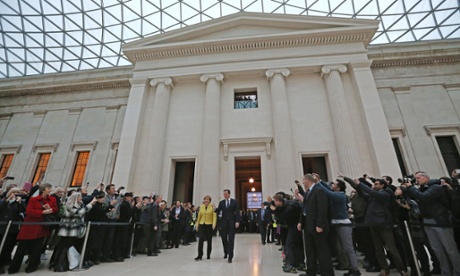
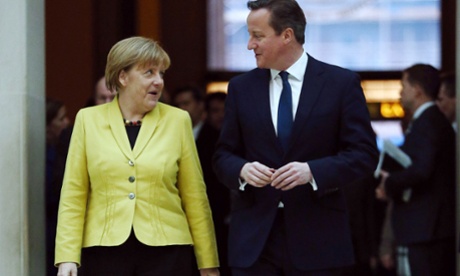
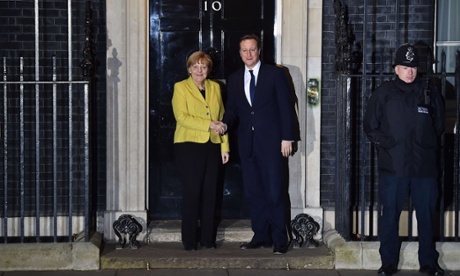
Summary
The day’s political developments have been overshadowed by the killings in Paris. Nevertheless, here are the key events so far:
- David Cameron and Angela Merkel have condemned the killing of 12 people at the satirical magazine Charlie Hebdo in Paris by gunmen who are still on the run. Speaking at the British Museum, where they visited the exhibition Germany: Memories of a Nation, Merkel said the attack was “barbarous” and “an attack against the values we all hold dear, of freedom of the press, freedom in general and the dignity of man”. Cameron said: “We must never allow the values we hold dear, of democracy, of freedom of speech, to be damaged by these terrorists.” Cameron and Labour leader Ed Miliband also condemned the attack at PMQs.
- Miliband criticised the prime minister for the NHS A&E crisis. The Labour leader said that rather than apologising to patients for the emergency, Cameron was blaming them for it. Cameron said he regretted any patient not being seen on time.
- But the PM also criticised Miliband, referring to a story claiming the Labour leader had said he was going to “weaponise” the NHS during the election campaign. Cameron described this as “the most disgusting phrase I have heard in politics”. Miliband did not deny having used the phrase.
- Cameron was asked who was to blame for the delay in publishing the Chilcot report into the Iraq war. Was it the White House or the cabinet secretary, asked Tory Sir Peter Tapsell. Cameron said the time of publication was not his decision. The report was “largely finished”, the PM said.
- Cameron said he was opposed to allowing voting at 16, but he would be happy to let the Commons decide this in a vote.
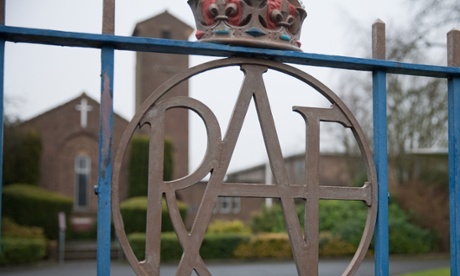
- Cameron said the government would do all it could to preserve the RAF chapel at Biggin Hill, which is dedicated to aircrews who took part in the Battle of Britain.
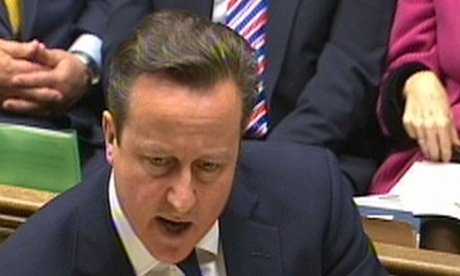
- Chris Mould, chair of the Trussell Trust charity, told the work and pensions committee that benefit sanctions were contributing to the increasing use of food banks. Other witnesses criticised the government’s use of benefit sanctions.
- Labour’s Sadiq Khan has called for the Green party to be included in the election TV debates. A Labour spokesman said the party’s position was that who took part was a matter for the broadcasters.
- George Osborne has quashed Theresa May’s proposal for foreign students to have to leave the UK automatically after they graduate, the Financial Times has reported.
- Nick Clegg has named what he calls his “general election cabinet” - who will speak for the party during the election on each portfolio. As expected, he is confirming that Vince Cable won’t be the party’s Treasury spokesman. That job will go to Danny Alexander, the chief secretary to the Treasury.
- The latest poll for YouGov/the Sun shows Labour and the Tories neck and neck on 33%.
PO
Updated
Here’s a video clip of Cameron and Merkel’s arrival at No 10.
Chancellor Angela Merkel, PM David Cameron arriving in Downing Street - longer version http://t.co/KL8PT5Umdz
— Max Foster (@MaxFosterCNN) January 7, 2015
This morning I mentioned the FT’s profile of Labour leader Ed Miliband.
Now the paper has published its follow-up profile of prime minister David Cameron.
It’s an interesting study in contrasts.
The Miliband piece quotes a former aide saying: “He really works long hours. Incredibly long hours.” He has been known to pore over speeches until 1 or 2am, it says.
Cameron, on the other hand, goes to bed “not long after 10pm” and is “always very chirpy” at his first meeting of the day: “You can tell he’s slept well,” one attendee tells the FT. “He doesn’t do dark nights of the soul.”
Many of Cameron’s perceived flaws, such as his hands-off style and inability to score an open goal in 2010, are highlighted, with one “senior” Tory MP saying:
Most of us didn’t give up well-paid jobs to go into politics so we could be slightly better managers than the other lot. There is something missing with David Cameron and that something is belief.
PO
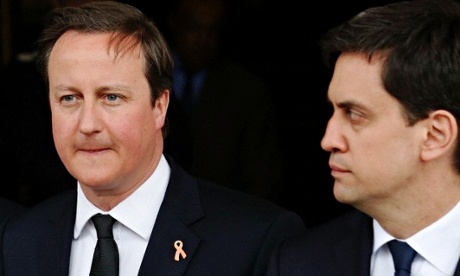
Angela Merkel has arrived at Number 10.
#Merkel and #Cameron at Number 10 pic.twitter.com/Koy9qmR7ex
— GermanEmbassyLondon (@GermanEmbassy) January 7, 2015
Remember the war of the dossiers? It was only two days ago, but it seems to have faded from the headlines quickly. The Tories published a dossier claiming Labour had unfunded spending commitments worth £20.7bn, and Labour responded with its own dossier saying the Tory claims were nonsense (because the supposed commitments were not commitments, or because the costings were wrong, or because they were funded). Late on Monday the Tories hit back with a rebuttal to the rebuttal, accusing Labour of abandoning 12 policies, changing seven more and getting their costings wrong with another 16. But by then journalists were losing interest, and those figures received little attention.
But the Tories haven’t given up. This afternoon they have released four letters from ministers to their Labour counterparts challenging them over some of the claims in the Labour rebuttal document. Mostly, they are reasserting points in the original dossier. At least two of the letters accuse Labour’s response of being “chaotic and confusing”.
Just to give you a flavour of what they say, there are four excerpts.
From Theresa May, the home secretary, to Yvette Cooper, the shadow home secretary
You have appeared to move away from your clear promise to establish a new Commissioner for domestic and sexual violence and women’s safety. Your press release on 21 September 2014 was explicit that a new Commissioner is needed to drive national standards and provision of specialist services. Is this no longer your position?
From Patrick McLoughlin, the transport secretary, to Michael Dugher, the shadow transport secretary
Your party has strongly opposed the abolition of Cycling England and Cycling Towns and Cities initiatives - which an answer to a parliamentary written question revealed saved £63m and would cost that amount to reinstate.
From Amber Rudd, the energy minister, to Caroline Flint, the shadow energy secretary
You have said that the half a million free home energy reports a year would be funded by the Energy Company Obligation. But in your 2014 speech at Labour conference you said that ‘every penny of the Energy Company Obligation’ would be used to ‘make 200,000 homes warm every year’. This money clearly cannot be spent twice, so could you please clarify how you would pay for this policy?
From Matthew Hancock, a business minister, to Chuka Umunna, the shadow business secretary
You have claimed that changing procurement rules to increase provision of apprenticeships could be done within existing budgets – despite clear analysis from Treasury officials showing that it will increase the cost of contract. Where will you find the cuts in procurement to pay for this?
I would post a link to the Labour rebuttal document, but unfortunately it doesn’t seem to be available online. AS
According the embassy, Cameron is now hosting a G7 business reception for Merkel.
#Merkel currently attending G7 business reception hosted by #Cameron after visiting @britishmuseum's #MemoriesOfANation exhibition
— GermanEmbassyLondon (@GermanEmbassy) January 7, 2015
In that last clip, you can see British Museum director Neil MacGregor showing Merkel and Cameron footage of East Berliners pushing through a checkpoint on the day the Berlin Wall fell in 1989.
Merkel replies: “This is the focal point, where I went half an hour later, through this point.” PO
The German embassy has posted this video of Merkel and Cameron’s visit to the British Museum:
#Merkel and #Cameron visiting impressive @britishmuseum exhibition on Germany. #MemoriesOfANation MT @RegSprecher https://t.co/LBOR32rH1V
— GermanEmbassyLondon (@GermanEmbassy) January 7, 2015
UK PM @David_Cameron remarks about principles of democracy (esp in light of Paris) w/German Chancellor Angela Merkel pic.twitter.com/fiPI9UxLpP
— Eileen Burbidge (@eileentso) January 7, 2015
Angela Merkel condemned the shootings as “barbarous”. Speaking at the British Museum, she said:
We strongly condemn these attacks and our thoughts go out to the French people, particularly to those who have lost loved ones in this horrendous attack.
This is an attack against the values we all hold dear, of freedom of the press, freedom in general and the dignity of man.
David Cameron called the attack an “appalling terrorist outrage” and said he felt “huge sympathy” for the families of those killed.
Cameron said:
We must never allow the values we hold dear, of democracy, of freedom of speech, to be damaged by these terrorists. We must stand against what they have done.
Merkel and Cameron have made a joint statement about the Paris attack at the British Museum today. We’ll have more details soon. PO
#Merkel & #Cameron make joint statement condemning today's appalling attack on our values in Paris pic.twitter.com/10j9pqSR08
— GermanEmbassyLondon (@GermanEmbassy) January 7, 2015
For all the talk about the G7, there are suspicions that Angela Merkel’s real aim in London today is to line up Neil MacGregor, the director of the British Museum, to head up a new arts centre in Berlin.
My colleague Charlotte Higgins has written this up in a post for Comment is free. She says Merkel should keep her hands off; we can’t afford to lose him.
In Britain there are legal safeguards in place to protect items of high cultural interest from being removed from these shores. Objects so protected need to meet at least one of what are called, in splendidly Sir Humphreyesque language, the Waverley Criteria. Which are: is the item so closely connected with our history and national life that its departure would be a misfortune? Is it of outstanding aesthetic importance? Is it of outstanding significance for the study of some particular branch of art, learning or history?
These criteria have hitherto been applied solely to things. But arguably it is time for a human exportstop. MacGregor may not in himself be of precisely outstanding aesthetic importance (the criterion known in the trade as Waverley Two), although one could surely make a case for his voice (Edinburgh-tinged, highly articulate, passionate, beloved of the listeners of Radio 4). But Waverley One and Waverley Three? Tick and double tick.
Updated
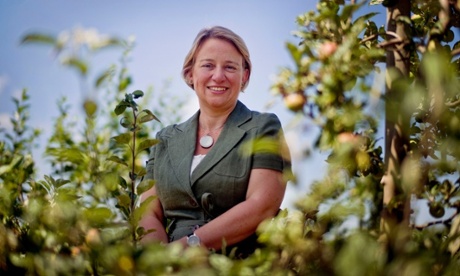
Whether or not there will be debates during the election campaign is still up in the air. The broadcasters have come up with a proposal, but David Cameron has said their idea is unfair because it includes Ukip’s Nigel Farage and not Natalie Bennett of the Greens.
Cameron has little to gain from the debates – Farage will probably come across well in them and Nick Clegg and Ed Miliband may be able to use them to increase their dire personal ratings, which can’t really get any worse – so he may have thrown a Green spanner in the works in order to prevent them happening.
But now Labour’s Sadiq Khan has said the Greens should be included. In an interview with the New Statesman, the shadow minister said:
I think they should happen and I think they [the Greens and Ukip] should be included. I’m relishing them; I think it’s an opportunity for the country to see Ed Miliband, to hear and see his passion, to hear and see the vision he has for the country and to hear and see that he thinks the best of the British public. I’m not sure why Cameron is so scared. I don’t understand why his advisers are bottling it.
I’ve asked Labour if this is now their official position, and will let you know what they say.
4.45pm update: A Labour spokesman has been in touch to say: “Our position is clear. We think David Cameron should get on and agree to these debates. Who takes part in them is a matter for the broadcasters.”
PO
Updated
The Press Association’s Sam Lister has posted some more pictures from the British Museum.
The PM and the German Chancellor looked at a VW Beetle on display in the entrance while some in the crowd whooped pic.twitter.com/owSlxIsZ3u
— sam lister (@sam_lister_) January 7, 2015
For Beetle buffs it was a type one 1953 #aircooled #wasser?neindanke pic.twitter.com/nj1Xigzn6W
— sam lister (@sam_lister_) January 7, 2015
Angela Merkel and David Cameron arrived at the British Museum to a round of applause from visitors pic.twitter.com/g27vpALovD
— sam lister (@sam_lister_) January 7, 2015
Angela Merkel has arrived in the UK, the German embassy reports. The embassy seems pretty excited about her trip to the British Museum, too.
#Merkel has arrived at Heathrow and is now on her way to Central London to meet with #Cameron at @britishmuseum pic.twitter.com/QcQUmL1PeZ
— GermanEmbassyLondon (@GermanEmbassy) January 7, 2015
Here she is meeting Cameron at the British Museum. PO
— GermanEmbassyLondon (@GermanEmbassy) January 7, 2015
Updated
Summary
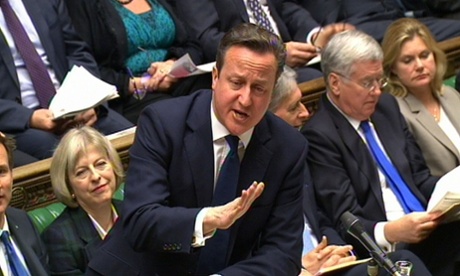
The day’s political developments have been overshadowed by the killings in Paris, which may end up changing Angela Merkel and David Cameron’s plans for this afternoon too. Nevertheless, here are the key events so far today:
-
Ed Miliband attacked the prime minister over the NHS A&E crisis at PMQs. The Labour leader said that rather than apologising to patients for the emergency, Cameron was blaming them for it. Cameron said he regretted any patient not being seen on time.
- But the PM also criticised Miliband, referring to a story claiming the Labour leader had said he was going to “weaponise” the NHS during the election campaign. Cameron described this as “the most disgusting phrase I have heard in politics”. Miliband did not deny having used the phrase.
- Cameron was asked who was to blame for the delay in publishing the Chilcot report into the Iraq war. Was it the White House or the cabinet secretary, asked Tory Sir Peter Tapsell. Cameron said the time of publication was not his decision. The report was “largely finished”, the PM said.
- Cameron said he was opposed to allowing voting at 16, but he would be happy to let the Commons decide this in a vote.
- Cameron said the government would do all it could to preserve the RAF chapel at Biggin Hill, which is dedicated to aircrews who took part in the Battle of Britain.
-
Chris Mould, chair of the Trussell Trust charity, told the work and pensions committee that benefit sanctions were contributing to the increasing use of food banks. Other witnesses criticised the government’s use of benefit sanctions.
- George Osborne has quashed Theresa May’s proposal for foreign students to have to leave the UK automatically after they graduate, the Financial Times has reported.
- Nick Clegg has named what he calls his “general election cabinet” - who will speak for the party during the election on each portfolio. As expected, he is confirming that Vince Cable won’t be the party’s Treasury spokesman. That job will go to Danny Alexander, the chief secretary to the Treasury.
- The latest poll for YouGov/the Sun shows Labour and the Tories neck and neck on 33%.
PO
PMQs and Hunt v Burnham - Verdict
David Cameron said today that, when he heard that Ed Miliband talked in private about wanting to “weaponise” the NHS, he thought it was “the most disgusting phrase” he had heard in politics. I wonder whether he had the same reaction when he first heard George Osborne come up with it.
As far as I know, Osborne is the man who introduced the concept of “weaponising” policy into British politics. Janan Ganesh writes about this in his biography of the chancellor and, actually, it’s a rather good way of describing how politicians can take an issue and turn it to their electoral advantage. Ganesh cites Osborne’s decision to describe employers’ national insurance as a “jobs tax” as an example, and I’m not aware of any evidence that Osborne has talked about “weaponising” health policy. But Osborne is a seasoned political operative who generally doesn’t seem to be held back by sentimental niceties. If he felt it necessary it weaponise the NHS, the Archbishop of Canterbury or even little baby Prince George, he would probably find a way.
So Cameron’s outrage was feigned. (Never take a politician seriously when they complain about someone politicising an issue. It’s like a sportsman complaining about his opponent being too competitive.) But was it effective? Some colleagues think that it is embarrassing for Miliband to be revealed as someone who talks about “weaponising” the NHS (Labour aren’t denying that he has said this), but I’m not so sure, and overall I felt he was on stronger ground than Cameron during the health exchanges. Miliband’s problem isn’t that he has “weaponised” the NHS as an issue; it is that Labour is rather poor at “weaponising” so many of the other policy proposals in its manifesto.
Cameron’s performance was poor because, when Miliband attacked him on the NHS, he started whinging about language and tactics. Faced with a weapon, it’s best to find a sharper weapon and throw it back. Or, failing that, put up a very strong shield.
And that takes us to Jeremy Hunt. Hunt’s main political task as health secretary has been to avoid the mistakes Andrew Lansley made, to keep the NHS out of the news as far as possible and to avoid antagonise health professionals. Obviously, he’s not doing well on the second front at the moment, but in the Commons he sounded calm and unflappable. That’s probably just what the Conservatives need from a health secretary at the moment. If you don’t agree, just imagine Michael Gove or Iain Duncan Smith doing the job. AS
Updated
PMQs - Twitter verdict
The Independent on Sunday’s John Rentoul felt David Cameron got the better of Ed Miliband today.
And with that, Cameron wins #PMQs.
— John Rentoul (@JohnRentoul) January 7, 2015
If EdM can't beat Cam on the NHS, the election is all over #PMQs
— John Rentoul (@JohnRentoul) January 7, 2015
That "weaponise" quote, which EdM didn't deny, is deadly to him. #PMQs
— John Rentoul (@JohnRentoul) January 7, 2015
Josh Lowe of Prospect magazine agreed.
Given that it was on "home turf" Ed didn't shine, there #PMQs
— josh lowe (@JeyyLowe) January 7, 2015
But many other tweeters gave the contest to Miliband.
From the New Statesman’s George Eaton:
A clear win for Miliband there: Cameron is going to have do better than crying "political football" as NHS crisis gets worse. #PMQs
— George Eaton (@georgeeaton) January 7, 2015
From the Guardian’s Gaby Hinsliff:
Round one on the NHS, I have to say, to Ed Miliband. PM lacked answers on failures of social care, closure of walkin centres etc #pmqs
— Gaby Hinsliff (@gabyhinsliff) January 7, 2015
From ITV’s Chris Ship:
Have to say that was a Miliband win. Not surprising he wants to make the NHS *the* election topic #pmqs
— Chris Ship (@chrisshipitv) January 7, 2015
From the Daily Mail’s James Chapman:
5-1 to Ed Miliband in #pmqs exchanges on NHS
— James Chapman (Mail) (@jameschappers) January 7, 2015
From Marcus Roberts of the Fabian Society:
Who won #PMQs? Well, a basic rule of politics is that winners don't complain about the other side "playing politics" with an issue...
— Marcus A. Roberts (@marcusaroberts) January 7, 2015
The Sun called it a draw:
#PMQs verdict: Battle lines drawn in first clash of 2015, but neither @Ed_Miliband or @David_Cameron came out top 3-3 http://t.co/rkqAFCl76Z
— Sun Politics (@Sun_Politics) January 7, 2015
James Forsyth of the Spectator noted that Nick Clegg was back at David Cameron’s side for PMQs today:
Clegg next to Cameron on the front bench for the first PMQs of the year
— James Forsyth (@JGForsyth) January 7, 2015
His colleague Isabel Hardman joined many in noticing a slip-up from the PM:
Unfortunate slip-up there from Cameron: talks about patients waiting for #AandE for four years, not hours #PMQs
— Isabel Hardman (@IsabelHardman) January 7, 2015
The Times’s Michael Savage spots some hypocrisy from Ed Miliband:
"Get rid of this useless prime minister," says Ed Miliband, who will not be deploying negative campaigning at this election. #PMQs
— Michael Savage (@michaelsavage) January 7, 2015
But many tweeters feel the tone of PMQs sat ill with unfolding news of the Charlie Hebdo killings in Paris.
The tone of today's PMQs seems completely disconnected given the magnitude of what has happened in Paris.
— Zac Goldsmith (@ZacGoldsmith) January 7, 2015
Rarely has the synthetic anger of PMQs felt less appropriate
— Chris Deerin (@chrisdeerin) January 7, 2015
PMQs can seem so small at times: debated Maria Miller's expenses at peak of Ukraine crisis, now bickering over NHS amid Paris carnage.
— Jeremy Cliffe (@JeremyCliffe) January 7, 2015
PO
The urgent question is now (finally) over. UQs normally last for 30 minutes, but this one has gone on for almost an hour and a half.
We’ll post a verdict on the exchanges, and a summary shortly.
Karen Lumley, a Conservative, says MPs should not play party politics with the NHS. Her opponents in Redditch are putting out leaflets saying she is systematically voting against the NHS, she says.
Hunt says NHS staff don’t want the NHS to be turned into a political football.
Labour’s Seema Malhotra asks why the coaliton scrapped Labour’s target designed to ensure everyone could get a GP appointment within 48 hours.
Hunt says Malhotra should ask why the Labour administration also scrapped it in Wales.
The problem with the target, he says, is that GPs gamed it, and stopped people making appointments more than 48 hours ahead. But some people wanted appointments that far ahead, he says.
Chloe Smith, a Conservative, says Labour is telling false stories about the NHS on leaflets in her constituency.
Hunt says, with the NHS under such pressure, all parties should act responsibly.
Labour’s Bill Esterson says a constituent described conditions at his local A&E as “a war zone”.
Hunt says there are pressures in the system. But we should remember that nine out of 10 patients are seen within four hours.
David TC Davies, a Conservative, says 92.6% of A&E patients are seen within four hours in England. In Wales, it is 83%. If Labour want to turn this into a political football, why don’t they play an away game and go to Cardiff.
Hunt agrees. Labour are not happy to talk about services in Wales, where they are in power, he says.
Hunt says he wants to ensure people are better looked after at home, so they don’t need to go to hospital.
David Lammy, the Labour former health minister, says he introduced the four-hour target. It was depend on various factors, including addressing delayed discharge, NHS Direct and other hospital targets. Will Hunt apologise for abolishing those other targets?
Hunt says he disagrees.
Barry Sheerman, the Labour MP, says the antagonism between trusts and commissioning services is destroying trust in the NHS.
Hunt says he thinks NHS organisations are collaborating better now than they did in the past.
Labour’s Gisela Stuart asks Hunt to make hospital performance figures available on a month by month basis.
Hunt says he agrees. He will see if mortality data can be made available monthly.
Andrew Percy, a Conservative, says he spent his Christmas volunteering with his local ambulance services. Moving to a community paramedical model, and using the skills of ambulance drivers more, would help, he says.
Hunt says he wants to better integrate ambulance services, GP services and 111.
Labour’s Diane Abbott says there is not proper coordination between health and social care.
Hunt says the solutions to these problems cannot all be introduced overnight.
But this government has got NHS providers to sit down and jointly plan social care.
Labour’s Derek Twigg asks why Hunt think A&E services are under such pressure.
Hunt says he has looked into this carefully. There are three key reason. First, the ageing population. Second, changing consumer expectations amongst young people, who want health care faster. And, third, a refusal by NHS trusts to do what they did in the past - cut corners to hit targets.
Hunt says the NHS is not a political weapon. It is there for patients.
Paul Burstow, the Lib Dem former care minister, asks if the Conservatives would deliver the extra £8bn the NHS needs to implement the Simon Stevens plan.
Hunt says the NHS asked for an extra £2bn last year. It got it. The government has said it accepts Stevens’ plan. But the government can only protect the NHS if there is a strong economy.
Labour’s Hazel Blears says she welcomes the Better Care Fund, but that it is not enough. There needs to be fundamental change in the way social care is delivered, she says.
Hunt says he agrees. The Better Care Fund is only a first step, he says.
Sir Kevin Barron, the Labour MP, asks about a pensioner in his constituency who was kept in hospital because a care package was not available for him at home.
Hunt says Labour should support the Better Care Fund package being introduced by the government to improve social care.
Kenneth Clarke, a Conservative former health secretary (among other jobs), says commentators did not predict that the ageing population would have this impact on services.
Hunt says the government needs a short-term plan, and a long-term plan. That is what it is doing.
Frank Dobson, the Labour former health secretary, asks Hunt if he agrees that the NHS 111 call handlers are referring far more people to A&E than the trained nurses who ran NHS Direct.
Hunt says it is important to keep the protocols for 111 under review.
Dr Sarah Wollaston, the Conservative chair of the Commons health committee, asks Hunt for an assurance that clinical priorities will come before targets.
Hunt says he agrees. Targets matter, but not at any cost. When Mid-Staffs was mistreating patients, it was mostly meeting its targets.
Hunt is responding to Burnham.
He says the extra money that has gone into hospitals has made a difference. A&E units are treating more people than before.
Burnham mentioned government failure in a letter yesterday. But this is not the time to play politics, he says. Yesterday Simon Stevens, the head of NHS England, said clinicians had done everything that could reasonably be expected to tackle demand.
On the issue of ambulance response times, Hunt says Labour was consulted about this, and offered no negative feedback.
Hunt says he just asked for clinical advice about what would be best for patients. But Labour is just trying to scaremonger, and frighten patients.
Shouldn’t Labour think about what is best for patients.
Ed Miliband says the coalition’s reforms were to blame.
But England, which introduced the reforms, has a better A&E performance than Wales, which did not introduce them.
Andy Burnham says the situation cannot be allowed to continue. Patients and staff deserve better answers.
Fourteen hospitals have declared major incidents. What does this mean for people?
What contingency plans will be put in place to protect the public?
Ministers blame unprecedented demand. But why is there unprecedented demand? It is to do with the difficulty of getting GP appointments, the closure of walk-in centres, or the lack of social care.
What is the status of Hunt’s plans to relax 999 response times?
What discussions have been had with the police about the police being asked to take patients to A&E?
Will Hunt accept Labour’s plan for an urgent summit of all services involved in A&E care?
Jeremy Hunt is giving his response now.
He says there 350,000 more over-75s now than there were four years ago.
He says more patients are coming to A&E. And there is an increase in emergency admissions.
The government is investing money to improve services, he says.
He concludes by thanking NHS staff for what they do.
Hunt responds to urgent question about the A&E crisis
Andy Burnham, the shadow health question, asks Jeremy Hunt to make a statement on the number of major incidents declared at A&E units.
Labour’s Sir Gerald Kaufman asks about a constituent who suffered from a passport backlog.
Cameron says he will look at this case. But Theresa May is doing a fantastic job, he says.
Bob Neill, a Conservative, asks if the RAF chapel at Biggin Hill will be preseved.
Yes, says Cameron. The Battle of Britain was one of the most important events in history. The government will do whatever it takes to protect it.
Cameron says Andy Burnham has been telling TV stations today he would spend more money on social care. But Ed Balls said earlier that there would be no extra money for local government under Labour. He reads out a quote from Balls. Labour are in “total chaos”.
Labour’s Kalid Mahmood asks Cameron to apologise again to people let down by the NHS.
Cameron says he regrets any patient not getting the treatment they need. But people can see one party is trying to improve the NHS. Another is trying to exploit it, or “weaponise” it. Cameron describes this as “the most disgusting phrase I have heard in politics”.
Sir Peter Tapsell, the Conservative father of the Commons, says he agrees with Lord Hurd who said in the Lords yesterday it was a “disgrace” the Iraq report was not being published. Who is to blame? The cabinet secretary, or the White House.
Cameron says the report is largely finished. But there is a process that involved those being criticised being given the chance to respond. This is not his decision, he says.
Updated
Labour’s Heidi Alexander says half of ambulances in London do not arrive in the eight minutes deadline.
Cameron says new drivers are being hired. The government decided to reform the NHS and put the money in. Labour opposed both moves, he says.
Cameron says the UK is the most attractive location for investment in offshore wind technology.
Labour’s Lisa Nandy asks about a cancer patient in her constituency. Why do so few nurses think Cameron is doing a good job?
Cameron says he applauds nurses, particularly the one in Wigan who chased the health secretary down a corridor to tell him something. There are 9,000 more doctors in the NHS, he says.
Elfyn Llwyd, the Plaid Cymru MP, asks why the Iraq inquiry report is taking so long. Could be be published in March?
Cameron says he shares Lloyd’s concern. If Labour had set it up earlier, it would have reported earlier. But it is not a matter for him, he says.
Labour’s Chi Onwurah says not one hospital in the north east is meeting the A&E waiting targets. But the government focused on a reorganisation, putting profits before people.
Cameron says, in Newcastle, there are 191 more doctors and more than 600 more nurses.
Labour’s Virendra Sharma asks Cameron why he won’t accept Labour’s plan to hire more GPs.
Cameron says, from what he’s read in the last 24 hours, he thought Labour’s plan was to tax London and spend all the money in Scotland.
Seriously, he says, in Sharma’s Ealing constituency almost all A&E patients are being seen within four hours.
Henry Smith, a Conservative, asks what Cameron can do to help business.
Cameron says the government is cutting the jobs tax, abolishing employee national insurance contributions for under-21s and taking other measures.
Labour’s Anas Sarwar says the price of oil has fallen to $50 a barrel. That is bad news for the Scottish oil economy. The SNP said it would be much higher. Will Cameron meet the industry to see if support can be provided.
Cameron says he agrees. This helps make the case for the United Kingdom. The SNP were utterly misguided, he says.
Cameron says he is opposed to allowing voting at 16, but he would be happy to let the Commons decide this in a vote.
Snap PMQs verdict
Snap PMQs verdict: Cameron had the single best line, about Miliband wanting to “weaponise” the NHS and it not being a weapon, but that’s a point about political spin, and Miliband’s line about Cameron not apologising to patients, but blaming them, was almost as good (even though, as far as I recall, Cameron wasn’t blaming them) and, overall, the Miliband onslaught was pretty effective. AS
Updated
Miliband says there is one very simple solution: “Get rid of this useless prime minister.” Wasn’t it obvious that spending £3bn on a reorganisation would harm patient care?
Cameron says he has cut the amount spent on bureaucracy. Miliband apparently said to Nick Robinson he wanted to “weaponise” the NHS. That’s a “disgusting” thing to say. The NHS is not a weapon.
Miliband says what’s disgusting is a prime minister who said people could put their trust in him on the NHS. He’s betrayed that trust. He is in denial over the crisis. If people want to solve the crisis, they must get rid of Cameron.
Cameron says Miliband has shown he is using this as a political football. Look at Labour’s record in Wales. The real risk is the damage Labour’s economic record would do to the NHS.
Miliband says Cameron is not apologising to patients; he is blaming them. When Cameron closed walk-in centres, wasn’t it obvious that more people would go to A&E.
Cameron says Andy Burnham used to say more money should not be spent on the NHS. Miliband has asked three questions, but has not made suggestions. He is playing politics with the NHS.
Miliband says it was obvious that cutting social care would put more pressure on A&E.
Cameron says, again, Miliband has no solutions. If he had solutions, he would implement them in Wales.
Updated
Ed Miliband backs what Cameron said about Paris. We stand united in our support for free speech, he says.
Does Cameron agree the NHS is facing a crisis?
Cameron says it is facing huge pressure. It is facing the winter with more doctors, more nurses and more money than before. We should recognise the pressures that are there, but put in place short-term and long-term solutions.
Miliband says in 2011 Cameron said he would not go back to the days of people waiting hours for A&E. Will he apologise for breaking that?
Cameron says he regrets any patient not being seen on time. But the NHS is dealing with more patients than every before. The government will go on providing the money and resources it needs.
Martin Horwood, the Lib Dem MP, mentions a constitutent being sent to A&E by the NHS 111 service. Why are so many people being sent their by the helpline?
Cameron says Gloucester has had some of the £700m extra money provided to the NHS this winter.
On the 111 service, he says 27% of users say they would have gone if it had not been there. But, in the event, only 7% of callers do go to A&E.
David Cameron starts by condemning the “barbaric” attack on the office of Charlie Hebdo. We stand with the people of France, and stand squarely for free speech, he says.
I’m not sure if this is fair, but I’ll pass it on anyway.
DC looking tired & unhappy as he chats to Jeremy Hunt ahead of #PMQs Wonder why?
— Fiona O'Donnell MP (@FionaODonnellMP) January 7, 2015
PMQs
PMQs is about to start.
Until about half an hour ago we were expecting an all-out shouting match about the state of the NHS. But, in the light of the killing of 11 people in the attack on the offices of the French satirical magazine Charlie Hebdo in Paris, the mood is likely to be more restrained.
I will be covering the exchanges, and then the urgent question on the A&E crisis immediately afterwards. AS
David Cameron has added his thoughts.
The murders in Paris are sickening. We stand with the French people in the fight against terror and defending the freedom of the press.
— David Cameron (@David_Cameron) January 7, 2015
Deputy prime minister Nick Clegg and foreign secretary Philip Hammond have tweeted in response to the attack on the offices of the French satirical magazine Charlie Hebdo in Paris. Eleven people have been killed. My colleagues are covering developments over on this live blog.
Horrible news of a barbaric attack on freedom of speech in Paris. My thoughts are with the victims, their families and their colleagues.
— Nick Clegg (@nick_clegg) January 7, 2015
Appalled to hear news of apparent terrorist attack in Paris. My thoughts are with the family and friends of those killed.
— Philip Hammond (@PHammondMP) January 7, 2015
Benefits sanctions contributing to increasing use of food banks, MPs told
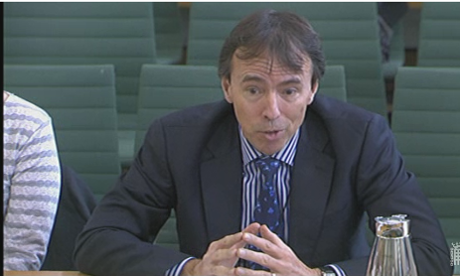
The Commons work and pensions committee is now taking evidence from another group of witnesses, including Chris Mould, chair of the Trussell Trust, and David Webster, a research fellow at the University of Glasgow.
Here are some of the key points from Twitter.
-
Mould said sanctions were contributing to the use of food banks and that some decisions were very unfair.
BBC Parliament - Benefit Sanctions Policy and the Oakley Review - Live now - Chris Mould Trussell Trust - sanctions causing use of foodbanks
— Peter Hale (@petervhale) January 7, 2015
Chris Mould of Trussell Trust food bank says charity told of "very disproportionate decisions" on sanctions "spread right across country"
— Matt Foster (@mlpfoster) January 7, 2015
-
Webster said the sanctions regime was like a “secret penal system”.
benefits sanctions has become "a parallel secret penal system", Professor Webster tells DWP select committee
— Patrick Wintour (@patrickwintour) January 7, 2015
There will be an urgent question in the Commons at 12.30pm about the A&E crisis.
Shadow Health Secretary Andy Burnham has been granted an urgent question in the House of Commons on A&E department pressures in England
— Sky News Newsdesk (@SkyNewsBreak) January 7, 2015
MPs take evidence on benefit sanctions
The Commons work and pensions committee has been holding its first evidence session as part of its inquiry into benefit sanctions. During the first hour it took evidence from Matthew Oakley, who conducted a review of jobseekers’ allowance sanctions for the Department for Work and Pensions; Tony Wilson, policy director from the Centre for Economic and Social Inclusion; Philip Connolly, policy and communications manager for Disability Rights UK; Kirsty McHugh, chief executive at the Employment Related Services Association; and Paul Farmer, chief executive at Mind.
Here are some of the key points from the first hour.
-
Oakley called for a wide-ranging review of the impact of benefits sanctions.
DWP independent reviewer of JSA sanctions tells select committee govt should undertake stock-take of impact of sanction reforms.
— Patrick Wintour (@patrickwintour) January 7, 2015
DWP inquiry on benefit sanction told lack of systematic research on sanctioned going into work, black economy or turn to family/food banks
— Patrick Wintour (@patrickwintour) January 7, 2015
-
Wilson said the use of sanctions for people claiming employment and support allowance should be suspended.
.@tonywilsonCESI tells @CommonsWorkPen that #sanctions for people on #ESA should be suspended until current practice is better understood
— Tom Pollard (@PollardTom) January 7, 2015
Witnesses call for sanctions on ESA (a key benefit for disabled) to be suspended. 4800 now being sanctioned a month, many mentally ill.
— Patrick Wintour (@patrickwintour) January 7, 2015
-
Farmer told the MPs that the DWP was ignoring its own rules on sanctions.
DWP is ignoring its own guidance including contacting GPs before deciding whether to sanction ESA claimants, select committee told by MIND.
— Patrick Wintour (@patrickwintour) January 7, 2015
Farmer also said there was no enough protection for people with mental health problems.
.@paulfarmermind tells @CommonsWorkPen there are not enough protections in place for people with #mentalhealth problems around #sanctions
— Tom Pollard (@PollardTom) January 7, 2015
.@paulfarmermind tells @CommonsWorkPen that threat of #sanctions are helping people with #mentalhealth problems - they're making them ill
— Tom Pollard (@PollardTom) January 7, 2015
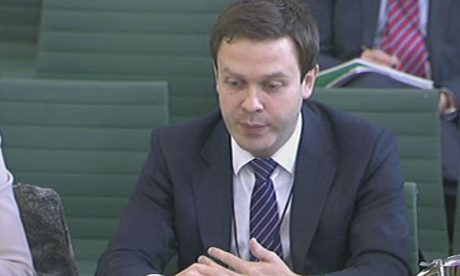
Ms May, home secretary, wanted the Conservatives to include the measure in their election manifesto, arguing that tougher controls were needed on non-EU students who she says are a key driver of net migration.
Her proposal that anybody entering Britain on a student visa should be required to leave the country when they graduate, and have to apply for a new visa if they wanted to work in the country, was attacked by university and business chiefs, including Sir James Dyson.
But senior Tory officials told the Financial Times the measure will not be included in the party’s manifesto, with Mr Osborne a leading voice in warning that the move would be damaging to the British economy.
“We have a policy that international students can stay when they graduate if they find a graduate-level job paying £24,000 a year,” one Tory official said. “That remains the policy.”
On the Today programme David Willetts, the Conservative former higher education minister, welcomed Osborne’s intervention.
I don’t think it was a good idea. It was never government policy and I’m pleased that, judging by these press reports today, it’s not going to be Conservative policy at the next election. Attracting overseas students to study in Britain is one of the great British successes. We make friends around the world and we make a lot of money from them.
But he also said he thought the £24,000 salary threshold for foreign graduates who want to stay was too high. The rules should be relaxed, he said, to make it easier for foreign graduates to stay.
Getting that kind of money in London and the south east is easier than earning it as your first job in the Midlands or the North. So this policy has the effect of sucking overseas graduates into London and the south east and I personally think that we should allow some flexibility, with rather lower wage requirements in other parts of the country, but that’s my personal suggestion.
I’ve taken the quotes from PoliticsHome. AS
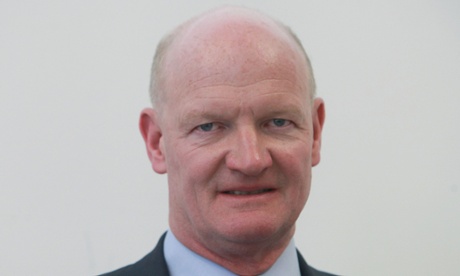
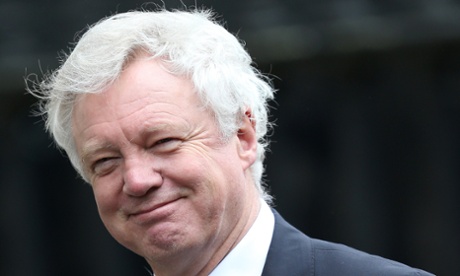
On the Today programme this morning David Davis, the Conservative backbencher, said that David Cameron’s main aim during his talks with Angela Merkel today was to persuade her that the prospect of the UK leaving the EU was genuine. Cameron had to persuade her that the “prospect of us leaving is real, it is not just sabre-rattling”, Davis said.
We have got to get across to her that there should be no mutual misunderstanding about this. That’s the first thing to get across, that this is not sabre-rattling, this is for real and the changes are material.
David McAllister, a member of Merkel’s Christian Democratic Union party, whose father was Scottish, told the programme that Merkel would listen to British concerns. When he was asked what he would say to Cameron if he were Merkel, he replied:
I would always say that Germans are ready to talk to London about British demands in a fair and reasonable manner. No reasonable politician can ignore the fact that during the next five years we will have to find solutions for the political concerns of the United Kingdom. We have to do this if we want to keep the United Kingdom within the European Union.
So I will work and many others will work for a fair deal with Britain but it must be a deal that accepts the specifities of the United Kingdom in the EU on the one hand while allowing the member states of the eurozone to integrate further.
What the papers say
A flick through the front pages is a rather alarming experience this morning – most of them are given over to apocalyptic warnings about the state of the NHS, as these tweets show.
Papers right across the political spectrum lead with the state of A&E and the NHS (via @suttonnick)... pic.twitter.com/jpBCu99Rst
— The Media Blog (@TheMediaTweets) January 7, 2015
Wednesday's Independent front page: In critical condition #tomorrowspaperstoday #bbcpapers pic.twitter.com/Zkz3ET69fG
— Nick Sutton (@suttonnick) January 6, 2015
(Interestingly, the Daily Telegraph and the Guardian both buck the trend, “splashing” instead on George Osborne’s attempts to make sure the falling oil price is passed on to consumers.)
Many of the papers look ahead to Angela Merkel’s visit to Britain today, the Telegraph noting on its front page that the German chancellor has failed to set up a meeting with Labour leader Ed Miliband while she’s here.
But if you are looking for clarity on what Merkel and David Cameron will discuss and decide today, you’ve come to the wrong place.
The Telegraph reports confidently that Merkel will tell the prime minister that “major treaty change will be a ‘no go’, despite Mr Cameron’s warning that he is prepared to take Britain out of Europe if he cannot secure sufficient reforms. She will instead say that any restrictions on migrants and access to welfare must be within the bounds of existing European Union laws.”
But the Times says Merkel will give ground on benefits: “Angela Merkel is poised to support British plans to cut millions of pounds of benefits sent abroad to the children of migrants,” it reports. Merkel may also “indicate flexibility on Mr Cameron’s demand to drop the EU’s formal commitment to ‘ever closer union’,” too, the paper says. Free movement is her red line, though.
Mats Persson in the Telegraph reckons that “Merkel has more to lose from Britain dropping out of the EU than is often assumed”.
Without Britain, the EU market would shrink by 15 per cent; some €284 billion (€220 billion) in EU exports could face extra costs; the EU budget would be some €15 billion lighter; and the bloc would lose one of its only two serious military powers.
But Cameron should not get too excited: “This does not mean Germany will agree to whatever Mr Cameron demands. A cap on EU migration, for example, is probably a genuine German red line.”
The Financial Times feels Cameron should change the record and talk to Merkel about how the eurozone can return to growth.
Like many other EU leaders, Mr Cameron will press Ms Merkel to boost investment in the German economy and liberalise its unreformed sectors.
The Daily Mail is the most aggressive, saying the eurozone is in such trouble that Merkel “needs any friend she can find”. Reporting that Merkel persuaded Cameron last year to drop plans for a cap on EU immigrants coming to Britain, the paper snarls: “It’s his turn to do the talking – and Mrs Merkel’s to listen.”
Perhaps the Sun’s prediction for the visit is most likely to have hit the nail on the head. The paper reports a “German government source” saying: “She has come to listen, and she will listen closely.”
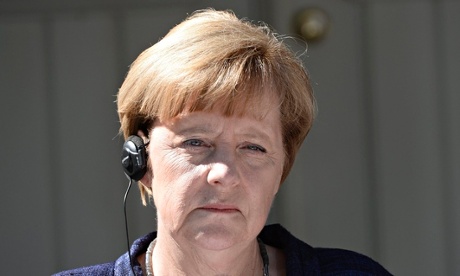
I also had a quick scan through the German press, which I’m sorry to report is more concerned with the upcoming Greek election and the Pegida anti-Islam movement than with Cameron and Merkel’s meeting. The Frankfurter Allgemeine does note the trip is taking place, but reports that the two leaders will discuss “the state of the world economy and the preparations for the G7 summit in Bavaria” – no mention of benefits tourism, immigration, or the threat of a “Brexit”. The paper does add that Merkel will be visiting the British Museum’s Germany: Memories of a Nation exhibition, though.
Elsewhere in the press, the Financial Times goes in search of “the real Ed Miliband”.
Much of this is familiar stuff – his self-belief, awkwardness with popular culture, his appetite for policy detail – and the few new details are mostly about his personal life:
He has little interest in fine dining — lunch is often a half-eaten sandwich — and even less in alcohol. One former ally recalls being served glasses with minuscule quantities of wine from a half-empty bottle at the Miliband home: “It was like receiving communion,” he says.
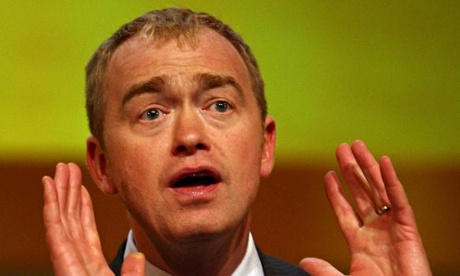
Meanwhile, the Lib Dems seem to be looking ahead to a post-Clegg era. The Independent reports that party president Tim Farron’s chances have been boosted by his picking up of the foreign affairs brief for the duration of the election campaign (see below).
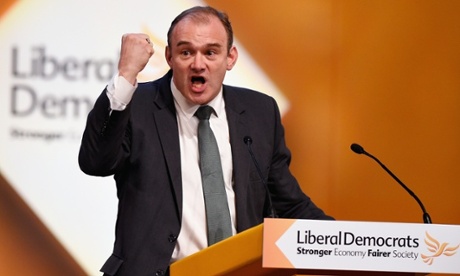
And the Guardian reports that Ed Davey, the climate change secretary, has murmured: “If one day it falls to me to lead it [the party], then obviously, I’d like to do that.”
Clegg himself – still in office – sets out his stall for the election in the Independent, presenting the Lib Dems as the best of both worlds:
The Liberal Democrats will borrow less than Labour and cut less than the Conservatives. And because we are not planning to shrink the State like the Tories, or re-inflate the State like Labour, we won’t have to cut as much, or spend as much on debt interest, as they will, meaning we can give the NHS and our schools the funding they need.
You can read all today’s Guardian politics stories here. And all the politics stories filed yesterday, including some in today’s paper, are here.
As for the rest of the papers, here’s the PoliticsHome list of top 10 political must-reads, and here is the ConservativeHome round-up of all today’s political stories. PO
Updated
Lord Ashcroft’s philanthropy continues. Having spent a fortune on polling in 114 individual constituencies, he has revamped his website so that the figures are now easy to find on a constituency by constituency basis. It’s definitely worth a look.
As he points out in a post for ConservativeHome, this data could do wonders for tactical voting.
As Tim Montgomerie has pointed out, the availability of this data means that tactical voters can be better informed than ever before. Voters in Sheffield Hallam, for example, will note that Labour look best placed to unseat Nick Clegg in a constituency that the Lib Dems have traditionally – if not, recently, very closely – contested with the Conservatives (indeed, they may well bump into Miliband out canvassing).
Conservatives in both Dudley North and Great Grimsby will see that although their party came second by less than a thousand votes last time round, UKIP now appear to offer the best chance of unseating Labour.
Lib Dems considering Labour in North Cornwall will know their seat is on a knife edge, and that their switch would make a Tory gain more likely.
Labour voters in Thanet South who do not wish Nigel Farage to represent them in Parliament will observe, however reluctantly, that to keep him out they will have to vote Conservative.
Cameron and Merkel's joint statement ahead of today's meeting
For what it’s worth, here’s the joint statement David Cameron and Angela Merkel issued ahead of today’s meeting.
You’ll notice that benefit rules for EU migrants, which has become the focus of Cameron’s planned EU renegotiation, doesn’t feature at all.
We meet to discuss key issues to advance our common agenda, in particular with regard to the German G7 presidency. As partners with growing economies, we must work with our European neighbours, G7 partners and others to secure the global recovery and to ensure that we come out of the financial crisis stronger than we were at the start.
Our aim is to increase economic growth and create prosperity for our citizens and this will be the focus of our discussions today. In the G7, we will jointly address global issues including climate protection and lessons learnt from the Ebola crisis as well as other health issues.
At the same time, we must do more to make the EU more stable and competitive than it is today. We have both taken steps at home to consolidate our public finances and it is important that we continue to pursue this long-term plan. We must do more to harness the potential of the single market and reduce regulation that is hampering business. We must also dismantle further barriers to trade, in particular by agreeing an EU-US trade deal in 2015, which was launched at the UK’s G8 summit in Lough Erne.
Clegg names his general election team
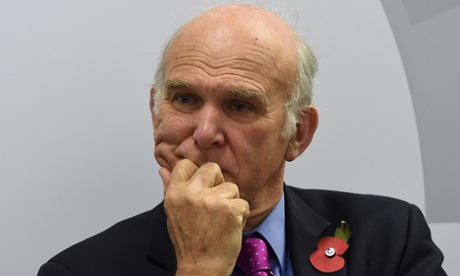
Nick Clegg has named what he calls his “general election cabinet” - who will speak for the party during the election on each portfolio.
As expected, he is confirming that Vince Cable won’t be the party’s Treasury spokesman. That job will go to Danny Alexander, the chief secretary to the Treasury.
Two other key appointments are Tim Farron covering foreign affairs, and Lynne Featherstone covering the Home Office.
As Naomi Smith, chair of the Social Liberal Forum, points out, a survey of Lib Dem members for Lib Dem Voice last year found that 65% of them want Cable to be the Treasury spokesman.
At least 65% of Lib Dems think it's wrong to pick Danny over Vince as economic spokesperson for the General Election http://t.co/wH0qazneiI
— Pimlicat (@pimlicat) January 7, 2015
Updated
For the record, here are the latest YouGov GB polling figures.
Labour: 33% (down 1 point from YouGov yesterday)
Conservatives: 33% (up 2)
Ukip: 13% (down 1)
Greens: 8% (no change)
Lib Dems: 7% (no change)
Government approval: -21(up 3)
According to Electoral Calculus, this would leave Labour the largest party, but three seats short of a majority.
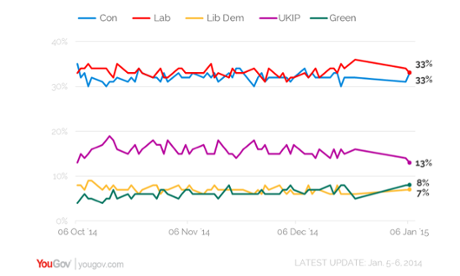
According to Mike Smithson, this is Ukip’s lowest figure since October.
October 6th - last time that UKIP were as low as 13% with @YouGov pic.twitter.com/XfMClrsm8D
— Mike Smithson (@MSmithsonPB) January 7, 2015
Updated
To adapt an old joke, today we’re going to see the world’s most powerful conservative leader holding court at 10 Downing Street. David Cameron is going to be there too.
For British readers, the most interesting aspect of Angela Merkel’s visit may be what the German chancellor has to say about Cameron’s demands for an EU renegotiation. But this is not her top priority and she is actually here to talk about this year’s G7 summit, which she’s chairing. Still, she’s the most powerful leader in Europe and she will be holding a joint press conference with Cameron late this afternoon. I’ll be covering it live.
There are four good articles previewing the visit in today’s Guardian.
David Cameron will on Wednesday host Angela Merkel at Downing Street amid signs of rising concern in Berlin over the prime minister’s demand for treaty changes.
In a joint statement ahead of the German chancellor’s visit, which will include a tour of the British Museum’s German history exhibition with its director, Neil MacGregor, the two leaders said they were committed to advancing a common agenda for making the EU more competitive.
But Downing Street confirmed that Merkel and Cameron would use their first substantive bilateral talks since the prime minister’s speech on EU immigration at the end of November to discuss his plans to reform the EU ahead of a planned UK referendum in 2017.
Their talks come as concerns arise in Berlin about Cameron setting the bar on EU reforms unrealistically high after having insisted over the weekend that he would demand “full-on” treaty change.
When John Major gave a much-hyped speech in Berlin in November, Merkel’s top brass shunned the event and the former prime minister’s “warning” wasn’t mentioned in a single German newspaper the next day.
More often than not, the impression was that Britain was not actually seeking a dialogue with Germany but with the British press. A week after Major’s visit, deputy prime minister Nick Clegg rolled into town in an incongruous eight-car motorcade with blacked-out windows. Notionally, the deputy PM had come to Berlin in search for lessons for Britain’s post-industrial north. But it emerged that the main objective of the trip was to stage Clegg’s own “intervention” on the EU migration debate, calling for a cut in child benefits for migrants who leave their offspring in their home country.
Had Clegg really been looking for a dialogue rather than a launchpad, he would have learned that Germany has actually tried this tactic – by restricting child benefit payments to Turkish and Yugoslav guest workers in 1975. (The view in hindsight is that it didn’t work because it incentivised migrant workers to bring their families with them.)
Cameron, who has never shown much flair for foreign policy, is increasingly narrowly focused on a May election that could spell political oblivion. Merkel, in contrast, halfway through her third consecutive term in office, is juggling multiple international challenges with the self-assurance of a leader without peers in the EU who represents Europe’s biggest economy. Like France’s weakened president, François Hollande, Cameron is reduced to reacting to a policy agenda directed not from London, Paris or Brussels, but from Berlin.
If politics were like boxing, meetings between national leaders would be arranged according to weight. In the asymmetrical world of international relations, however, disparity is the norm rather than the exception. So it is with Angela Merkel and David Cameron, who confer together in London on Wednesday. The chancellor is the heavyweight contender, while the prime minister would rate as middleweight at most. The difference, unfortunately, is not just a reflection of the strength and size of the two countries concerned. It is also a measure of the stature of these two politicians.
We’ll be covering the visit, and the reaction to it, in detail.
But, as usual, we’ll be covering the other politics too. Here’s the agenda for the day.
9am: Stephen Crabb, the Welsh secretary, gives a speech on the economy.
9.30am: The Commons work and pensions committee takes evidence from experts as part of its inquiry into benefits sanctions.
9.45am: Nicky Morgan, the education secretary, gives evidence to the Commons education committee on careers guidance.
10am: Ed Davey, the energy secretary, gives evidence to the Commons energy committee on the Lima climate change talks.
10.30am: Liz Truss, the environment secretary, speaks to the Oxford Farming conference.
12pm: David Cameron faces Ed Miliband at PMQs.
3pm: Cameron and Angela Merkel visit the Germany exhibition at the British Museum.
4.50pm: Cameron and Merkel arrive at Number 10 for talks.
5.45pm: Cameron and Merkel hold a press conference.
I’m Andrew Sparrow (AS) and I will be writing the blog today with Paul Owen (PO). Where it matters, we will use initials to show how has written each post. If you want to follow us on Twitter, I’m on @AndrewSparrow and Paul is on @PaulTOwen.
Updated