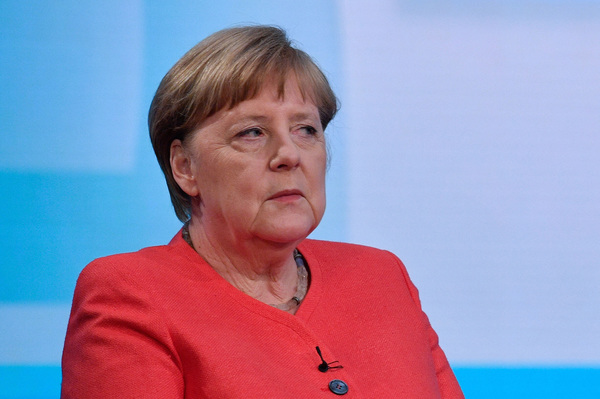
BERLIN — Chancellor Angela Merkel imposed tougher limits on public and private gatherings Monday as Germany struggles to stem the coronavirus spread.
Merkel and the premiers of Germany's 16 states agreed that people should refrain from all unnecessary social contact, including get-togethers at home and in public spaces.
"A turning point hasn't been reached" in Germany's outbreak, Merkel said on Monday after more than five hours of talks. "Contact restrictions are the recipe for success. We need to cut back even more in order to achieve our goals."
Merkel and state premiers plan to reconvene on Nov. 25, days before current restrictions are due to end, and lay out a plan for the coming months, she said.
Without significant improvement in containing the disease before then, the German leader will face pressure to toughen and extend curbs, which could threaten Christmas shopping and increase government spending to prop up affected businesses.
Two weeks into a partial shutdown — which closed bars and restaurants but kept schools and most shops open — Germany's contagion rates are still more than double the level authorities have determined to be manageable. Even with tentative signs that the wave is cresting in Europe, the outbreak is still worse than the initial phase.
With consumers unsettled, Europe's largest economy could stagnate or even shrink in the final three months of the year, the Bundesbank said on Monday. While current curbs are less stringent than a national lockdown in the spring, Germany's exports are suffering from a resurgence of the virus across major industrial countries.
After declining significantly through July, the number of coronavirus cases began ticking up again across Europe in early August, spread by travelers returning from vacation and slack adherence of distancing and hygiene rules. While Germany has far fewer cases and deaths than countries such as the U.K., France and Italy, Merkel's government has warned that a surge in patients could overload the health system.
Aside from the restrictions on gatherings, Germany will provide people over 65 and at-risk individuals 15 FFP2 face masks to give them extra protection during the winter.
Amid news of promising vaccine trials, the government is also preparing for a widespread rollout and plans to get immunization centers ready to operate at short notice.
Germany's strategy to contain the virus has been less severe than in countries such as Austria, where the government will shut schools, most stores, and services such as hairdressers starting Tuesday.
But pressure is rising. Infections in Germany have surged about 50% since the end of October, and the number of COVID-19 patients in intensive care has shot up 70%.
Merkel last week opened the door to extending the current measures into December, warning again over this weekend that Germany faced difficult winter months ahead. Economy Minister Peter Altmaier predicted that the country will have to live with "considerable restrictions" for at least the next four to five months.