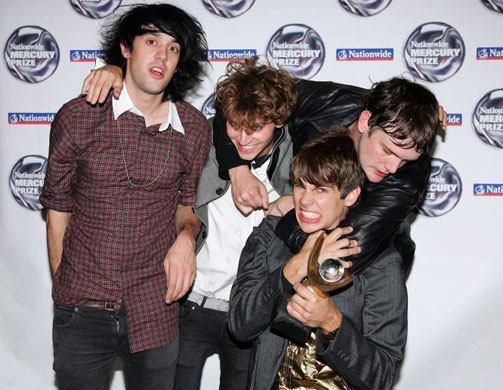
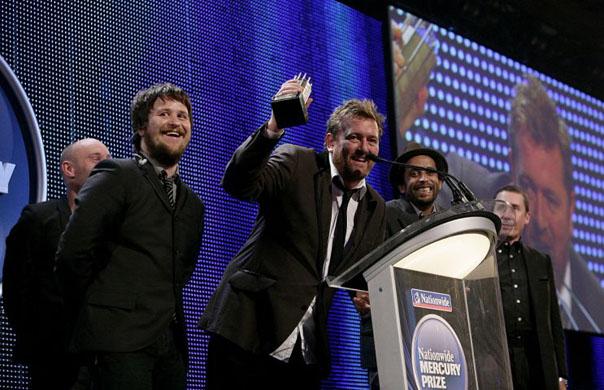
1992 - Primal Scream. The band won the inaugural prize for the genre-bending album Screamadelica. Since that time the band have rediscovered their love of Gram Parsons, Ministry and mid-70’s Rolling Stones, though not necessarily all at the same time. Singer Bobby Gillespie has also done the drugs/hang-with-Kate-Moss thing, but now prefers to complain about noisy neighbours down the road.Photograph: Terry Richardson/PR1993 – Suede. The pioneers of Britpop, Suede won the award with their debut album, Suede, sparking a rush of imitators naming their LPs after animal products. Matching the mewling vocals of Brett Anderson with the melodic guitars of Bernard Butler, the band also played the androgynous card like no one since Bowie. Photograph: PR/PR1994 - M People. The Manchester pop-dance combo were led by veteran DJ Mike Pickering but fronted by the booming voice of Heather Small, and had the knack of crafting a catchy tune that could also accompany you down the cheese aisle in Asda. Elegant Slumming was the name of their winning album; the name of their least prominent member was Shovell.Photograph: Tibor Bozi/Corbis
1995 – Portishead. Another eponymous winner (though they were themselves named after a small town 12 miles from Bristol), the trip-hop collective effectively made another soundtrack for the Third Man and everybody lapped it up. You couldn’t drink a cup of Carte Noir coffee in '95 without hearing this album, which was dominated by Beth Gibbons’s smoky vocals. Like Winehouse without the beehive. And other things. Photograph: David Lefranc/Corbis1996 – Pulp. If there were ever to be a Mercury of Mercurys then Different Class might well be the Midnight’s Children of the bunch. Smart, sardonic and piercingly contemporary Jarvis Cocker tore into John Major’s classless society with a fervent hunger. This album, and a little bit of onstage bum-waggling, helped to turn Jarvis from indie striver to national treasure. In an act befitting such a title, he now lives in Paris. Photograph: PR1997 - Roni Size/Reprazent. 1997 was the year that drum’n’bass ruled the world. Or, at least, sweaty former air hangars in the home counties. Roni Size was at the musical end of the genre, and New Forms was almost as popular with punters as it was with critics. Perhaps the shift came when Roni chose to add live instrumentation to his sound, for while his live shows were popular his follow-up album was not. The birth of The Curse of the Mercury Prize can be fixed to this time. Photograph: Sean Smith/Guardian1998 – Gomez. The Curse reached its apex in '98 with Gomez and Bring it On. A frighteningly talented group of neo-bluesmen, the band were barely out of their teens when they released Bring it On. It was a universally popular winner, but then it all went wrong with follow-up albums Liquid Skin and the bizarrely-titled In Our Gun. (Shh.. Let’s not mention Split the Difference.) It is said the band are popular in the States, but since when has that counted for anything? Photograph: Sean Smith/Guardian1999 - Talvin Singh. This year’s winning album was OK. Which, in retrospect, was appropriate. This was the year in which white people heard about bhangra and also the year tabla player and producer Singh released his reinterpretation of Indian classical works, shoved through the almost obligatory filter of breakbeats and the odd bit of scratching. After his triumph, Singh succumbed to The Curse. Photograph: Rebecca Naden/PA2000 - Badly Drawn Boy. If you’re looking for the best title on a Mercury winner, then this is it. The Hour of Bewilderbeast was Damon Gough’s first outing and chock-full of uplifting melodic numbers celebrating beauty. Sung by a small stocky man with a bushy beard wearing a woolly hat, which was in no way incongruous. Gough followed this with the just-as-popular About A Boy soundtrack and, thereby escaped the curse.Photograph: James Arnold/PA2001 - PJ Harvey. Perhaps the closest the Mercury has come to handing out a lifetime achievement award, Polly Harvey’s Stories from the City, Stories from the Sea was her seventh long player. She declared the album her attempt to find “absolute beauty”, despite the fact it featured Thom Yorke on as many as three tracks. The award ceremony took place on 9/11. Simon Frith said that music could be 'healing' at such a time; the world went 'prrthprth!' Photograph: PR2002 - Ms Dynamite. The album was called A Little Deeper and the emphasis might well be placed on the little. Hardly the strongest Mercury winner in history, its triumph can only really be explained by a frighteningly poor shortlist that year (although, it could be argued that two stronger candidates did exist and both in the field of rap and hip-hop - Roots Manuva’s Run Come Save Me and Original Pirate Material by The Streets). The Curse inevitably beckoned. Photograph: PR2003 - Dizzee Rascal. Da Boy in the Corner saw British urban music claim the Mercury prize for a second year running, but this was a very different (Bewilder)beast. With his barely comprehensible flow and caustic tales of frustration in London’s E3, Dylan Mills was as fresh a voice as had been heard in British music for decades. That said, his penchant for wearing one golfing glove never really caught on. Photograph: PR2004 - Franz Ferdinand. Eponymous winner number three, the triumph of these Glaswegian art-rockers in their (ahem) early 30s came amid a new flush of commercially successful British acts (Keane, Snow Patrol, Joss Stone and Amy Winehouse were all nominated this year). None of them could play power chords in formation like Franz could, though. Nor write about food, for that matter. Photograph: Matt Cardy/Getty2005 - Antony and the Johnsons. Was he British or wasn’t he? That was the main question asked of Anthony Hegarty’s unquestionably beautiful I Am a Bird Now. The fact he lived the first six years of his life in Chichester ultimately weighed more heavily in the judges minds than the fifteen years he spent honing his craft in Manhattan. Hegarty is also officially the owner of the highest voice among all Mercury winners. Photograph: Rafa Rivas/Getty2006 - Arctic Monkeys. Whatever is there to write about them, that already written has been not? They were just a bunch of Sheffield teenagers recording the lives and loves in their home town, but they did it with such acuity and verve that they stormed to the top of everything within months of plugging in their mum’s modem. Will they win it again tonight?Photograph: PREveryone thought Bat for Lashes would walk away with the 2007 prize, but Klaxons surprised everyone (including Guardian writers) by taking the award for their psychedelic, new rave debut Myths of the Near Future. As this picture proves, they took the news calmlyPhotograph: Gareth Cattermole/GettyElbow were first nominated in 2001, for their debut record Asleep in the Back. Seven years on, the often-overlooked Bury band finally get a proper shot at the mainstream by scooping the prize for their epic fourth album The Seldom Seen Kid Photograph: Yui Mok/PA
Sign up to read this article
Read news from 100’s of titles, curated specifically for you.