
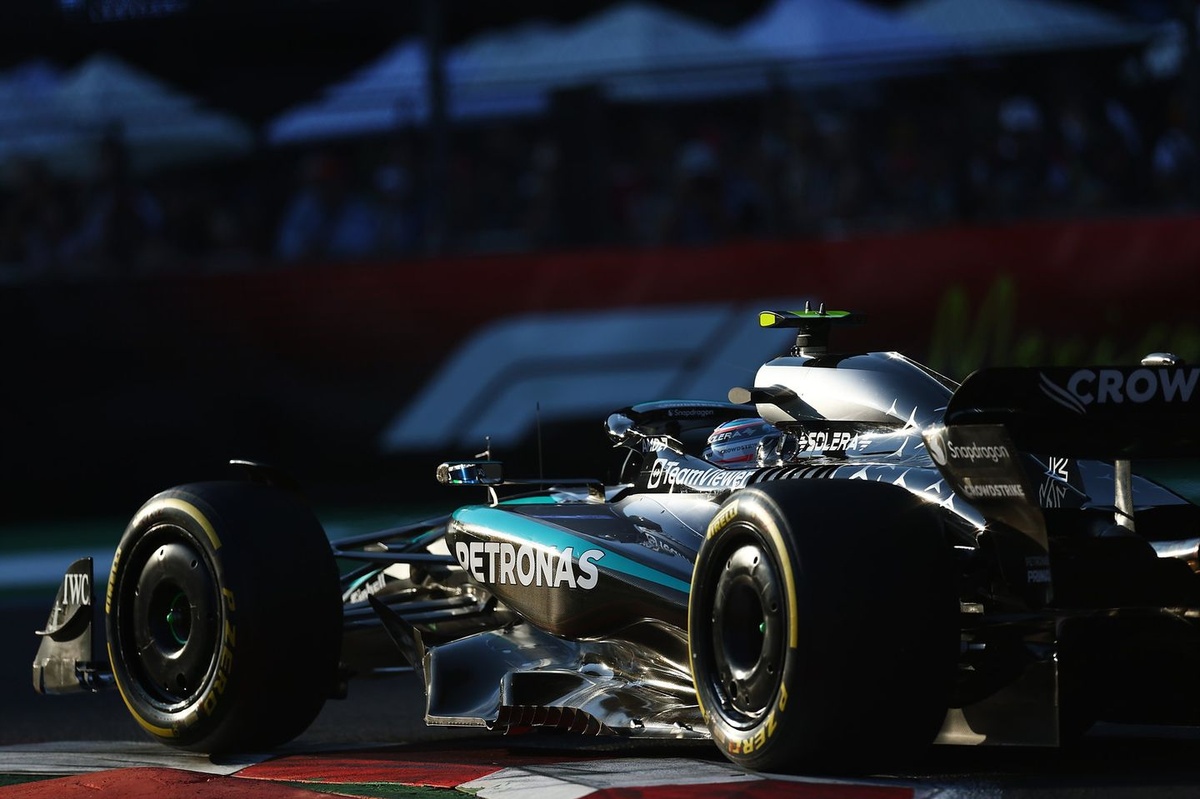
Even before the 2026 calendar year has begun, the first controversy under F1's new ruleset has already surfaced. It concerns the engine regulations, and more specifically the compression ratio of the internal combustion engine – the ratio between the cylinder's maximum and minimum volume.
Under the previous regulations, that ratio stood at 18:1, but for the 2026 regulations the FIA has reduced it to 16:1, partly because it would be easier to achieve for new entrants. Article C5.4.3 of the 2026 regulations states:
“No cylinder of the engine may have a geometric compression ratio higher than 16.0. The procedure to measure this value will be detailed by each PU manufacturer according to the guidance document FIA-F1-DOC-C042 and executed at ambient temperature. This procedure must be approved by the FIA technical department and included in the PU manufacturer homologation dossier.”
How big is the alleged advantage?
Much of the recently emerged controversy revolves around the phrase “ambient temperature”. It is suggested that Mercedes (and therefore all Mercedes customer teams) and Red Bull Powertrains have found a way to achieve a higher compression ratio at higher temperatures – in other words, while the engine is running on-track.
A higher compression ratio offers two potential advantages: with a higher ratio, more power can be extracted from the same amount of fuel, meaning the performance of the ICE is potentially higher. The alternative benefit is that the same performance can be extracted from less fuel than would be required at a lower compression ratio.
In F1’s new era, this is significant for multiple reasons. Firstly, the fuel flow remains restricted, making it crucial to extract as much power as possible from that limited amount of fuel. Secondly, the FIA still has “strong levers” to play with when it comes to the electric components (harvesting and deployment) depending on circuit type. That makes it even more important for manufacturers to maximise everything on the ICE side, despite the increased share of electrical power.
At present, it is difficult to judge how much of an advantage this alleged loophole might bring on-track, as it is unknown what compression ratio the engines in question can actually reach at operating temperatures. According to rivals, the ratio exceeds 16:1, but apart from insiders at the manufacturers, nobody knows whether it actually approaches 18:1 while running or whether it sits somewhere in between the two ratios. And precisely that aspect determines how large the advantage really is. If it does indeed approach 18:1, estimates suggest a gain of around 10 to 13 horsepower.
Why the ball is now in the FIA’s court?
The crux of the matter lies in how all this is described in the FIA’s technical regulations. The engine manufacturers currently in the spotlight can point to the way compliance is checked. If the power units meet the 16:1 compression ratio during static checks at ambient temperature, then they are, in essence, compliant with Article C5.4.3 of the technical regulations. As outlined above, this is currently the only prescribed method for testing legality.
Rivals, however, can point to a more general phrase in the technical regulations, Article 1.5, which states: “Formula 1 cars must comply with these regulations in their entirety at all times during a competition.”
Since the 16:1 compression ratio is explicitly stated in the regulations, those manufacturers can argue that all engines must comply with that limit at all times, including while running on-track at higher temperatures.
It means that the ball now lies with the FIA. As with the flexi-wings debate, the key question is how the governing body chooses to interpret and, above all, how it intends to enforce the rules. In the case of flexible wings, teams complied with the limits during static tests, but not at high speed. That ultimately led to dots on the rear wings, the use of additional camera footage to gather data, and eventually tighter tests.
In the engine loophole debate, one theoretical option would be to conduct static tests at higher temperatures, potentially revealing higher compression ratios. However, the FIA indicated last week that it had no immediate plans to do so, according to a statement from a spokesperson.

“The regulations clearly define the maximum compression ratio and the method for measuring it, which is based on static conditions at ambient temperature. This procedure has remained unchanged despite the reduction in the permitted ratio for 2026.”
That said, the FIA did leave the door ajar for future changes, as it was added to the statement that “if necessary, adjustments to the regulations or measurement procedures can be considered in the future.”
This is the key point: it is now up to the FIA to decide which of the above wordings carries greater weight and, accordingly, whether the checks need to be adjusted ahead of the 2026 season or not.
What happens next?
It is a complex debate with potentially significant consequences. While teams could react relatively quickly to revised flexi-wings checks, the lead times for engine changes are far longer. Any modification – no matter how small – takes time, and that time is now almost gone. The 2026 engines will be homologated on 1 March, making it likely that manufacturers across the spectrum are effectively stuck with what they currently have.
The Italian outlet Corriere dello Sport reports that Red Bull could still adjust its engines to meet the 16:1 compression ratio if required, while Mercedes would not be able to do so. However, this remains speculative and cannot be verified at this stage. Other Italian media outlets have reported the opposite, leaving open the question of how feasible any compromise solutions might be. It remains part of the ongoing discussions between the FIA and the engine manufacturers.

The fact that both Mercedes and Red Bull Powertrains are being mentioned appears to be no coincidence. The paddock suggestion is that Mercedes has been working on this concept for longer, with the knowledge later finding its way to Red Bull Powertrains via former Mercedes personnel. As is well known, Red Bull’s in-house engine project has recruited from, among others, Mercedes High Performance Powertrains. This is also the most realistic way of arriving at a similar solution, since copying something without insider knowledge is far from straightforward.
Knowing what is happening is one thing; being able to execute it flawlessly is quite another.
It naturally raises the question of the consequences for other engine manufacturers if the FIA does not intervene before the start of the F1 season and leaves the checks as they are now. In that scenario, the rest would have to respond, but it seems unlikely that such a response could be implemented before 1 March and thus before the engine homologation. It could mean a handicap lasting until the start of 2027, although the ADUO mechanism does provide a potential safety net prior to that.
ADUO stands for Additional Development and Upgrade Opportunities and means that engine suppliers who are behind are granted additional development options. Based on three periods of six races each (1–6, 7–12, 13–18), the FIA measures the power of the internal combustion engine. If a manufacturer is between 2% and 4% down on the best ICE, it is granted one additional upgrade. If it is more than 4% behind, it receives two additional upgrades. This could allow manufacturers to introduce a similar solution before 2027 if the FIA allows the current situation to stand – although it would still be crucial to fully understand exactly how others are achieving it.
For now, the ball lies primarily with the FIA. The governing body understandably does not want to kick off F1’s new era with a wave of protests during the season opener in Melbourne, but the question remains whether a compromise can be reached beforehand and whether all parties could live with it. The complexity is heightened by the fact that engine suppliers on both sides of the spectrum can, based on different parts of the technical regulations, legitimately feel that they are in the right.















Read and post comments