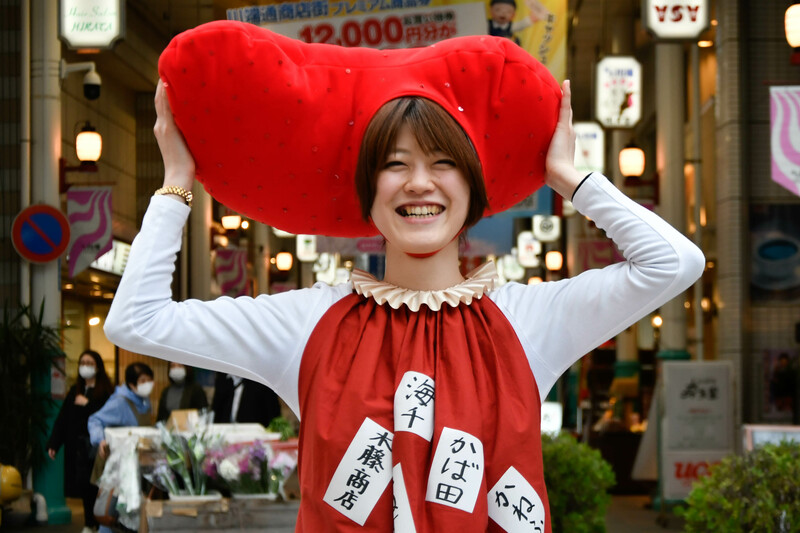
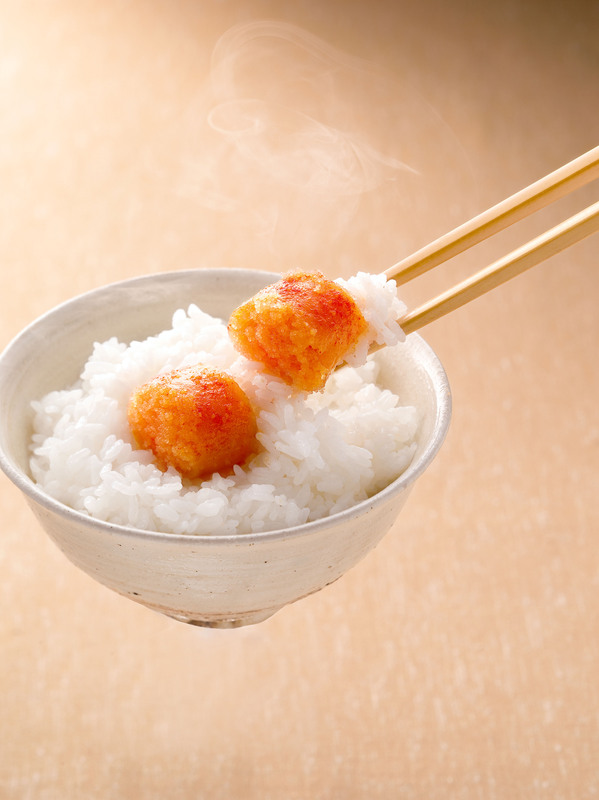
FUKUOKA -- She is known on social media as Mentaiko Taguchi, and so enamored is she with karashi mentaiko -- pollack roe marinated with red chili -- that last December she moved from Tokyo to Fukuoka, where the delicacy is a local specialty.
What is it about mentaiko that would lead a person to do such a thing? As a Fukuoka Prefecture native myself, I spoke to Taguchi about her obsession with this spicy delight.
Saved by the mentaiko
Born and bred in Tokyo, Taguchi says she had never lived anywhere else. So how did she get hooked on mentaiko?
It happened while she was an ordinary employee working in a Tokyo office. Seeing her in the large mentaiko-shaped headgear she now sports in public as part of her persona, it is hard to imagine her toiling away behind a desk.
"I was just shuttling between the company and home," she recalls. "I started wondering if this was really how I wanted to go through life," she said. It was all very depressing.
Around that time, upon the advice of a friend, she became a foodie and started posting on Instagram. A big fan of roe by nature, she started posting photos of dishes and products featuring mentaiko.
Taguchi says that up to then, she had lacked self-confidence. By breaking out of her shell and "coming out" as a mentaiko lover, she gradually expanded her circle of friends and gained more opportunities to connect with society outside of her job.
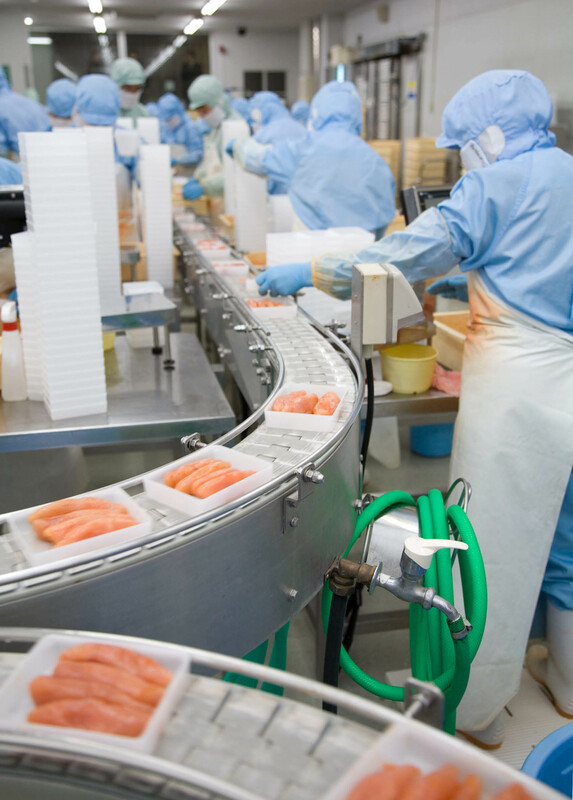
Soon her love for mentaiko became an obsession. "I wanted to try things I wanted to do," she thought. She quit her company in 2018 and set off on a mentaiko-centric journey to Fukuoka. She received unexpected hospitality from mentaiko manufacturers, who welcomed her and showed her around their factories.
Touched by the warmth of people in the prefecture, she thought, "Maybe I should try living here." That became the first step in her relocation from Tokyo.
-- Starting production
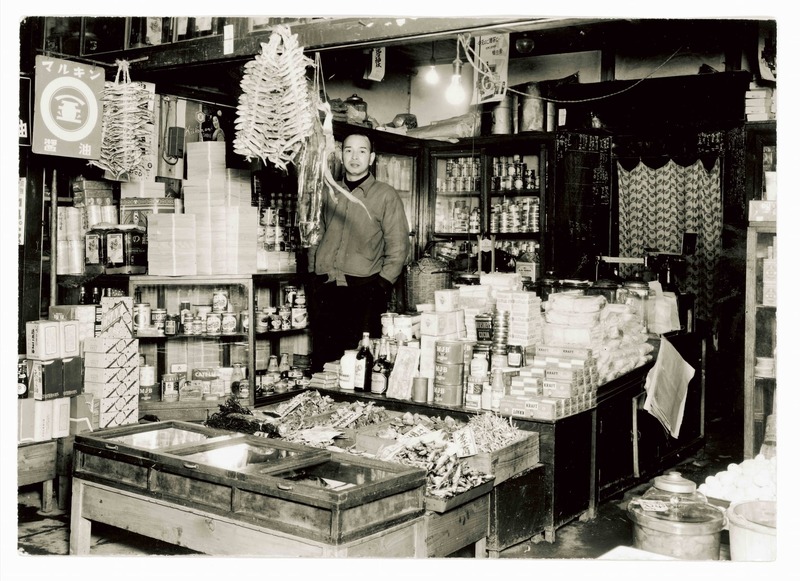
Karashi mentaiko was first produced after World War II. The late Toshio Kawahara, the founder of renowned mentaiko manufacturer Fukuya Co., tried to replicate the mentaiko he had eaten while in Busan, South Korea, before the war. After much experimentation, he came up with a product.
Tweaked to suit Japanese preferences, Kawahara's mentaiko became a popular souvenir of Fukuoka. As he was not stingy about his mentaiko recipe and made it publicly available, other mentaiko makers cropped up one after another in the prefecture. It now holds the status as the "face of the prefecture's food culture."
Kawahara's life story has since been dramatized in "Mentai-piriri," a film and TV drama series in which he was portrayed by comedian Hanamaru Hakata.
According to the fair trade council on mentaiko food products, an industry organization of manufacturers and retailers based in Fukuoka City, there are currently 86 member companies, of which 90% are headquartered in the prefecture.
I was born in Kitakyushu in the prefecture and have never lived in Tokyo, and I used to think people in Tokyo could get mentaiko whenever they want. But Taguchi told me that she had to rely on online shopping for her mentaiko when she lived there.
According to the council, only the more well-known companies like Fukuya, Kabata Co. and Fukusaya Co., have outlets in Tokyo. This means that Fukuoka Prefecture residents with their own favorite brands may need to prepare for a mentaiko letdown when they go to Tokyo.
-- Difference between manufacturers
Is there really that much difference between manufacturers?
Taguchi emphatically says yes. "Of course the spiciness varies, and there are differences in the dashi stock [for marinating the roe]," she says. "Some companies use wine instead of sake, and others add in yuzu citrus or other fruits. Each manufacturer pursues its own taste, and if you consciously try, you can tell right away when you eat it."
The question of which company makes the best mentaiko is one that every Fukuoka Prefecture native has surely been asked at least once in their life. It could be that, like me, many locals might answer, "They're all the same." But after consciously tasting several brands, I felt embarrassed about finally becoming awakened to the truth.
-- Mentaiko Taguchi's ambition
On Dec. 15 last year, Taguchi finally became a registered resident of Fukuoka City.
"I was concerned that they may not be accepting of someone from Tokyo, but now I feel the warmth of people in Fukuoka," she said.
The city is just the right size, and she has new friends. Living outside Tokyo for the first time, she does not feel isolated.
"While I'd never thought I would move, I want to take in all the information you can only get in Fukuoka and convey the appeal of mentaiko to the whole country," Taguchi says as she shows a notebook in which she has pasted photos of mentaiko.
According to her own research, there are about 200 mentaiko manufacturers across the country, including restaurants that serve home-made mentaiko.
"When the COVID-19 pandemic is over, I want to organize an event bringing together mentaiko makers from across the country," she says. "If people taste the mentaiko and learn of each company's commitment, I'm sure they will understand the appeal of mentaiko."
Taguchi's life of mentaiko in Fukuoka has only just begun.
Read more from The Japan News at https://japannews.yomiuri.co.jp/