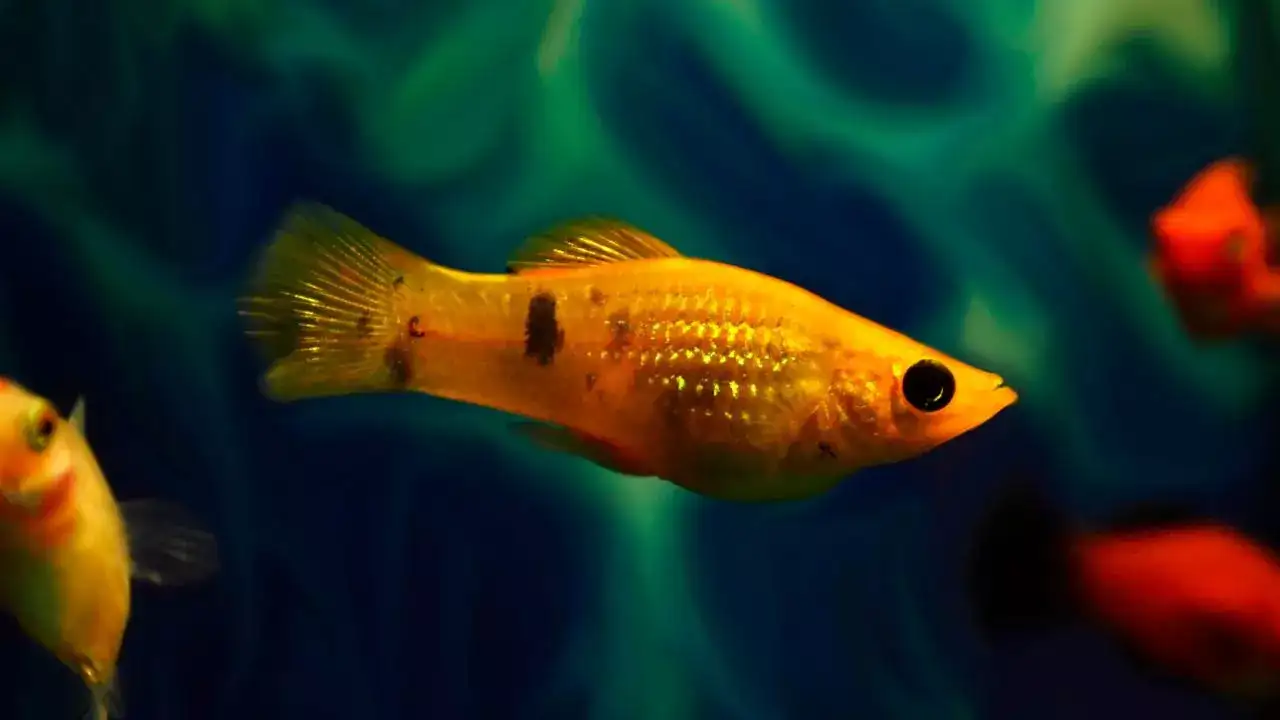
In the natural world, the disappearance of males is usually considered a death sentence for a species. Yet one tiny fish has spent the last 100,000 years proving evolution wrong.
Swimming through the warm rivers of Mexico and southern Texas is a remarkable creature known as the Amazon molly — a fish made up entirely of females. No males. No fathers. And somehow, no extinction.
Named after the legendary female warriors of Greek mythology, the Amazon molly has become one of nature's greatest mysteries. Scientists once believed all-female species were evolutionary dead ends destined to vanish quickly. Instead, this tiny silver fish has thrived for millennia, baffling researchers and challenging long-held theories about survival.
The Fish That Doesn't Need Male DNA
The Amazon molly has developed a reproductive strategy that sounds almost impossible.
To reproduce, female mollies mate with males from closely related fish species. But here's the twist: they don't actually use the male's DNA.
Through a rare process called gynogenesis , the sperm merely triggers egg development. The male genetic material is then discarded, allowing the female to produce an almost identical clone of herself. Generation after generation, the species continues without creating a single male offspring.
Why Scientists Call It an Evolutionary Miracle
Sexual reproduction dominates the natural world for a reason. Mixing genes creates genetic diversity, helping species adapt to disease, environmental change, and other threats.
Without that genetic reshuffling, harmful mutations should gradually accumulate — a phenomenon known as Muller's Ratchet . Over time, those mutations are expected to drive a species toward extinction.
That's why the Amazon molly's survival is so shocking.
After more than 100,000 years of cloning itself, the fish should theoretically be struggling under the weight of genetic errors. Instead, it continues to flourish.
The Secret Hidden Inside Its DNA
A recent study co-authored by computational biologist Edward Ricemeyer may have uncovered the secret.
Researchers found that Amazon mollies possess a powerful genetic repair mechanism called gene conversion . Think of it as nature's own copy-and-paste tool.
When a harmful mutation appears, the fish can use a healthy version of the gene as a template, effectively repairing damaged DNA before it becomes a problem.
Even more astonishing, this repair process appears to target the most dangerous mutations, helping the species maintain its genetic health despite reproducing through cloning.
Nature's Ultimate Rule-Breaker
The Amazon molly isn't completely alone. Creatures like the Bdelloid rotifer , a microscopic animal, have also survived for millions of years without males, earning the nickname "evolutionary scandals" among scientists.
But the Amazon molly remains one of the most extraordinary examples of nature finding a workaround where none should exist.
Its story suggests that evolution may be far more creative than scientists once imagined. While most species rely on fathers to survive, the Amazon molly has spent 100,000 years proving there's more than one path to success.
And that's exactly why this tiny fish continues to leave the scientific world stunned.