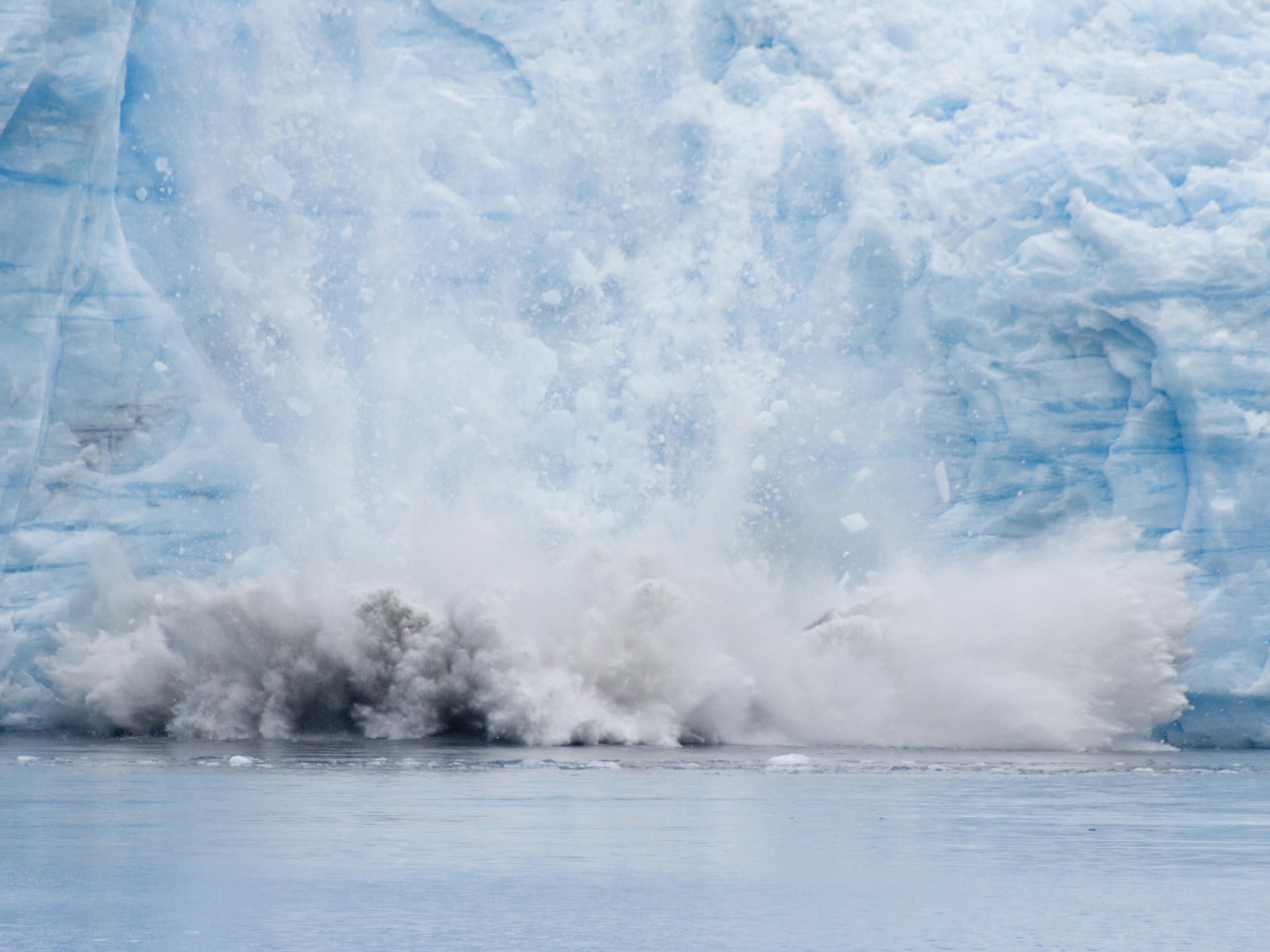
Melting glaciers could be triggering a ripple effect of natural disasters that culminates in massive tsunamis, according to new research.
Ice provides support for rocky slopes, and as temperatures rise and this ice retreats it is increasing the risk of hazardous landslides.
This problem is likely to be exacerbated along the icy coastlines of Greenland, Patagonia and Norway, where huge chunks of rock smashing into the water can create towering waves. Similar events have already taken place.
One slope that collapsed on Alaska’s Tyndall Glacier in 2015 sent 180 million tonnes of rock into the neighbouring fjord.
This resulted in a tsunami with a wave runup – the extent to which the water rushes up the surrounding coast – nearly 200m high - one of the highest ever recorded.
Such events pose a threat that extends far beyond the normal range of a mere landslide.
While the Tyndall landslide covered an area over a mile from its original source, a new study has revealed the tsunami’s devastation stretched more than 12 miles.
A team led by Alaska-based researcher Dr Bretwood Higman collected data from the site of the 2015 tsunami, using traces left by the event to assess how serious it had been.
Deposits of wood fragments, soil and rock up to several metres thick formed a distinctive footprint that the scientists say could be used to assess this emerging problem.
In their research, published in the journal Scientific Reports, the authors described the importance of monitoring these events in order to understand and prepare for them in the future.
“The landslide and tsunami predicated by glacial retreat at Taan Fiord represents a hazard occasioned by climate change. More such landslides are likely to occur as mountain glaciers continue to shrink and alpine permafrost thaws,” they wrote.
“These landslides can more often be expected to produce tsunamis as water bodies grow and extend landward, closer to steep mountain slopes.”
While many of the locations in which these tsunamis are likely to take place are remote, they are increasingly serving as magnets for tourists and developers.
Landslide-triggered tsunamis are particularly worrying for residents of polar regions and have already proved deadly.
In 2017 a landslide in a Greenland fjord created a massive wave that killed four people in the tiny settlement of Nuugaatsiaq, almost 20 miles away.
Earlier this year the Greenlandic village of Innaarsuit was put on high alert and forced to evacuate as an enormous iceberg drifted into its vicinity, prompting fears it would break up and cause a tsunami.