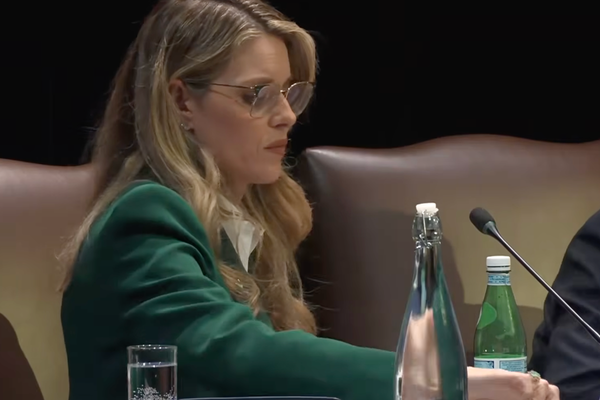
“Meeting-itis” has been around for so long, you could dismiss it as being endemic, and not worth your immediate attention. But the pandemic and its aftermath have given rise to a trickier, more toxic variant — the virtual or online meeting. Whichever strain you contract, the symptoms are the same. “Meeting-itis” makes people feel the urge to meet and talk animatedly about work rather than sit boringly all by themselves and work.
Why do people meet? Well, that is like asking why do people fall in love? Human instinct, I guess. Man has always regarded an assembly of five or more with respect. This is based on our deep-seated belief that if two heads are better than one, three should be better than two, and so on. It took our cave-dwelling forefathers a meeting around the fire to decide the next day’s menu as well as take steps to prevent themselves from featuring in the menu of the sabre-toothed tiger. From those formative years, the meeting has grown steadily in importance till we have reached the point when almost nothing you say or do is taken seriously unless you have video-conferenced, “zoomed” or “teamed” up.
Modern man knows that there is more to a meeting than meets the eye. Until just over a decade ago, to shirk work you needed to suddenly fall ill, lose a near relative, or think of some other cataclysm to visit your household. Meetings save you from taxing your imagination. On the morning that you feel disinclined to work, you call for a meeting. You will find ready acceptance because a lot of your colleagues in other departments may also be simultaneously experiencing similar disinclination. How can we forget that at the peak of the Work from Home era, the meeting was a godsend. Unless your wife was cued in and knew exactly what was going on, a “very important office meeting” was the alibi that helped you escape sundry errands.
Only people of importance attend meetings, and the more of them you attend, the more important you are. So when a young executive is asked to join a meeting of his seniors, he will barely be able to conceal his pride. Conversely, if you find your name missing from the list of invitees sent to your peers, you have been effectively dropped from the ‘A’ team. If you want to know how to overcome such disappointment, ask Ravichandran Ashwin or Ajinkya Rahane — they are veterans in this department.
As important as the number of meetings you clock is their size. If there are just two or three of you, all you are doing is having coffee and conversation. If the assembly is very large, the importance of the meeting gets diffused. Once inside, your first task — even before you reach for the cookies — is to turn to the most pliant junior and tell him or her to “take the minutes”. This will show your superiors how seriously you view these discussions and will also keep uppity juniors in their place.
American writer Dave Barry once said: “If you had to identify, in one word, the reason why the human race has not achieved, and never will achieve, its full potential, that word would be ‘meetings’.” America’s former Ambassador to India John Kenneth Galbraith was a bit more diplomatic: “Meetings are indispensable when you don’t want to do anything.” But whatever wise men may say, I for one believe that ‘meeting-itis’ will outlive its critics. If you hold a different point of view… well, let’s have a meeting.
jairam.menon@gmail.com