Many of the world's largest shipping nations will decide Friday whether to impose a tax on carbon emissions from ships.
If the 174 International Maritime Organization members present — all but the United States — reach an agreement, it would effectively be the world's first global carbon tax.
The previous day, delegates approved a proposal to designate an emissions control area in the North-East Atlantic Ocean, which was welcomed by environmentalists participating in the meeting.
The International Maritime Organization, which regulates international shipping, has set a target for the sector to reach net-zero greenhouse gas emissions by about 2050 and committed to promoting fuels with zero or near-zero emissions.
But as the last day of meetings begins, delegates are still haggling over the details of a possible shipping emissions tax. The Marine Environment Protection Committee has been in meetings all week in London and plans to finalize a decision later today.
One major issue is the way a tax would be charged. More than 60 countries entered the negotiations pushing for a simple tax charged per metric ton of emissions. They were led by Pacific island nations, whose very existence is threatened by climate change.
Other countries with sizable maritime fleets — notably China, Brazil, Saudi Arabia and South Africa — wanted a credit trading model instead of a fixed levy. Others sought a compromise between the two models.
Failing to deliver significant progress on decarbonization is simply not an option for the maritime industry, said Mark Brownstein, who leads the Environmental Defense Fund’s energy program globally.
“This is an industry that is seeing climate change every day and can’t easily walk away from it,” he said.
The United States didn’t participate in the negotiations in London, instead urging other governments to oppose the greenhouse gas emission measures under consideration. The Trump administration said it would reject any efforts to to impose economic measures against its ships based on emissions or fuel choice, which it said would burden the sector and drive inflation. It threatened possible reciprocal measures if any fees are charged.
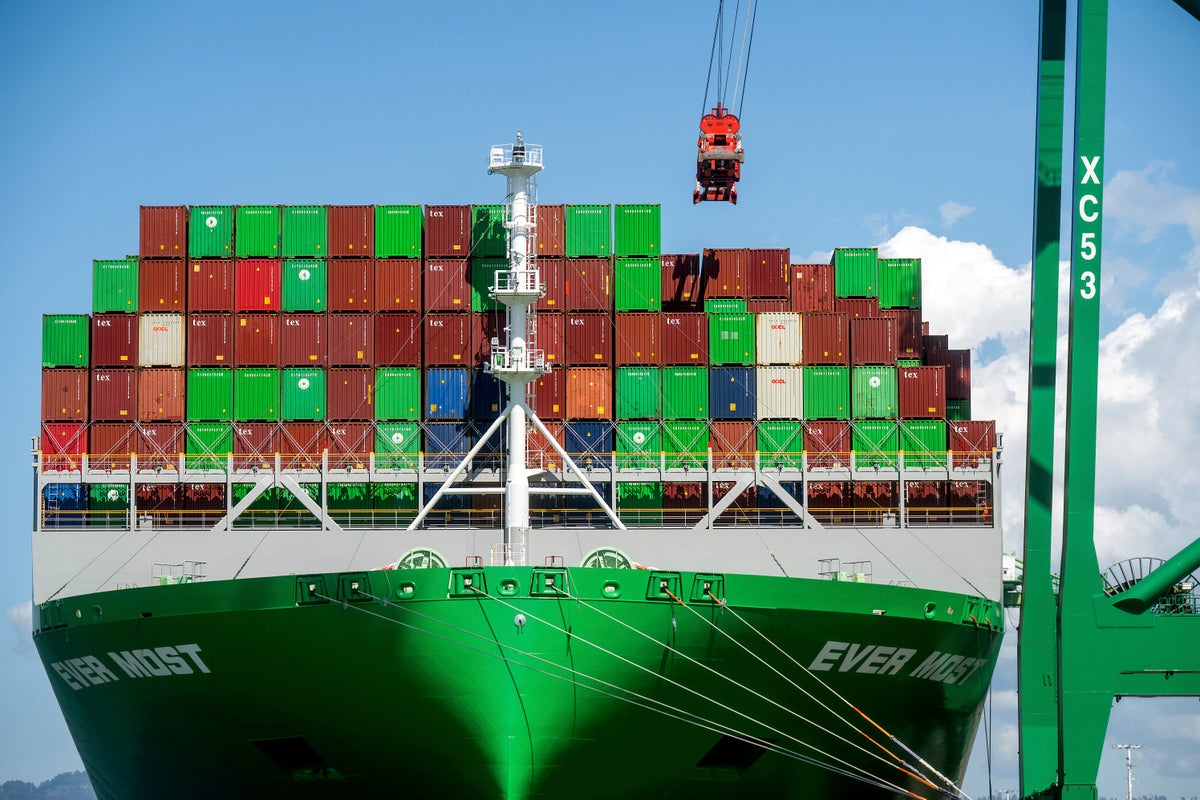
Emissions from shipping have increased over the last decade— to about 3% of the global total according to the United Nations — as vessels have gotten bigger, delivering more cargo per trip and using immense amounts of fuel.
Last week, IMO Secretary-General Arsenio Dominguez had said that the meetings will, “set the course for a net-zero future for the maritime sector.”
Any new regulations could be formally adopted in October and take effect in 2027.
___
The Associated Press’ climate and environmental coverage receives financial support from multiple private foundations. AP is solely responsible for all content. Find AP’s standards for working with philanthropies, a list of supporters and funded coverage areas at AP.org.
Trump ordered by Supreme Court to bring back wrongly deported Maryland dad: Live
Trump tariffs live: China raises levies to 125% on US as trade war escalates
China announces countermeasures by raising tariffs on US goods from 84% to 125% from Saturday
Farage compares turmoil of Donald Trump’s tariffs to market chaos caused by Liz Truss
Chopper broke apart before nose-diving into Hudson river killing six: Latest updates
UK economy grew by 0.5% in February in boost to Rachel Reeves