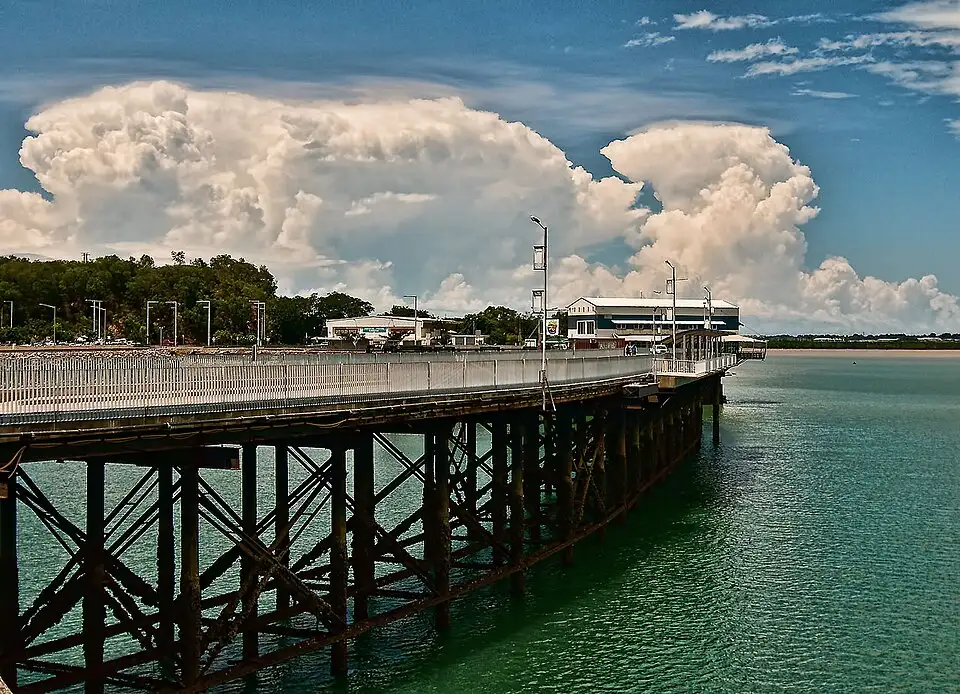
Most thunderstorms are unpredictable, forming with little warning and disappearing just as quickly. But off Australia's northern coast, one remarkable storm follows a schedule so consistent that it has earned a name of its own. Known as Hector the Convector, this unusual thunderstorm has fascinated meteorologists and researchers for decades, according to a report by Science Focus.
‘Hector the Convector'- a thunderstorm arrives at the same time every day
Weather systems usually earn names when they grow powerful enough to threaten large regions, such as hurricanes or the massive winter nor'easters that affect the United States and Canada. Hector is different. It is not famous because of destruction, but because of its incredible consistency.
Known as Hector the Convector, this thunderstorm develops over the Tiwi Islands, located off the coast of Darwin in Australia's Northern Territory. During the build-up and rainy seasons, from September through March, the storm forms so regularly that meteorologists say it appears at roughly 3 p.m. almost every afternoon, as per a report by Science Focus.
Why does Hector arrive so reliably?
The answer lies in the Tiwi Islands' unique local environment. The islands are surrounded by warm tropical marine air. As the morning sun heats the land, the dry air over the islands warms much faster than the humid air over the surrounding sea. As this warmer air expands, it creates an area of lower pressure that pulls moist marine air inland through afternoon sea breezes. This predictable weather pattern is what makes Hector so dependable compared to most thunderstorms.
What makes Hector the Convector different from ordinary thunderstorms?
Most thunderstorms are known for their unpredictability. They can develop quickly, shift direction without warning and disappear just as fast, making them difficult for scientists to study in detail.
Hector is different. Unlike typical thunderstorms, Hector forms over the Tiwi Islands off Australia's Northern Territory with remarkable consistency. During the build-up and rainy seasons, from September to March, it appears almost every afternoon at around 3 p.m., making it one of the world's most dependable weather events.
Its reliability has also made it a favourite among researchers. While most thunderstorms are too unpredictable to observe under similar conditions, scientists have been studying Hector since the 1980s to better understand how storms develop, how lightning forms and how powerful updrafts behave. That consistency has turned one daily thunderstorm into one of nature's most valuable outdoor laboratories.
How does the storm form every afternoon?
The sea breezes move toward the islands from every direction. When those air currents meet near the islands' pyramid-shaped peaks, they are forced upward.
As the rising air carries moisture higher into the atmosphere, it begins to cool. The moisture then condenses into clouds and water droplets, creating atmospheric instability that rapidly develops into a deep convective thunderstorm.
This process is the reason behind the storm's famous nickname, Hector the Convector.
The Australian Bureau of Meteorology says Hector is among the planet's most consistently large thunderstorms. It frequently reaches heights exceeding 19 kilometers, or around 12 miles, and on some occasions even extends into the stratosphere.
Why has Hector become a scientific attraction?
Hector's reputation extends well beyond its reliability. The storm received its name from World War II pilots, who relied on its towering cumulonimbus cloud as a navigation marker while flying between Darwin and Papua New Guinea.
Its dependable appearance has also made it one of the most closely studied thunderstorms in the world. Unlike typical storms that form unpredictably and disappear quickly, Hector provides scientists with a rare opportunity to repeatedly observe the same weather process under similar conditions.
Since the 1980s, researchers have used Hector to better understand how thunderstorms develop. Its reliable formation has helped scientists investigate lightning, atmospheric updrafts and the mechanics behind storm development.
While most weather systems remain difficult to predict, Hector continues to stand apart. Forming almost like clockwork over the Tiwi Islands each afternoon, it remains one of nature's most remarkable examples of how geography and local weather patterns can combine to create an extraordinary natural phenomenon.
FAQs
Why is the storm called Hector?
World War II pilots named it after using the towering storm as a navigation landmark.
Why is Hector special?
It appears with remarkable consistency, often forming around 3 p.m. during the rainy season.




.jpg?w=600)