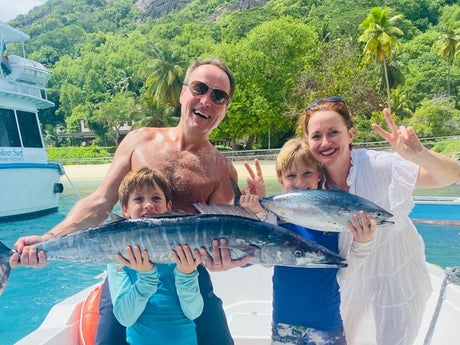
In early January, Riccardo Bortolotti was sat on a private island rimmed with white sand beaches and translucent waters, 5,000 miles away from home, faced with something of a dilemma.
Did he board his scheduled flight in a few days’ time, taking him and his family home from the Seychelles and back to a third lockdown in wintry London? Or did he stay, and see out lockdown in “paradise” instead?
Naturally, he chose the latter.
Bortolotti and his family have just returned home after their two-week Christmas break ballooned into a three-month “staycation” in the Indian Ocean nation, where they spent their days working remotely, swimming, hiking or fishing.
Tourism-reliant Seychelles reopened to travellers from low and medium-risk countries in August, on the proviso that visitors could not leave their hotel premises for 10 days. After rolling out one of the world’s fastest vaccination campaigns to its, admittedly tiny, population of 100,000 people, the country reopened to all and abolished the quarantine requirement in March.
However, by mid-May, Covid cases had spiked and authorities were busy issuing assurances the Seychelles was still a safe tourism destination. It currently sits on the UK’s red list, and all arrivals must quarantine for 11 nights in a hotel.
Bortolotti certainly agrees.
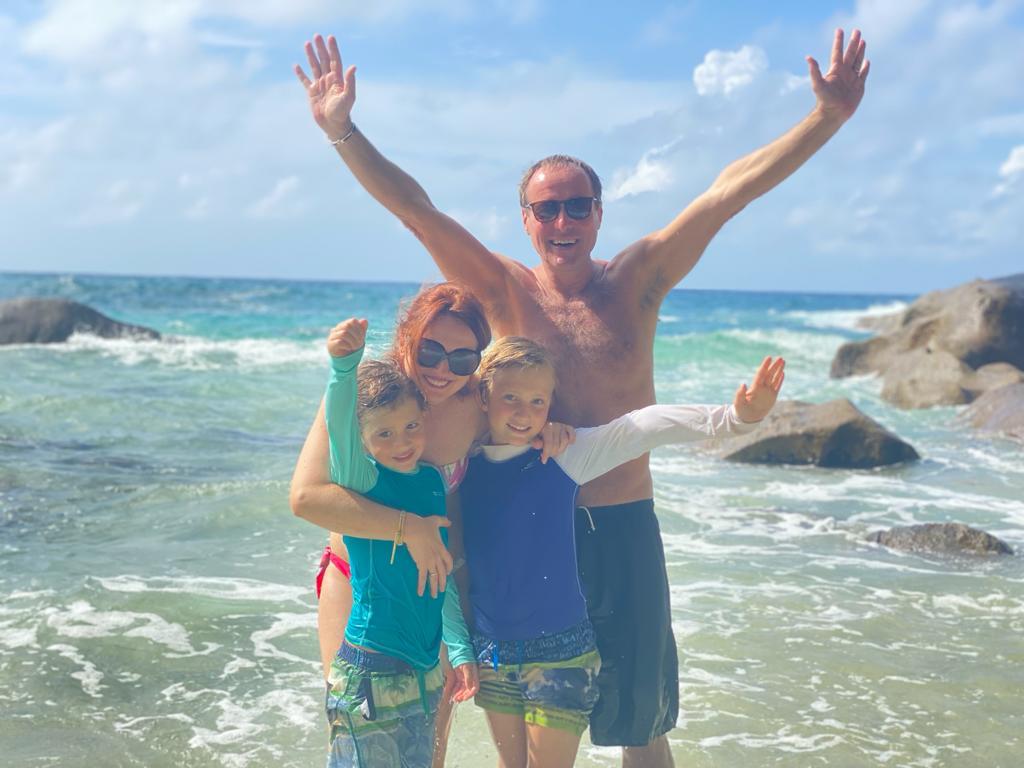
The London business executive flew to the Seychelles with his wife and two children on 19 December, before UK visitors were barred from entering, and checked into the Hilton Seychelles Labriz Resort & Spa, on the private Silhouette Island.
But when it came time to return to the UK, Bortolotti made a snap decision.
“The UK was in bad shape. There was no reason to go back when I can work remotely. I told my wife, let’s take the risk and not take the flight tomorrow and we’ll see.”
What we had was absolute freedom and we just hadn’t had that in so long
With rates negotiated with the resort, the family moved into Labriz’s most luxurious villa for the long-haul. And as Silhouette, a 40-minute boat ride from the mainland, was Covid-free throughout most of the pandemic, two other British families on the island made the same decision.
“The hotel was at about 5 per cent occupancy, so our kids would all hang out, every day they had a tennis lesson with one of the waiters, and then the adults would meet for dinner. It became a community,” Bortolotti says.
“And we had faster internet here than we’d had in the centre of London.”
Bortolotti’s son celebrated his 10th birthday on the island with a beach party and a present of a Padi diving course. His children took to greeting the trickle of new guests at the pier. Borolotti spent most of his time fishing, hiking or learning how to “catch octopus with my bare hands” with the locals. When it came time to leave in mid-March, before a stop in Italy to avoid hotel quarantine in the UK, he admits feeling emotional.
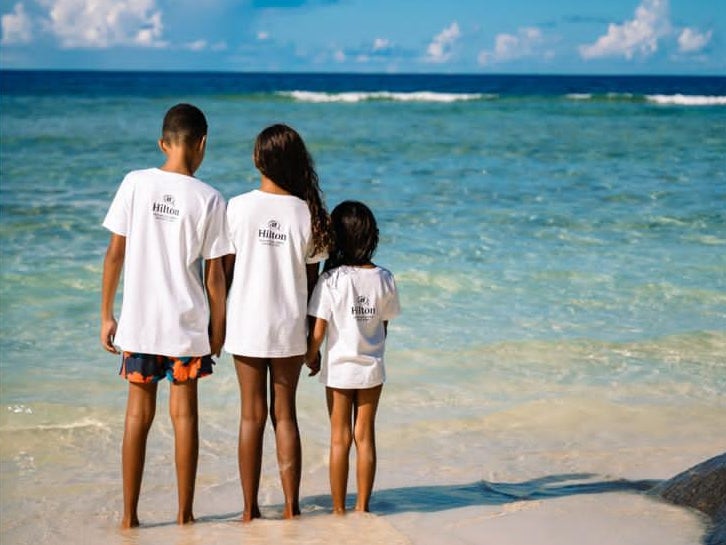
“I've never stayed for so long in a hotel anywhere. My kids cried like I’ve never seen them cry before, all the way home. My wife had tears.
“We had the time of our lives – and the main thing was that we felt very safe.”
Laura Berlouis, from London, was another of the two families staying on Silhouette. Her family inadvertently clocked up 80 nights there.
Berlouis, who has dual British and Seychellois nationality, travelled to the islands with her partner and three children to attend a court hearing. But with lockdown looming – Berlouis decided to extend her stay and continue her work as a virtual personal assistant remotely.
“I just said ‘I’m going to wait it out, what’s the worst that could happen?’”
Unfortunately, the “worst” was transit countries being placed on the UK’s red list and her Qatar Airways flight being cancelled.
Thankfully, being dual nationality, Berlouis was eligible for local hotel rates. Life on Silhouette without tourists for three months was “paradise”, she says.
“What we had was absolute freedom and we just hadn’t had that in so long. I didn’t want to take the kids out of that situation.”
In the end, Berlouis returned to the UK on 8 April, via the Maldives, before the island nation was added to the red list.
“Quarantine was going to cost me £5,000 anyway, so it was better to top that up and have an experience along with it – I couldn’t think of anything worse than three children and their dad in one room in a Holiday Inn,” she says.
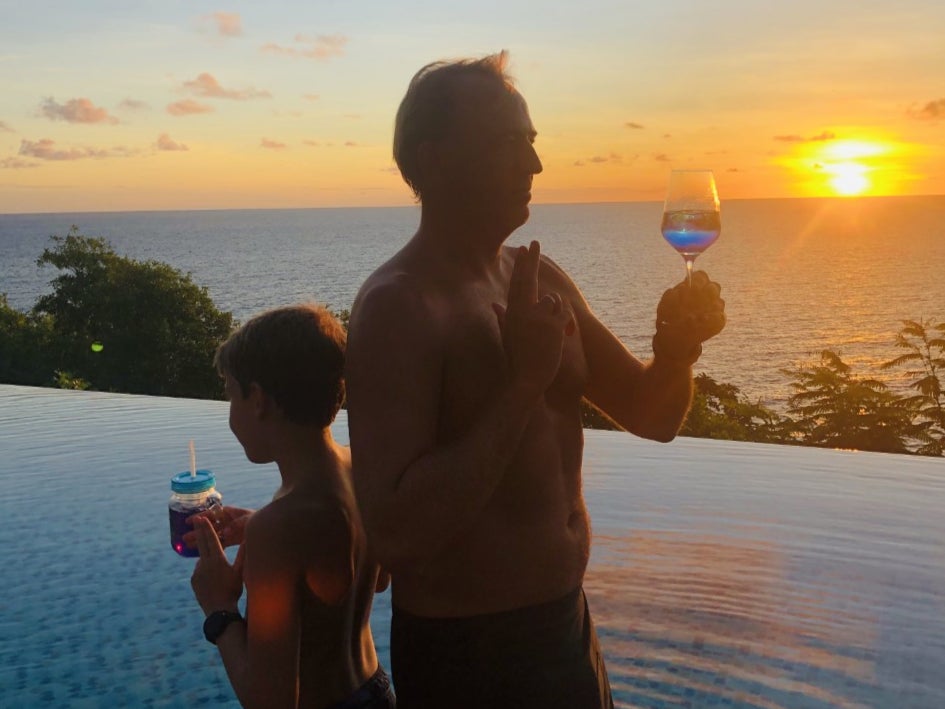
“I live in a garden-less flat in London so lockdown was a nightmare. Obviously lockdown three has been my favourite thus far. I may be paying for the trip for the rest of my life but the kids have had an experience they’ll remember forever – they just won’t be getting another one.”
The Seychelles has recorded 10,740 Covid infections and 38 deaths in total.
Almost 70 percent of the country is fully vaccinated.
Sylvestre Radegonde, Minister for Foreign Affairs and Tourism in the Seychelles, says a plan to vaccinate the entire country by March was not met due to “the situation on the ground”, but was “not far away”. He says, despite the current spike in cases, the country should still be a viable choice for tourists.
Current restrictions, including an 11pm curfew, would likely be in place for a while. This is because locals, who “love to party”, were often flouting the rules, Radegonde says.
My kids cried like I’ve never seen them cry before, all the way home
A “low percentage” of tourists had tested positive, almost all of them as they were leaving the country. Most travellers are now from Russia or eastern Europe, Radegonde says.
But as tourism ramps up, hotels face a staff shortage due to new tourism regulations.
In August, the government announced that foreign workers who had left the country during the pandemic would have their work permits revoked, forcing companies to hire locally. At the time, 5,000 of the 17,000 expat workers employed in the country were abroad.
“We've gone from kind of allowing anyone and everyone to come in for jobs. And now it's like a case-by-case basis kind of thing. We will continue this ban on foreign labour for now,” Radegonde says.
He hopes vaccine tourism could bring in more long-stay guests in the near future. People such as Tom Leach, from Staffordshire, for example.
Leach, who has a permanent residence in the Four Seasons Resort Seychelles and splits his time between there, Poland and the UK, spent almost a year grounded on Mahe during the pandemic after returning from the UK. Previously, he clocked up about 100 flights per year.
“We were locked down before we knew it in the Seychelles and we couldn’t have been in a better spot for the pandemic,” he says.
“We had the beach to ourselves for about five months. The only exception to our solitude was the occasional appearance of ‘Mr Squid’, a local fisherman who regularly swims around from the next bay to Four Seasons, catching squid en-route, which we happily bought off him and grilled in the evening.”
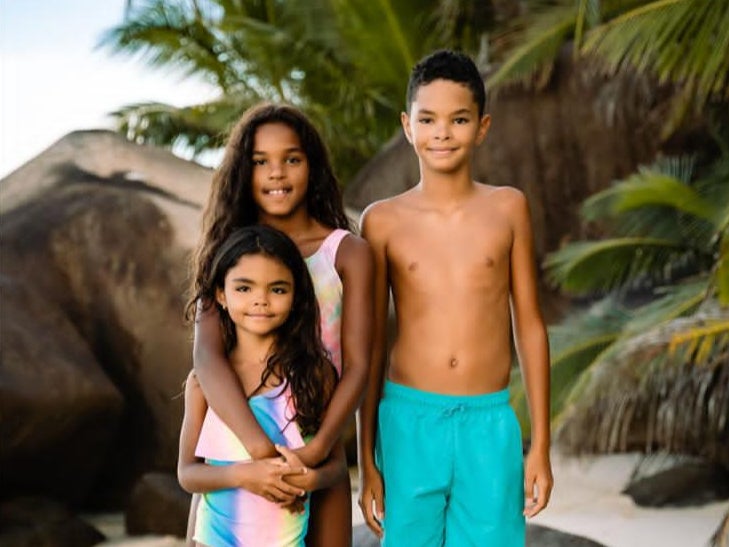
While working remotely, Leach spent his days cleaning the beach or clearing trees underneath his villa with a machete to plant a garden, now full of avocado, lime, papaya and passionfruit trees.
However, Leach plans to permanently relocate back to the UK next year and the family are currently on their way back to set things in motion. They are spending 10 days in Poland as an “amber list launchpad” and will then move into the Four Seasons Park Lane as his son attends an interview for primary school.
“A little over a year ago it would have just been one direct flight from Mahe to Heathrow and back – how the world has changed.”