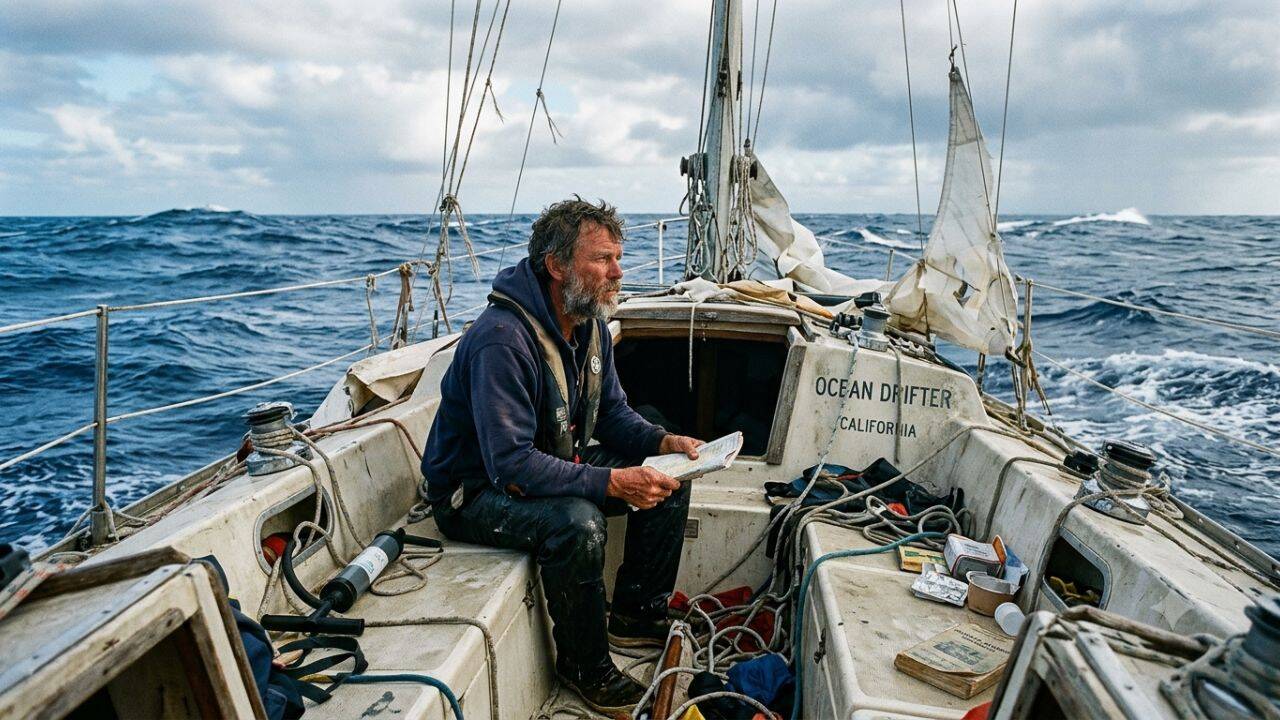
For weeks, a small sailing boat drifted across a vast stretch of the Pacific with little certainty about where it would end up. Its lone occupant, 39-year-old Kai Sato from California, had set out hoping to complete his first solo voyage to Hawaii, but the journey quickly became something very different. Far from shipping routes and with limited supplies, he was forced to abandon the idea of simply reaching his destination and instead focus on getting through each passing day. By the time another vessel finally appeared on the horizon, more than a month had passed since his plans had fallen apart, leaving behind a story shaped less by adventure than by persistence and improvisation.
Get breaking news anytime, anywhere. Download the TOI app now!
Solo sailor's Pacific Ocean voyage to Hawaii turned into a survival ordeal
According to Hawaii News, Sato left California's Catalina Islands on 7 June, beginning what he intended to be his first solo crossing of the Pacific to Hawaii. The trip had personal meaning. Years earlier, he had travelled the same route alongside an uncle, an experience that had stayed with him and encouraged him to attempt the crossing on his own.
Only a couple of weeks into the voyage, everything changed. The sailboat's mast failed, removing the vessel's main source of power and leaving it at the mercy of wind and ocean currents. The route he had carefully planned disappeared almost immediately as the damaged boat drifted farther from where he wanted to be.
When returning home was no longer possible
The days immediately after the accident proved just as demanding emotionally as they were physically. Sato later described feeling overwhelmed by the situation, admitting that he struggled to see a way out during the first week after the damage occurred.
He attempted to rely on the boat's engine to head back towards land, but that option soon disappeared when the fuel ran out. Without wind propulsion or enough fuel to motor home, the boat simply continued drifting, carried by currents moving him farther south instead of towards safety.
After several days of uncertainty, he decided he needed to work with whatever equipment remained on board rather than wait for rescue.
Repairing the boat with ordinary items
The damaged sailboat could not be restored properly at sea, but Sato managed to improvise a temporary solution using ordinary items he had onboard. PVC pipes and kayak paddles became makeshift replacements that allowed him to create a basic sailing system capable of giving him at least some control over the vessel.
The repairs were far from ideal, yet they gradually helped him steer back towards one of the busy shipping corridors linking California and Hawaii. Reaching that area took weeks rather than days, but returning to a route travelled by commercial vessels offered the first realistic chance of being spotted.
How he found food and fresh water
As the voyage dragged on, supplies became an even greater concern. His drinking water eventually ran out during July, forcing him to experiment with ways of collecting small amounts of fresh moisture.
He filled containers with seawater and covered them using plastic bags, allowing condensation to form inside. The tiny amounts of fresh water produced by this process became an important source of hydration.
Food remained scarce as well. Oatmeal lasted longer than expected because it was carefully rationed, while fish and squid that ended up on the boat added occasional meals that helped extend his supplies.
The mental struggle of surviving alone in the open ocean
Long periods alone at sea can become mentally exhausting, particularly when there is no clear idea of when help might arrive. Sato said he spent much of his time talking aloud, meditating and reflecting while surrounded only by open water.
He also found comfort in memories of his uncle, whose earlier Pacific voyage had inspired his own attempt. Remembering that shared experience gave him something familiar to hold onto while facing long days without contact with other people.
After weeks without seeing another vessel close enough to reach, Sato eventually spotted a ship operated by Pasha Hawaii. Even then, getting aboard was not immediate. Crew members needed more than one attempt before successfully lowering a rope ladder that he could climb safely.
Once aboard, the contrast was immediate. Fresh water, fruit, clean clothes and a private cabin replaced the difficult conditions he had endured for weeks. Sato later described the moment as one of overwhelming relief after spending so long uncertain whether anyone would find him.