From Brunei's horrific new anti-gay laws to same-sex marriage in Taiwan and the portrayal of disabled homosexuals on screen, here's the latest from LGBT communities over the past month
Against stoning penalty
As we strive towards acceptance and equality, resistance from some quarters remains strong. When Brunei announced it would stone to death those who engage in gay sex, the world was left open-mouthed. It is 2019. More and more countries around the world have or are working towards marriage equality. And yet, in certain corners of the planet, people can still get killed simply for an act of love. And in such brutal fashion. It is depressing and sickening.
Naturally, people were outraged. Many began doing what they could to put pressure on Brunei. Celebrities like George Clooney and Elton John have called for a boycott of Brunei-owned hotels. The Sultan of Brunei had his honorary degree from the University of Aberdeen revoked.
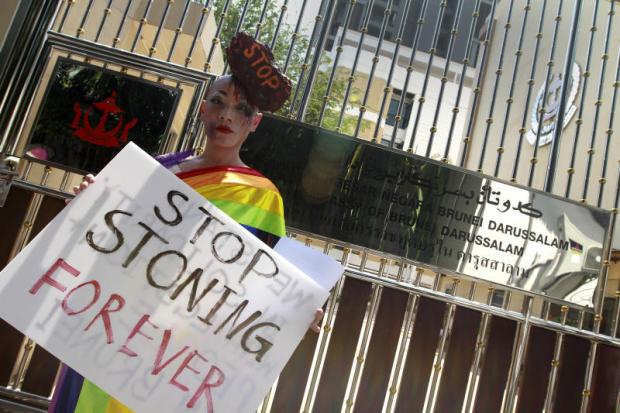
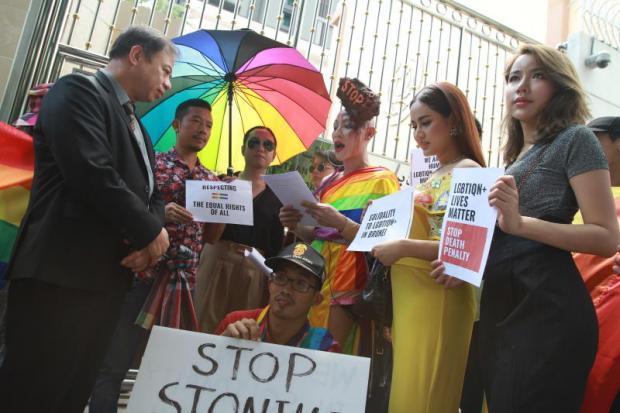
In Thailand, members of the LGBTI community, activists and allies gathered outside the Embassy of Brunei Darussalam in Bangkok to present a statement, asking the Brunei's government to reconsider its anti-gay laws. The statement was accepted by the embassy's representative.
Yet, for all of the international community's efforts, Brunei has stood by its decision. In a letter to the European Parliament, it wrote that "the realisation of international human rights must be considered in the national context", as independent countries operate according to their own rules and values. In diversity, no single standard fits all.
The letter continues by saying that the law's intention is not to criminalise or victimise a person based on their sexual orientation, but rather to "safeguard the sanctity of family lineage and marriage of individual Muslims, particularly women", and that it doesn't apply to non-Muslims unless the act is committed with a Muslim.
Before the introduction of the current law, homosexuality was punishable by up to 10 years in jail. Lesbian sex is punishable by caning.
Each to their own beliefs when it comes to religious values. But what happens when these clash with human rights? And what does it mean when they jeopardise a person's safety just because they are in a consensual relationship with a person of the same sex? We pray no one falls victim to this barbaric law.
WITHIN REACH
Do we hear wedding bells? May 24 is fast approaching. For same-sex couples in Taiwan, this could be the day they are finally able to marry one another legally.
On May 24, 2017, Taiwan's Constitutional Court ruled the country's Civil Code unconstitutional for excluding same-sex couples from legal marriage. It was decided that authorities must amend the existing code or pass relevant laws within two years of the ruling. Fast forward and we're now less than a month away from the fateful day.
But while hopes were initially raised for an amendment to the marriage law, what Taiwan may end up getting is a new, separate bill. A public referendum held last November showed that a majority of Taiwanese people were opposed to same-sex marriage and its inclusion under the Civil Code. The government then introduced a new bill that would grant same-sex marriage to follow the Constitutional Court's interpretation while also respecting the referendum.
At the same time, opponents are determined to counter the cabinet's draft and bring forth their own bill that would limit the use of the words "marriage" and "spouse" to heterosexual couples only. With two competing bills at hand, it's unclear how things will turn out, though we are definitely keeping our fingers crossed. Should Taiwan legalise same-sex marriage, it will set an example for other Asian countries, and hopefully many more will follow in their footsteps.
As for the prospect of same-sex marriage in Thailand, the once much-hyped civil partnership bill has since fallen by the wayside. It will be up to the new government (if we ever get to establish one) to pick up the pieces of this long-awaited law. Ultimately, many are still rooting for an amendment to the Civil and Commercial Code, Section 1448, that will one day allow anyone to be legally wed, regardless of gender.

SOMETHING SPECIAL
The intersectionality of homosexuality and disability is now being played out in the Netflix comedy series Special.
The show is based on I'm Special: And Other Lies We Tell Ourselves by Ryan O'Connell, who also scripts the show and stars as the lead.
This semi-autobiographical tale follows Ryan, a gay man with cerebral palsy, and how he deals with work, society and -- most importantly of all -- his identity. In the show, Ryan struggles with his own insecurities about his condition. Following a car accident, he begins telling people that his limp is a result of him being hit by a car rather than cerebral palsy.
But while his physical condition proves a challenge that undermines his confidence, being gay is not. He is easily accepted by family and friends.
Special serves to raise the visibility of the underexplored territory of LGBTI people with disability. The series comes in eight episodes, each episode about 15 minutes long. It has been welcomed with mostly positive reviews since its release.
MONTHLY SNIPPETS
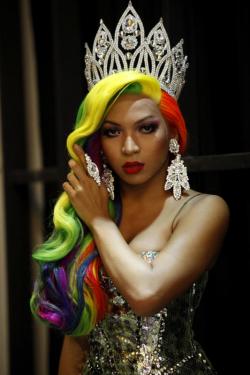
History was made when Angele Anang, a transgender drag queen, snatched the crown of Drag Race Thailand Season 2 and became the first transgender woman to win a Drag Race since the franchise began in 2009. Angele, 24, began her career as a showgirl and Beyoncé impersonator. In an interview with Life, she revealed she aims to go on an international tour to perform for the world and be an inspiration for other transgender people.
Last year, Angela Ponce from Spain made headlines worldwide for being the first transgender woman to compete on the Miss Universe stage. Others are already following in her footsteps. Trans beauty queen Eirin Tunheim, 26, from Thailand, is now among the semi-finalists of Miss Norway 2019. If Eirin goes on to win, she will be the first trans woman to represent Norway in Miss Universe.
Ayako Fuchigami, a retired dancer, was elected the first openly transgender assemblywoman in Japan. She won the seat in Higashi Ward district in Sapporo, Hokkaido. Fuchigami is endorsed by the Constitutional Democratic Party of Japan.
Contact melalinm@bangkokpost.co.th for news and views of LGBTI.