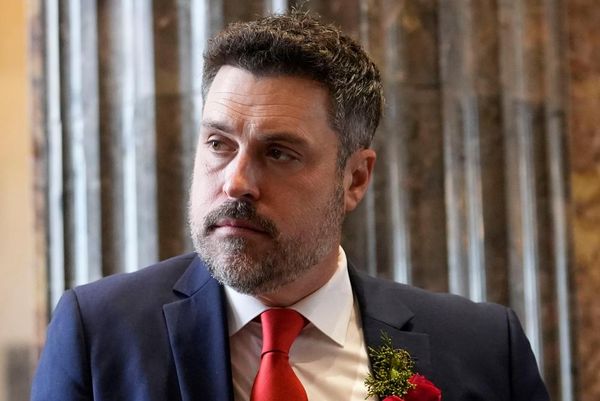
Kenneth Berry can feel the bullets in his body move. One jiggles down his leg toward his ankle; another presses on his sciatic nerve; a third has migrated to his hip.
The three bullets have been inside Berry, 41, for more than two decades, pumped into him when he was a teenager near St. Louis.
Now, after years without health coverage, besieged by untreated nerve pain and hunched over a cane, he finally has the golden ticket to get the medical procedures that will bring relief: a Medicaid card.
This is a surprising effect of the Affordable Care Act, the landmark health care law that now faces an uncertain future given the Republican Party's victory in the presidential election and its control of both houses of Congress.
By funding the expansion of state Medicaid programs beyond the traditional populations of poor mothers and children, the law has brought coverage to tens of thousands of previously uninsured shooting victims, often young African-American men, who, once stabilized in emergency rooms, missed out on crucial follow-up care and have endured unremitting effects of nerve injuries, fractured bones, intestinal damage and post-traumatic stress disorder.
The same states that have opted to expand Medicaid suffer high numbers of firearm injuries, including California, Arizona, Illinois, Michigan, Maryland and Pennsylvania. The law is profoundly changing how gunshot victims in these states heal from grievous injuries by guaranteeing access to specialists, physical therapy, nursing home care, antibiotics, wound supplies and wheelchairs, according to dozens of interviews with trauma surgeons, rehabilitation specialists, anti-violence groups and shooting victims.
"Some of my patients would be missing their skulls three months after the injury and have to wear helmets," said Dr. Michael Ajluni, a traumatic brain injury specialist at the Rehabilitation Institute of Michigan in Detroit. "Now they can get their skulls back in place."
Officials at urban hospitals across the country estimated that before the health law, more than half of their gunshot patients were uninsured. Obligated under federal law, hospitals provided hundreds of millions of dollars in unreimbursed services. Trauma surgeons called in favors for scarce charity openings with specialists, but more often grudgingly sent uninsured patients home, knowing they were unlikely to receive essential follow-up care.
Patients needing bowel diversion surgery, for example, a common necessity for those shot in the abdomen that should be surgically reversed after the intestines heal, instead walked around for months or even years with temporary colostomy bags because many hospitals would not treat them without health insurance.
"I felt deeply ashamed of that," said Dr. Marie Crandall, a former trauma surgeon at Northwestern Memorial Hospital in Chicago, remembering shooting victims whose colostomies she was unauthorized to reverse.