• Hacks, flacks, invited guests and crashers politely averted their eyes and ears at the Sky party at Labour conference as New Statesman editor Jason Cowley tore a strip off James Robinson, the former Guardian and Observer journalist turned spin doctor. Cowley’s beef? A six-year-old MediaGuardian profile by Robinson calling the magazine “a title in turmoil” and its editor “smooth and self-promoting”, which in Cowley’s view was an undeserved “hatchet job” he has never received a proper apology for. The Staggers supremo can claim with some justice that (while Milibandistas and Corbynistas deplore the title’s shift in political line) the piece has been shown to be over-sceptical by his successes in revitalising its website, leavening its editorial mix and making it a talking point by such ploys as celebrity guest editors. But as Robinson is now head of communications for deputy leader Tom Watson, their altercation didn’t get relations between Labour’s new regime and the leading leftwing weekly off to a promising start.
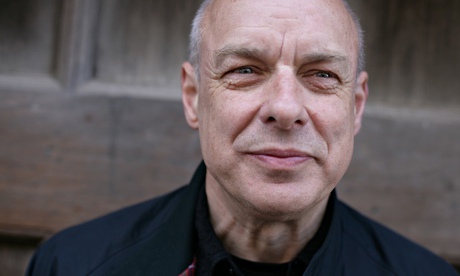
• Brian Eno declined to provide an advance text of his BBC John Peel Lecture last weekend, requiring hacks to keep pace with the braniac record producer’s train of thought. A transcript, hastily cobbled together by BBC PR, hardly helped but was unwittingly indiscreet: “Lord Rhys, setting up the BBC,” a passage read, “had the idea that the whole nation would benefit from being a part of this new idea of radio, that ideas could be spread around differently.” So the cat is out of the bag, then: the Beeb’s founder was a Welshman. A BBC4 profile by Huw Edwards of this little-known peer, plus a series of debates about Rhysian values, will now need to be set up urgently ahead of the charter negotiations, while the always-incredible old mythology about a grim, Private Frazer-like Scot is quietly dismantled.
• Monkey’s plea for some sign that Charlotte Moore and Kim Shillinglaw, the respective controllers of BBC1 and BBC2, are on speaking terms has sadly gone unanswered, and instead Friday’s debut of The Kennedys (a BBC1 sitcom based on Emma Kennedy’s memories of growing up in 70s Stevenage, a new town then largely populated by London emigres) provided another piece of evidence of estrangement; not only does it follow ludicrously hard on the heels of Cradle to Grave, BBC2’s comedy drama based on Danny Baker’s memories of growing up in 70s London, but the latter is actually still running – so you could be forgiven for inferring that no one at BBC1 was aware of its existence before it inconveniently popped up on screen. What was it Tony Hall said about ending blinkered mindsets and breaking down the Beeb’s “silos”?
• Moore’s recent showcase for autumn BBC1, incidentally, elicited an unusually cynical tweet from Broadcast’s news editor Jake Kanter: “BBC1 will defined by risk-taking, says its boss, announcing 3 novel adaptations, more Shakespeare and [Troy, based on The Iliad] a retelling of a 3,000 year-old story”. Monkey is confident, however, that all these reworkings will nevertheless be accompanied by the “Original BBC Drama” tag that was one of the legacies of former drama boss Ben Stephenson - the preposterous slogan was still being used, after all, about the recent run of adapted classics on Moore’s channel that began with Lady Chatterley’s Lover.
• Drama was the star in last week’s launch by Radio 3 of its plans for 2015/16, in which rookie controller Alan Davey was at pains to stress that it’s a part-time speech station as well as a most-of-the-time music one. Promised goodies include Arthur Miller plays, a Stoppard revival and a season curated by Harriet Walter - all or most in the Drama on 3 strand. Absent, however, was any indication that the slot itself might be altered to give these attractions a chance of winning a substantial audience beyond those who listen to Radio 3 all day or strongly prefer radio as a medium. Incomprehensibly, Drama on 3 - the network’s sole regular drama outlet - is at 9pm on Sundays, exactly when BBC1 (recently costume adaptations like Cider with Rosie), ITV (currently Downton Abbey) and C4 (currently This Is England) all air their most prestigious, stellar and heavily trailed fiction offerings. Up against them, if Drama on 3 stays where it is, Miller, Stoppard and Walter’s selections have about as much hope of success as the Charge of the Light Brigade.
• “When does Beth Rigby start as the Times’s media editor?” Monkey is often asked, a question of some interest since the former FT deputy political editor (a) is the first woman in the job for ages, and (b) has switched paper and field to take up a possibly perilous position - two Times reporters covering media stories (including her predecessor, Alex Spence) have left the paper in a hurry in the past five years, while others showed no liking for the beat and swiftly moved on. And the answer is that it seems Beth won’t be joining the Murdoch title after all; someone called Elizabeth Rigby has, however, just inherited the poisoned chalice, a rebranding almost certainly connected to editor John Witherow’s implacable hostility towards shortened names (“why does he call himself Phil?!” was the nominal hard-liner’s legendary harrumph about a hapless critic’s byline while at the Sunday Times). For the moment, the likes of Ben Macintyre, Ben Webster and Robbie Millen may be safe because he inherited them, but their stubbornly stumpy monickers won’t do them any favours.