Josie Rourke takes the strategy of the gender-swap to a whole new level in her thought-provoking treatment of this Shakespearean problem play about sex, power and abuse in the work place. Before the interval, we're offered an incisive, heavily cut version of the piece, in renaissance dress and running at about 90 minutes.
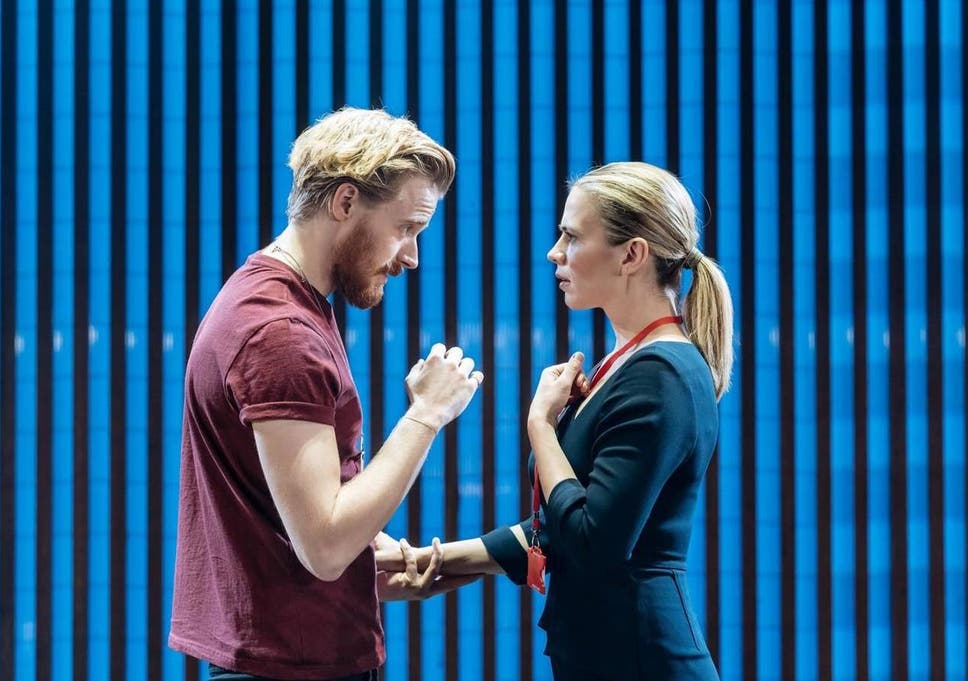
Hayley Atwell brings remarkable argumentative fervour and force of will to the role of Isabella, the novice nun who is told she can save her condemned brother's life if she sleeps with the corrupt new Deputy, Angelo. In the latter part, Jack Lowden is first-rate – an intellectually austere Scot and hard-line Puritan who flusters and fidgets with the unfamiliar sensation of lust when confronted by this fellow temperamental absolutist. This production gives you a truly horrible sense of Isabella's powerlessness as Angelo corners and gropes her, jeering “Who will believe thee, Isabella?” when his shivering victim threatens to tell the world what sort of man he really is.
In the public showdowns of the last act, it's impossible not to be reminded of Professor Christine Blasey Ford's courageous testimony before the Senate judiciary committee, Brett Kavanaugh's splenetic sense of entitlement, and the sheer institutional weight against a woman survivor being believed. The final male insult is this. Having put Isabella through all kinds of needless distress in order to make the “happy” ending feel like inspired delay, the “absentee” Duke (nicely captured as a bungling would-be Providence-figure by Nicholas Burns) tries to force his hand in marriage on her. She reacts here with shaking, silent disgust, returning just before the interval to roar in utter fury at him.
After a tumultulent spasm in the lighting and sound department, we are suddenly in the present day. While retaining the names of their original characters, Atwell and Lowden are discovered to have exchanged positions vis-a-vis influence in a slightly shorter re-run of the play.
She's now a power-dressing business woman (the lone female, you gather, in government circles) and super-keen to take over the reins. Instead of a trainee-priest, he's a recovering addict who seems to have joined a religious support group. Lowden gets across the nervous fragility of this figure and the very slightly brainwashed feel of his religious arguments against the deputy. (The “More than our brother is our chastity” stakes are still lower and less comprehensible.)
Do we judge things differently if the predator is female? Well, you could say that Atwell's modern Isabella put the moves on Angelo for not unsympathetic reasons in part – because her sceptical male team are not giving her the back-up she deserves and she compensates by trying to assert her power over a man she fancies. But there are also moments that are like a parody of misogynistic cliches about career women.
Take the equivalent “Who will believe thee Angelo?” moment. Isabella at this point puts on a display of the fake faces she would use in order to foil him in dastardly femme fatale fashion. It's grotesque. I wasn't sure how we were meant to take it. It occurred to me that there would be parts of the press only too willing to believe the salacious worst of a new woman deputy and that Angelo might have little difficulty selling his story to a tabloid.
The second half becomes, to my mind, embroiled in implausibilities. The production scores several firsts, though. I have never before seen a “bed-trick” authenticated by the smartphone recording of of a yelping orgasm. The modernisation is a bit facile — Jackie Clune's depraved Pompey delivers her lines about “groping for trouts in a peculiar river” in a jokey Russian accent and there's a chorus of sex-workers who barely look up from their assorted screens. It's satisfying that the cack-handed, interfering Duke is rebuffed, both by a woman in the first ending and by a man in the second when he outs himself and, because of the logic of the gender swap, proposes slobbering matrimony to Lowden's Angelo. Another first.
Not as trenchant as one might have hope but a show that gives abrasive new life to the idea of a play of two halves.
Measure for Measure runs at the Donmar Warehouse until the 24 November.