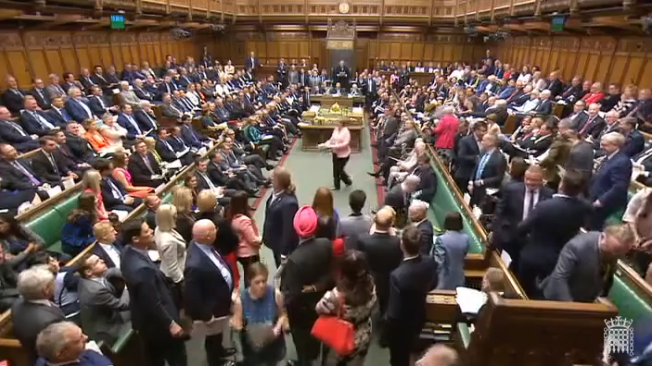
We referred to “a pre-planned stunt” by Ian Blackford, the leader of the Scottish National Party at Westminster, who got himself thrown out of the Commons this week for refusing to accept the speaker’s ruling. There are some pedants who point out that planning is something you do in advance, and therefore there is no need for the “pre-”. It is not as if there could be such a thing as “post-planning”, they say.
I had this debate a while ago over those official stickers on London minicabs that say: “Pre-Booked Only.” I thought it would look odd, and harder to grasp quickly if you were looking for a taxi, if they said: “Booked Only.” It is worth emphasising the “pre-” at the expense of tautology.
I am not sure if that applies in this case. “A planned stunt” would have been fine, and the meaning is clear. But I have no problem with “pre-” to drive the point home. Blackford intended to get himself thrown out if the speaker refused to allow him to disrupt Prime Minister’s Questions by demanding a vote in the middle of it, and secured the cheap publicity he had pre-prepared.
Glossy brochure: A headline said this week’s National Audit Office report on universal credit blamed ministers for a “catalogue of errors”. Apart from giving the impression of a glossy brochure, I thought this diminished the NAO’s criticisms by suggesting they were a list of mere mistakes that could be corrected.
In fact, as we reported, “the NAO concluded that the benefit had not delivered value for money and it was uncertain that it ever would”, and that “there was no way of measuring” whether it will meet its aims.
The problems with universal credit seem more fundamental than just errors, even a large number of them.
Successful campaign: I am proud to report that, in a week when politics was turbulent and several media appearances went badly for interviewees, we managed to use the phrase “car crash” only to refer to road accidents. It’s a common metaphor for a public embarrassment, but it can be upsetting to anyone who has lost a loved one in a car crash. I’m glad we are avoiding it.
One of the many clichés of the Brexit debate about which I think we should show similar restraint is the idea that leaving the EU is, as we put it in a comment article this week, an “act of economic self-harm”. That may not have been intended as a metaphor, because the plain meaning of the words reflects the consensus among economists that the costs of leaving are greater than the savings.
But the association with the trauma of unhappy people harming themselves is tasteless and unnecessary. Let us have less of it.