Alastair Campbell, when he was Tony Blair’s press secretary, used to tour the newspaper offices behind the press gallery in the House of Commons. Once he came into the tiny room – it used to house a photocopier – occupied by The Independent’s five staff and mischievously leaned over the shoulder of Don Macintyre, our political editor, to peer at his screen.
“You can’t put ‘not’ in a first paragraph,” he said. Don told him to get lost, but later admitted he was right. I think Campbell said it was one of the things he learned on the Daily Mirror training scheme: don’t use “not” in headlines or first paragraphs. It was sound advice.
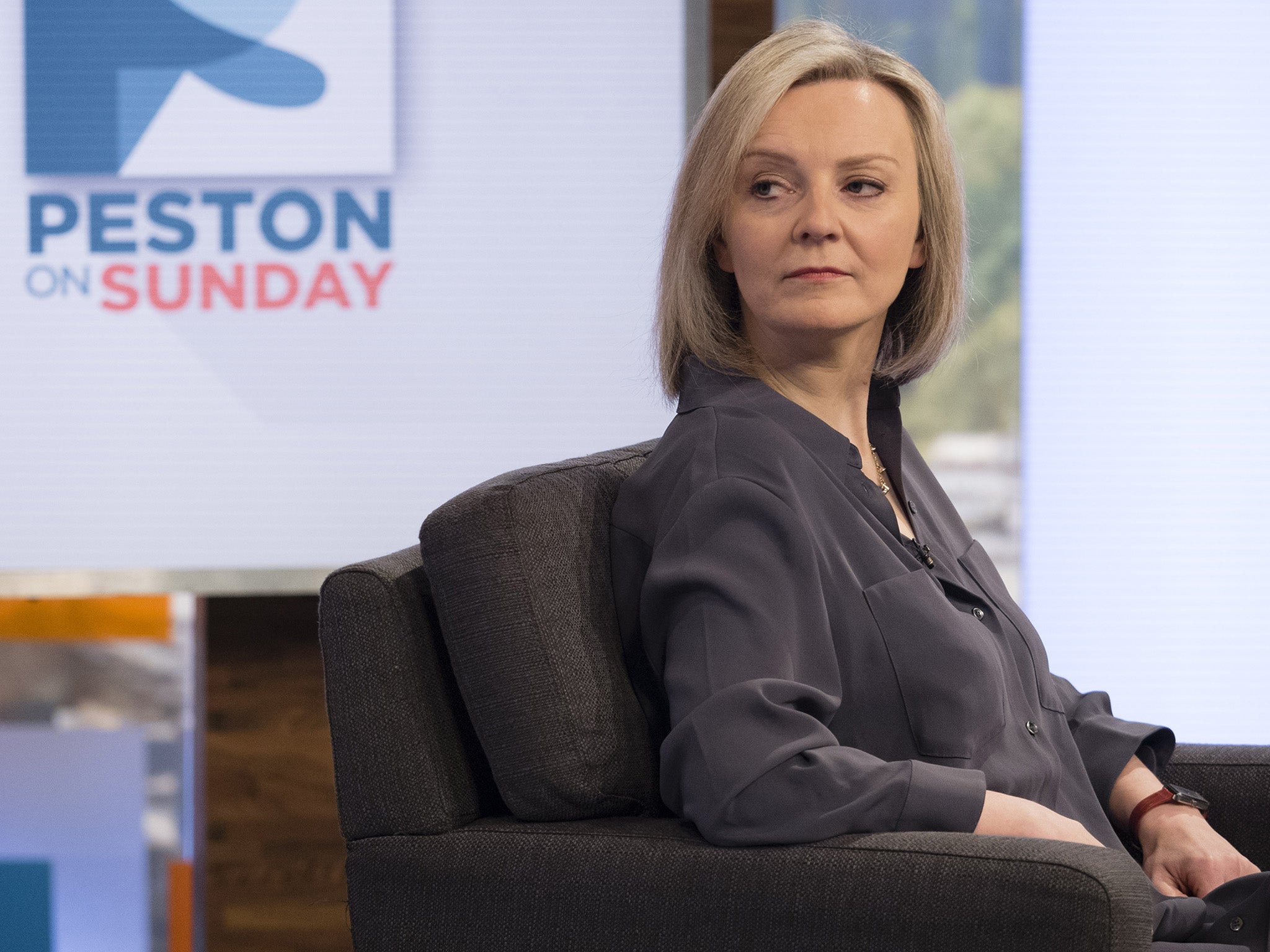
Negatives are easy to get wrong. The word “not” can be left out by mistake, as we did this week when we wrote, in the first paragraph of a news story: “Treasury minister Liz Truss has been branded ‘innumerate or inept’ after falsely claiming that local councils are facing cuts.” What she had claimed, of course, was that local councils are not facing cuts. (Thanks to Paul Edwards for pointing this out.)
It is also surprisingly easy to mistype “now” for “not”. These are good enough reasons for the Mirror’s rule, but even if the “not” is right, it can take the reader a split second longer to process the meaning. Better to rephrase and, as Bing Crosby sang, eliminate the negative.
We could have said that Truss had falsely claimed local council spending would be protected from cuts.
Acres and pains: In an article about the People’s Mujahedin Organisation of Iran, the opposition group favoured by US conservatives, we described its HQ in Albania. We referred to it as “a well-guarded 84-acre (340,000 square metres, or 34 hectares) property”. This tripling of statistics seemed excessive, a belt, braces and safety-pin approach.
I have always been a bit hazy about the size of an acre – once the area that could be ploughed by two oxen in a day – and so 84 acres doesn’t mean much to me. However, restating it in square metres or hectares doesn’t help.
Gordon Whitehead, who drew this to my attention, said that at least we “refrained from expressing the area in terms of Olympic swimming pools, or how many London buses it could contain, or in comparison with Wales”.
I think we should have just left it at 84 acres. It seems big enough. However, I have just looked it up, and that is the size of St James’s Park in London. There is a comparison that makes sense to me, at least.
New species of verb phrase: Fiona Coombes wrote to ask if “went extinct” is correct. We used it twice in an article in the Daily Edition about the elephant bird, Vorombe titan, which has been declared the biggest bird ever to have lived.
The usual form is for things to “become” extinct rather than to “go” extinct, but the new usage seems to have started in the late 1970s, and gained ground in the 1990s. I don’t know where it came from. I thought it might be American, but it seems to have become more common in Britain and America at the same time. “Go/went extinct” has, however, always been much less popular than “become/became extinct”. You can look it up on Google Ngram, which searches the huge Google Books database.
There is nothing grammatically wrong with the newer form: it simply sounds unfamiliar to some of us – it “sounds wrong”. For as long as that is the case, I think we should avoid it.
The Independent has launched its #FinalSay campaign to demand that voters are given a voice on the final Brexit deal.
Sign our petition here