The modern form of human beings – our very own courageous, sophisticated line of Homo Sapiens – have existed for about 200,000 years. Over the last quarter of our epoch, we have somehow managed to define what being seventeen should be like. Seventeen year olds should be established. They should have figured out the map of the world and the map of their future. They should live exactly on the boundary of bittersweet, damaged adolescence and straightforward, predictable adulthood. Most probably, they should have something distinctive to make them an important somebody in the flood of 7.2 billion other humans struggling to be distinctive too. Every seventeen year old needs some sort of interesting happening in their life.
You know, like one momentous summer they helped save the whales. Or the puffins. Or any other rapidly-going-extinct animal. Or, they finally stumbled on the answer to the meaning of life through some sad happening and suddenly they are oh-so-great saints with beautifully worded, pristine philosophies. We must never divide society into victims and villains; if something terrible happens to you, you must learn a life lesson. You must see beyond mistakes to the lessons before you’ve even struggled through it. If your frizzy haired, average ex-girlfriend becomes ill with myelogenous leukaemia, you stop being a jerk and start being a philosophical teenager who suddenly becomes inspired by the demonic instruments of death.
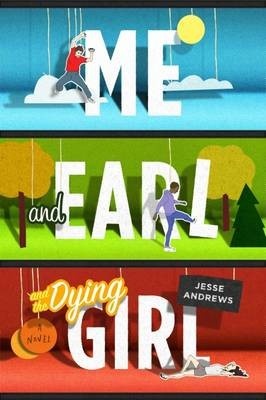
For Greg Gaines, it’s a bit difficult to fit himself into the confinements of all the aesthetically prepossessing Young Adult characters we have learned to love so endlessly. Greg is a senior at high school; an introvert at heart with an extrovert attitude. He limits himself to a tiring, infinite list of friendships - the ones where he makes the right jokes at the right moments and everyone hoo-haa’s at how funny Gaines is without pausing to indulge themselves in the question; “Who actually is Greg Gaines?”. Instead of ignoring every group, he joins every group. The stoners, the goth kids, the wide-eyed theatre kids - all the archetypal labels of high school. Name them, Greg is on good terms with them. Which suddenly leaves us with one resolution: Greg seems entirely undefinable because he clambers in all directions through the common social hierarchy of educational institutions.
But yet, we know he shares a compassion for films with Earl Jackson, who he labels as his “co-worker” (Greg seems to find it easy to figure who everyone is but himself - a unique attribute I’ve never really picked up in any other YA). Both enjoy remaking classic films using just the raw ingredients; a camera, some costumes and a hunger to follow in the footsteps of all those great storytellers and filmmakers. Jackson is the comedic part of the novel. He throws in the boyish, teenage jokes about sex. The eccentric family shadowed by the horror of the Jackson brothers and the Mother that only ever appears in the book through a name. It is Greg we expect to learn; he’s the one most connected to Rachel Kushner - the frizzy haired, average ex-girlfriend with myelogneous leukaemia - we expect him to become intent on an answer to the meaning of life, the universe, the unexplainable mystery of being seventeen. But it is Earl, throughout the evolution of story, that becomes enlightened. That learns a little more about what it is to be human. The difference between living and dying and how they are not really synonyms of each other. Time is running out, sure, but the seconds only suddenly mean something when you’re counting them.
In turn, Andrews brings these two entirely different teenage boys closer to be in the presence of an ill girl. Rachel Kushner. It is Kushner herself who I love. Despite her not narrating the book, not having time to learn the life lesson or the moral of the story. I could describe her as the Sellotape of the story - she gives the necessary coincidences and tragedies to make the book flow. I could describe her as the manic, pixie girl who fell victim to the hands of something bigger. But Rachel is neither a victim or a friend or even the owner of the phrase “the dying girl”. Rachel is a human. Rachel is the breathing, living lesson that being seventeen isn’t a miracle. It isn’t a great, terrific, life-changing time. Being seventeen is fragile; being alive itself is frangible. When she makes an appearance, it is so unchallenging to forget that she is even ill. She is funny, understanding and gives space for Greg to be himself - something all the other acquaintances he has don’t gift him with. And aside from that, she is her own person. An entire galaxy of feelings and an undying crush on Daniel Craig and friends who talk too much and say too little - and throughout this book we get to take a peek at her finite galaxy as it cascades through her puberty and her last few months of being alive.
And one of the greatest points of the novel? There is no romance. It is a platonic relationship - as Olivia Cooke (The ultimately great actress who portrays “Rachel” in the movie alongside personal favourite Thomas Mann and brilliant newbie RJ Cyler) mentioned during an interview at the Somerset House screening - the friendship is profound in the way it exists beyond sexual and romantic boundaries. Young Adult readers, including myself, thrive on the chaotic perfection of juvenile romance so it was interesting to see how stripped of the vigorous democracy of desire, Rachel achieves a unique intimacy with Greg and Earl.
This book will be misunderstood. It will be despised. Like every other single book that exists, people will see what they wish to see and no more. But “Me and Earl and the Dying Girl” introduces three, complex and insanely detailed characters. I see myself in Greg; in the careless manner he treats people as if they were paper dolls for his amusement, in the way he realises how important some things and some people are when it’s too late; when there’s no words to be said and no time to dwindle. Greg is almost a nihilist. He seems to be sure that knowing Rachel didn’t change him. But there is this shift in the entire novel; at the end Greg reveals the purpose of writing the book and we realise the impact Rachel had on him. She didn’t give him his miracle, but she showed him the way to his miracle.
I see myself in Earl, Rachel, Papa Gaines, Mama Gaines, Madison (maybe even Cat Stevens - the cat that lounges around) - there all this pieces, words, memories, behaviours we all partook in at one point in our lives. The story isn’t just about the self-centred world of Greg Gaines, the rapid loss of Rachel Kushner, the crazy, best-friend-life of Earl Jackson. It’s about people’s love for films, humans, life, stories, strange food (Papa Gaines has a weird habit of eating rare, peculiar food) - and it is this passion for things that makes being a bright-eyed, unknowing, awkward seventeen year old that little more special.
Andrews shows us what it’s like to be young in the 21st century for most of us. When we encounter loss, devastation and despair, we often don’t behave like heroes. We behave like people who haven’t seen much or done much. The message is that it’s okay to be uninspiring in the face of inspiring things.
It’s what Greg reminds us; it’s so great and interesting to write beautifully about hard times, but yet so difficult to actually live through them.
- Buy this book at the Guardian Bookshop.

.png?w=600)