While the appeal of McDonald’s may be universal, there’s one group that has never been catered for by the fast food giant until now: bees.
Home to progressive values and Scandi-style, Sweden has come up trumps for this small, but mighty insect by building a tiny McDonald’s branch for the buzzing creatures.
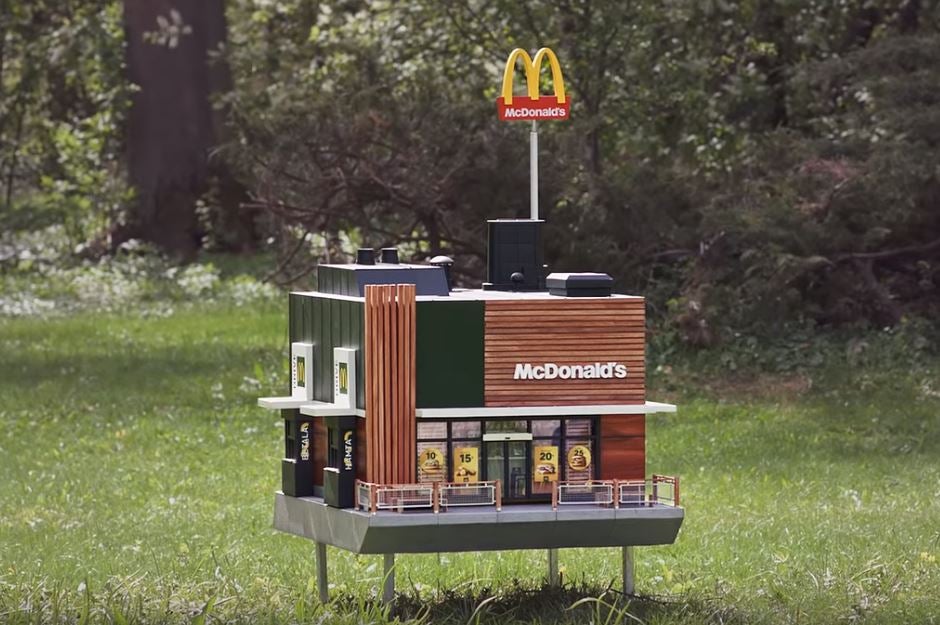
Named the McHive, the tiny miniature structure is practical as well as being completely adorable to behold, and exists as a fully-functioning hive.
The yellow and black and insects enter the hive underneath the restaurant’s iconic golden arches and can benefit from outdoor seating and a McDrive, if they’re short on time.
Designed and built by award-winning set designer Nicklas Nilisson, the McHive was developed for a charity fundraiser for Ronald McDonald House Charities: a non-profit organisation affiliated with McDonalds that exists to support children and young people.
And, it’s not the first time McDonald’s has collaborated with these special insects.
In Sweden, some McDonald’s restaurants have installed beehives on their roofs in a bid to create a more sustainable environment in their local community.
As the world’s most important pollinator of food crops, humans are heavily reliant on bees for stable, diverse food supplies.
The McHive was successfully auctioned on 21 May and sold to a bidder for over $10,000 (£7,885).
Christoffer Rönnblad, marketing director, McDonald’s Sweden said: ‘We have a lot of really devoted franchisees who contribute to our sustainability work, and it feels good that we can use our size to amplify such a great idea as beehives on the rooftops – this miniature McDonald’s is a tribute to franchisee Christina Richter’s initiative.’
According to Greenpeace, the economic value of bees’ pollination work has been estimated at around € 265 billion annually, worldwide.
On a purely economical basis, societal support for bees is absolutely crucial for humanity.