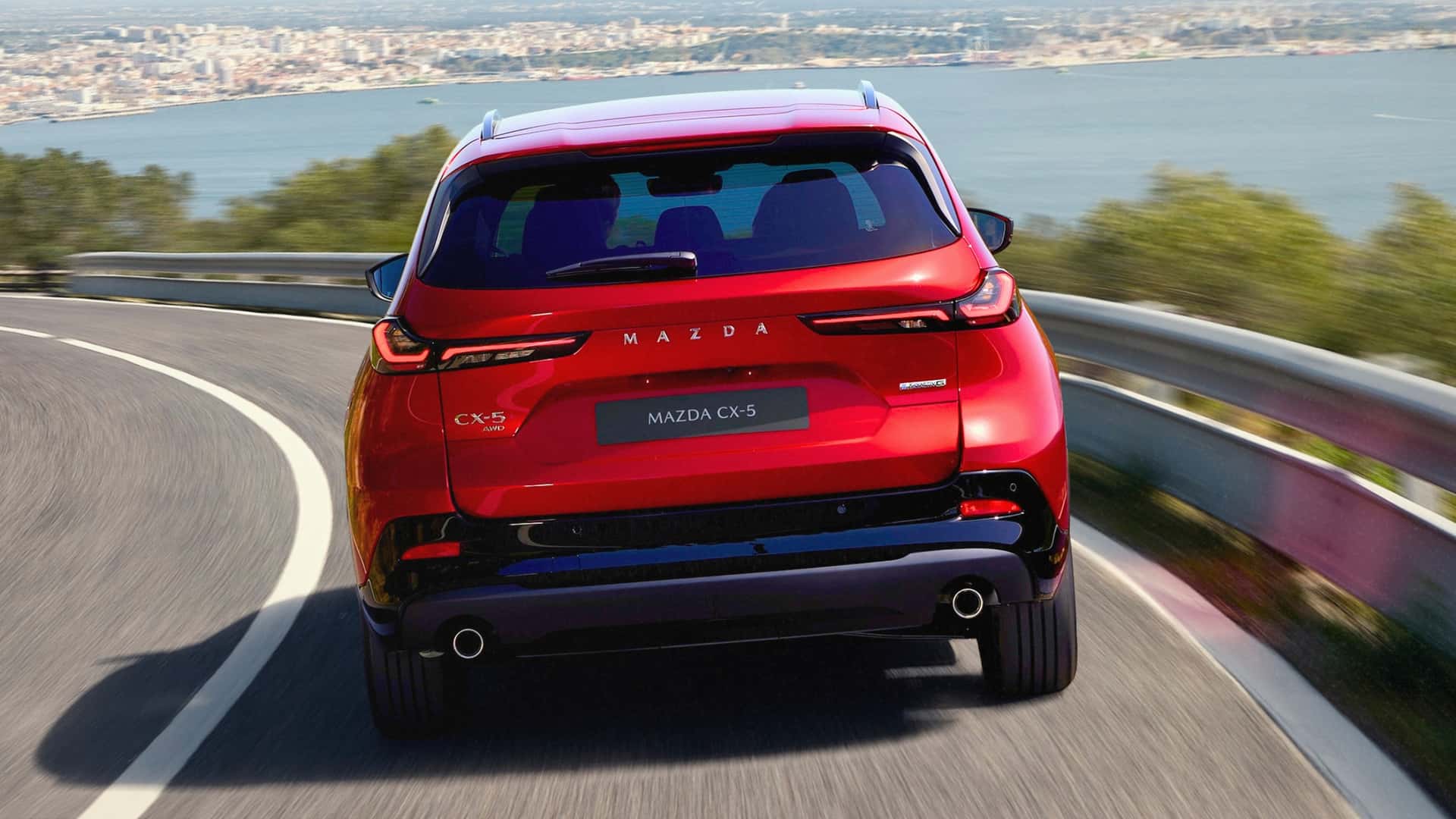
The Mazda CX-5 has always been considered the best-handling crossover in its segment. Yet, even amidst a growth spurt, for 2026, the new version is somehow even tighter and more composed than the one it replaces.
It’s not just Mazda magic. The Japanese automaker was able to maintain the CX-5’s signature driving characteristics by investing in a new, more expensive damper design that works in conjunction with a reimagined suspension setup inspired by the MX-5 Miata.

"It wasn’t a matter of changing the character, it was just a matter of making it better," said Ruben Archilla, Mazda’s senior manager of Research & Development. He sat down with Motor1 earlier this month to discuss the chassis improvements the automaker made to its best-selling model.
The new dampers feature a larger piston diameter and an improved valve stack that reduces friction in the assembly and provides more sensitivity, especially at low speeds. The damping curve is also less progressive than before.
"It’s more linear," said Archilla. "So, we have more damping at the beginning of the motion and less damping at higher piston speeds."
'It wasn't a matter of changing the character, it was just a matter of making it better.'
Mazda also "changed the relationship" between the springs and dampers. The new CX-5 has relatively soft springs and firm dampers, a concept borrowed from the Miata, which has "the lowest ride frequency of any Mazda that we make," according to Archilla.
"The spring rate is considerably lower than it was in the previous car," he continued. "That allows it to soak up a lot of imperfections, and it makes the ride simply more comfortable, softer. But we’ve also increased the damping force, especially at the initial movement—like really small inputs, considerably—which is what keeps the body posture and the body motions, the kind of primary floaty motions, really well controlled."
At the same time, Mazda also improved the CX-5's steering feel by adding more analog feedback. The automaker further refined its G-Vectoring Control system for the CX-5, which reduces engine torque to transfer weight to the front tires when the driver begins to turn.
"That gives the front tires more grip, gives them more response, and it also creates more force that gets fed back through the steering," said Archilla.
Something new the 2026 CX-5 is doing to enhance steering is lightly preloading the torque coupling in the all-wheel-drive system. This tries to force the front and rear tires to spin at the same rate, which makes the car want to go straight.
It’s this self-aligning torque, which translates into more force through the column, and the reduced damping in the electric power steering assist system that greatly improves the steering feel.
"It's got more actual tactile feedback, more analog feedback, and lighter effort, which makes it just easier to drive," Archilla said.