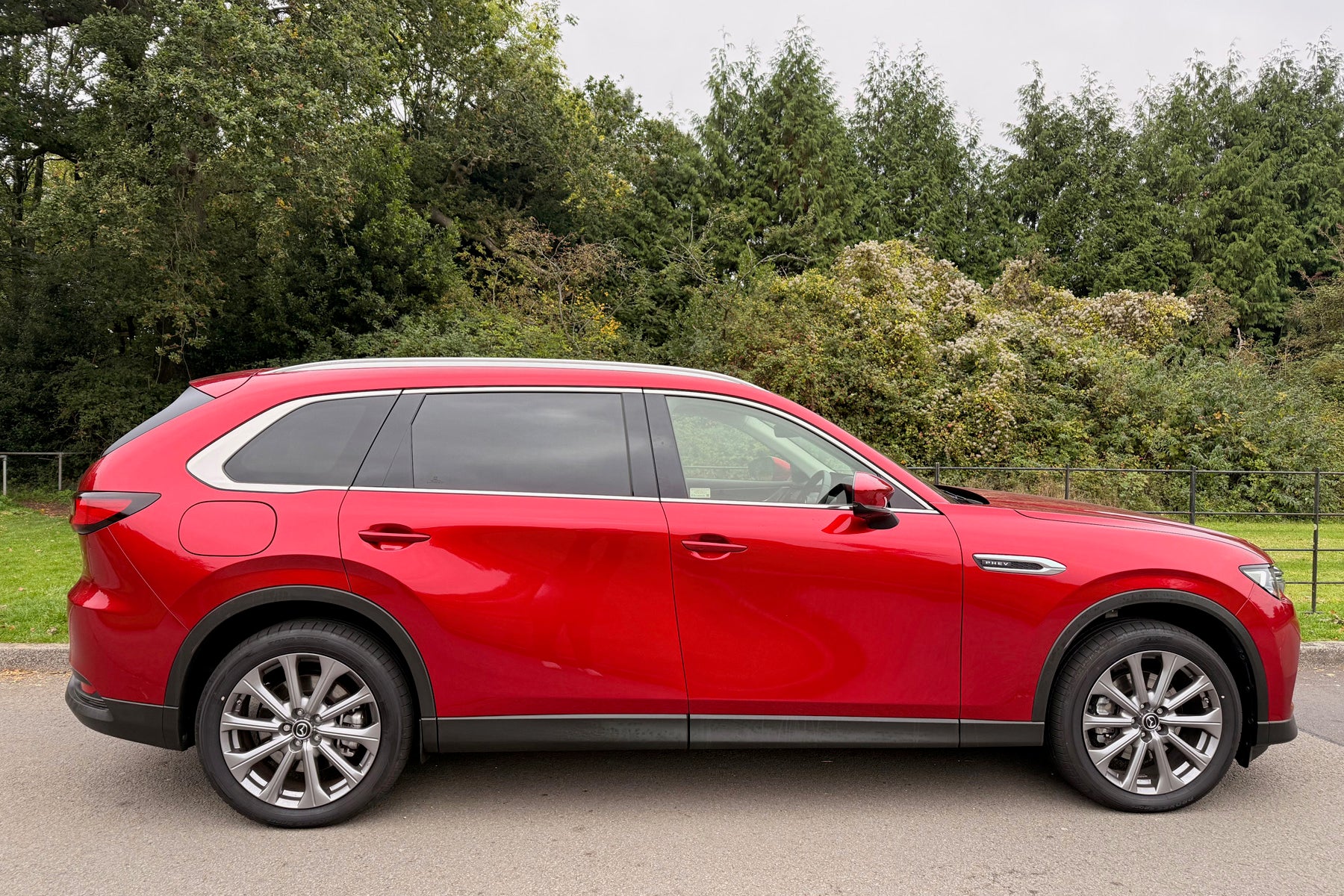
Mazda’s flagship model is the mighty CX-80, a full-sized family SUV that’s big on style and practicality with room for six or seven people across three rows of seats. Customers can opt for the impressive diesel-powered car or, alternatively plump for the plug-in hybrid version. But whatever the model, one thing is guaranteed and that’s a high-end interior that’s packed with technology and mod cons.
There is a choice of trims called Exclusive-Line, Homura, Homura Plus, Takumi and Takumi Plus with all versions featuring all-wheel drive, which will appeal to anyone needing to tow a family caravan.
Prices for the plug-in hybrid CX-80 line-up start from £50,080 for the entry-level Exclusive-Line car, and that’s the model we put through its paces during a 10-day loan.
How we tested
We were big fans of the diesel-powered version of Mazda’s flagship car, but wanted to see how the plug-in hybrid model compared on a test run that covered a 250-mile round-trip to Heathrow Airport, plus some more engaging driving on a favourite countryside driving route.
Mazda CX-80: From £46,940, Mazda.co.uk
Independent rating: 7/10
- Pros: Seven seats, modern styling, bundles of user-friendly technology, practical
- Cons: Hesitant hybrid powertrain, not particularly engaging to drive, low EV-only range, quite pricey
Mazda CX-80 specs
- Price range: £46,940 to £56,300
- Battery size: 17.8kWh
- Maximum EV range: 38 miles
- Engine: 2.5-litre petrol
- Claimed battery & engine range: 2,883 miles
Battery, range, charging, performance and drive
We have taken the diesel-powered version of the CX-80 on a number of adventures from glamping trips to longer treks to the coast and it took everything in its stride. And while the demands on the plug-in hybrid version were not quite so demanding, we still clocked up some heavy mileage, including several hundred miles of motorway driving.
Powering the car is a 2.5-litre Skyactiv petrol engine working in tandem with a 17.8kWh battery that can deliver an electric-only driving range of 38 miles. That’s a figure that is beaten by many rival models but, in theory, should be plenty to cover the average daily commute with the assurance of the petrol engine to fall back on when needed.
With 327PS and 500Nm, the CX-80 is no slouch out the starting blocks, sprinting to 62mph from a standing start in 6.8 seconds and onto a top speed of 121mph. That’s not too shabby for a car that weighs in at more than 2.8 tonnes.
It’s a comfortable motorway cruiser and will sit happily at 70mph eating away at the miles. But it’s when you need a sharp turn of pace that things go a bit awry. At times, the powertrain and eight-speed automatic gearbox seem hesitant and almost reluctant to oblige and there are the occasional clunking sounds of protest too. This is unusual for Mazda, a company renowned for its refinement, but after speaking to colleagues who had also tested the car, they too experienced similar issues.
However, that was my only grip during testing and when faced with twisting country lanes, the car was perfectly balanced and demonstrated confident grip through tighter curves. Drive modes called Sport, Normal, EV and Off Road alter the dynamics of the car and there are steering wheel-mounted paddles to manually switch through the gears for added driver engagement and fun.
Despite its huge proportions, the CX-80 is agile and easy to manoeuvre in busier towns and villages, and you will need all the vehicle’s clever parking aids to squeeze into an extra-large parking bay.
Apart from the occasionally noisy powertrain, the refinement levels impress with cushioned suspension and great insulation. And, thanks to the elevated seating, the all-round driver visibility is also noteworthy.
Interior, practicality and boot space

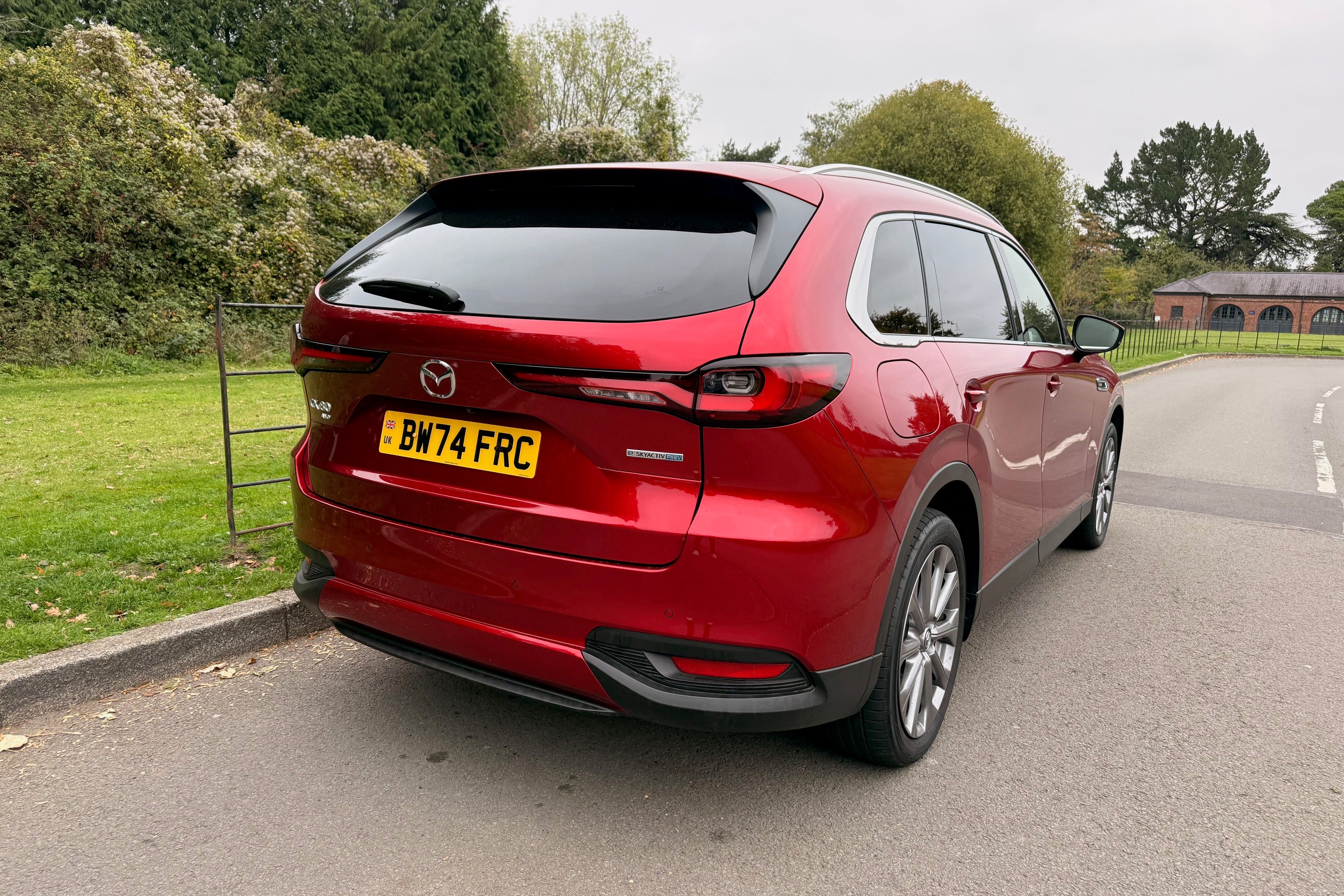
When it comes to practicality, the Mazda CX-80 has it covered to the max. It’s a huge family SUV that stretches just 5mm shy of five metres in length, and the 3,120mm wheelbase results in a spacious cabin with three rows of seats. Customers can specify six seats if they prefer, but we tested the model with the full capacity.
Up front, two six footers will have no complaints about the room, and neither will passengers in row two. Thanks to the high roofline, generous width of the cabin and sliding seats, there is ample leg, head and elbow room for a trio of second-row occupants. The pair of back seats are ideally suited for children, especially as clambering in and out with any sense of dignity can be challenging.
The boot is accessed via a powered tailgate and with all seven seats in use, can swallow 258 litres of luggage which is ample room for the weekly supermarket run. Drop the two rear seat by pulling on a seat-back tags and the capacity increases to 566 litres - it can be increased further to 687 litres by sliding the second row of seats forward. Finally, with just the front seats occupied, the capacity rises to 1,971 litres.
Expect to find plenty of handy storage compartments throughout the vehicle too, including cup holders for all occupants, an area beneath the boot floor to keep cables tucked away, a glovebox, wireless charging pad, central cubby and plenty of USB-C charging ports.
The elevated seating will make life easier for people who needs regular access to a child seat and this will also be helpful for anyone with mobility issues.
With family breaks in mind, the all-wheel drive Mazda CX-80 plug-in hybrid model can tow a caravan or trailer weighing up to 2.5 tonnes.
Technology, stereo and infotainment
Mazda prides itself on its high-end, elegant and generously equipped interiors and the CX-80 is no exception. Even our entry-level Exclusive-Line car featured black leather seat upholstery and a leather-wrapped steering wheel.
The CX-80 is certainly one of the most driver-friendly cars available with uncomplicated readouts, plenty of physical controls and a rotary dial that makes navigating the 12.3-inch infotainment touchscreen an absolute doddle. This screen offers access to a wealth of technology, including the sat nav, smartphone connection via Apple CarPlay or Android Auto, Bluetooth and lots more besides.
Set into the dashboard is a separate panel for all the climate settings, including the heated and ventilated seats and heated steering wheel. Then behind the multi-function steering wheel is a 12.3in driver display featuring three large dials offering clear readouts without any over-cluttered and flashy graphics.
Finding the perfect driving position is made simpler thanks to the powered front seats, which were part of the optional Comfort Pack costing £1,400. These seats are supportive without being overly firm guaranteeing comfort over long journeys.
We really enjoyed the simplistic approach to the infotainment system and on-board tech, much of which can also be controlled via the Alexa personal assistant.
Prices and running costs
The plug-in hybrid CX-80 line-up is slightly cheaper than the diesel-powered models with our entry-level Exclusive-Line test car costing £50,080. The most expensive and luxuriously equipped Takumi Plus PHEV will set you back £56,830.
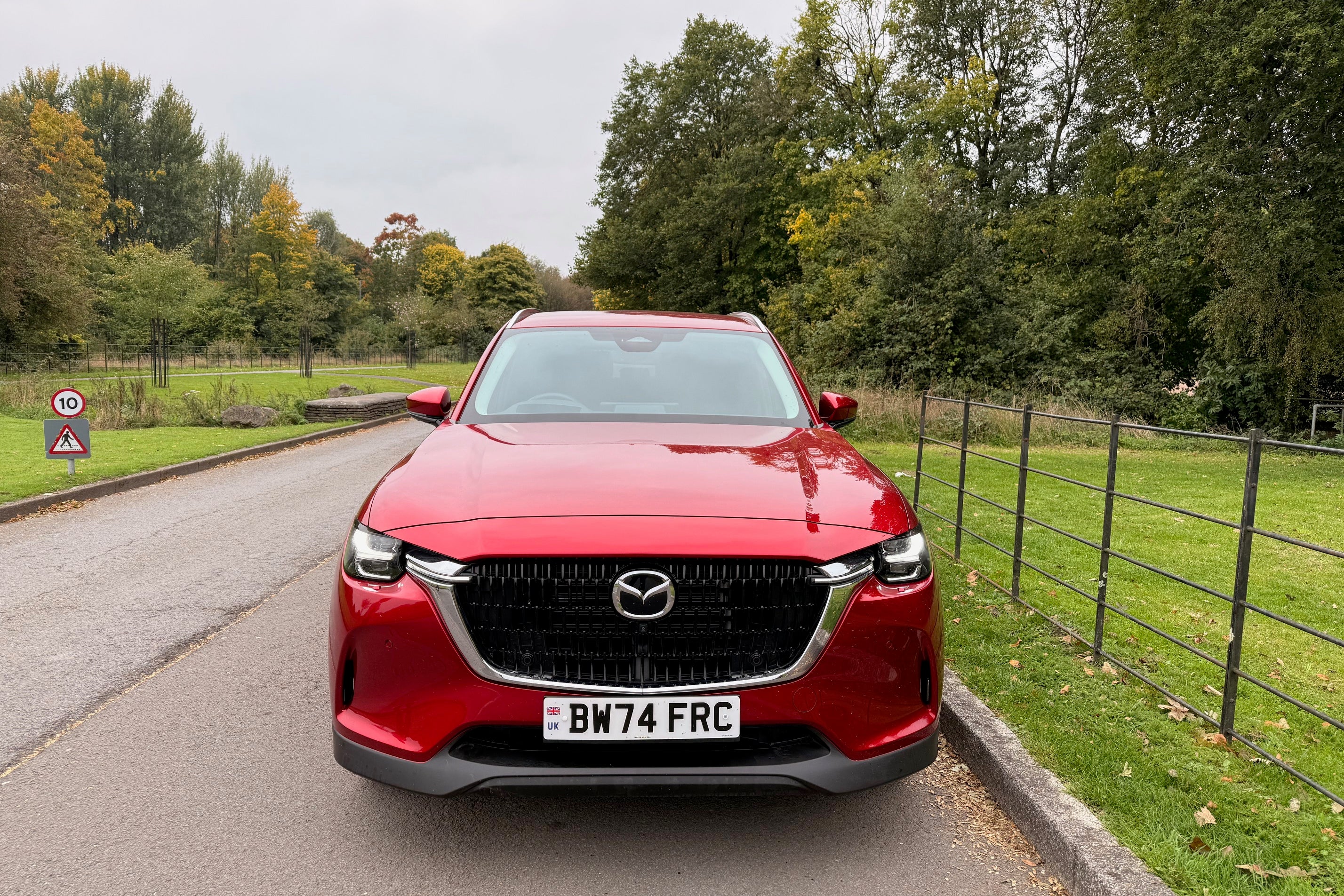
Our car also featured a few optional extras, such as Soul Red Crystal paint that looked really eye-catching. There was a Comfort Pack that added larger 20-inch wheels, powered front seats, heated outer rear seats and a number of other features. And a Convenience and Driver Assistance Pack introduced the likes of adaptive LED headlights, rear privacy glass, a 360-degree camera with trailer connection support, intelligent speed assist, centre console storge illumination and much more besides. These optional extras saw the final price-tag rise to £54,330.
But the plug-in hybrid technology does bring with it a number of financial rewards, especially to the business sector. Thanks to its 38-mile EV-only range and low carbon emissions figure of 35g/km, any company drivers will receive a Benefit in Kind rating of 13 per cent.
The official fuel efficiency figure of 176.6mpg has been weighted so is more realistic than some of the outrageous numbers allocated to rival models under official WLTP-testing, but it would still rely heavily on maximising full use of the electric range and charging the car regularly. One tip would be to explore energy supplier tariffs to see who offers better rates for overnight charging, which could help keep costs down.
When it comes to taxing the vehicle, it will cost £110 for the first year, increasing to the standard fee of £195 after 12 months. But as the car exceeds £40,000, owners will need to factor in the Expensive Car Supplement which adds £425 to annual bills from years two to six. The Mazda CX-80 Exclusive-Line, as tested, sits in insurance group 37.
Mazda enjoys an excellent reliability record, and for added peace of mind, the vehicle comes with a six-year, 100,000-mile warranty package, extended to eight years for the battery.
Mazda CX-80 Rivals
- Skoda Kodiaq
- Hyundai Santa Fe
- BMW X5
- Volkswagen Tiguan
FAQs
How long does it take to charge?
The CX-80s 17.8kWh battery can be charged in 4 hours, 50 mins from a domestic socket (20-80 per cent) or in 1 hour, 30 minutes if using a wallbox.
How much does it cost - is it worth it?
The CX-80 line-up stars from £50,080 for the Exclusive-Line model that we tested. So, not cheap, but you do get a great quality car that is generously kitted out and will cover all practicality needs well.
Does Mazda replace batteries for free?
There’s eight years or 100,000-mile cover for the hybrid battery pack.
Why trust us
Our team of motoring experts have decades of experience driving, reviewing and reporting on the latest EV cars, and our verdicts are reached with every kind of driver in mind. We thoroughly test drive every car we recommend, so you can be sure our verdicts are honest, unbiased and authentic.
Verdict: Mazda CX-80
Remember when everyone said diesel engines were noisy, dirty and unrefined? Well, Mazda went away and developed a simply brilliant 3.3-litre unit to power its larger cars and prove all those doubters wrong in the process. Additionally, the CX-80 is offered with a fuel-efficient plug-in hybrid powertrain which, while delivering on many counts, proved a little too hesitant and noisy for our liking.
Best used electric cars 2025: Top 10 second-hand EVs to buy
Best electric cars 2025: Top 12 EVs to buy (and the ones to avoid)
This car promises to glide over potholes, but can it really?
Fast chargers are expanding quickly, but American EV drivers still fear running out of juice
Volkswagen Passat: Practical perfection
BYD Atto 2 review: A high quality and enjoyable, family-friendly EV
What happens if your electric car breaks down? The AA has the answer
10 best cheap electric cars: Affordable EVs worth ditching petrol and diesel for