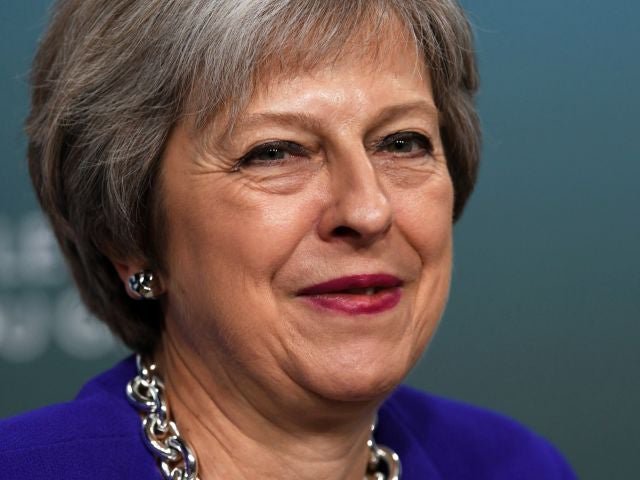
MPs have moved a step closer to voting on overturning Northern Ireland’s near-total ban on abortions, after Theresa May conceded it was an “option”.
In her first comments on the controversy, the prime minister declared “a woman should be able to access safe legal abortion” – and paid tribute to MPs who revealed their own “moving” experiences.
No 10 had insisted Northern Ireland’s strict abortion laws were a devolved matter, but Ms May has now said that a decision in Belfast is only her “preferred option”.
The comments will raise the hopes of MPs in all parties that Westminster can step into the void left by the collapse of devolved government in Belfast, 17 months ago.
They also risk a furious row with the Democratic Unionist Party, which is propping up the Tories in power and remains fiercely opposed to abortion reform.
Speaking on her trip to the G7 summit, Ms May said: “I believe that a woman should be able to access safe legal abortion.”
And she added: “There was some very moving testimony given by MPs across the House the other day, in the debate that took place on this particular issue.”
The prime minister repeated the government’s stance that it was working to get the Stormont assembly and power-sharing government “back up and running”.
But, significantly, she said: “My preferred option is for it to be dealt with and addressed by those people who are elected and accountable politicians in Northern Ireland.
“Obviously, in the House of Commons, any votes on abortion, because it is a conscience issue, are always and will continue to be treated as a free vote.”
Pressure is growing on the prime minister to act after the UK’s highest court said Northern Ireland’s abortion laws are incompatible with human rights.
Terminations are only allowed where there is a serious risk to a woman’s mental or physical health and not in cases of fatal foetal abnormalities, rape or incest.
The Supreme Court said preventing women from seeking abortion in those circumstances was incompatible with Article 8 of the European Convention on Human Rights, which protects the right to a private and family life.
Although it ruled that Northern Ireland’s Human Rights Commission had no legal standing to bring the case, the justices have thrust the controversy centre stage.
Meanwhile, senior cabinet ministers, including Karen Bradley, the Northern Ireland Secretary, have also come out decisively in favour of change.
Ms May’s views will encourage the chances of any future amendment for reform passing the Commons, by encouraging other Tory MPs to follow suit.
A cross-party group is seeking repeal of the 1861 Offences Against the Person Act, which would prevent abortion being treated as a criminal offence in Northern Ireland.
The government would then be forced to discuss how to change the laws – possibly by staging a referendum, the mechanism for reform in the Republic of Ireland.
During Tuesday’s debate, Heidi Allen, the Conservative MP for South Cambridgeshire, revealed in an emotional speech that she had had an abortion.
“I was ill when I made the incredibly hard decision to have a termination,” she told MPs. “I was having seizures every day, I wasn’t even able to control my own body, let alone care for a new life.”