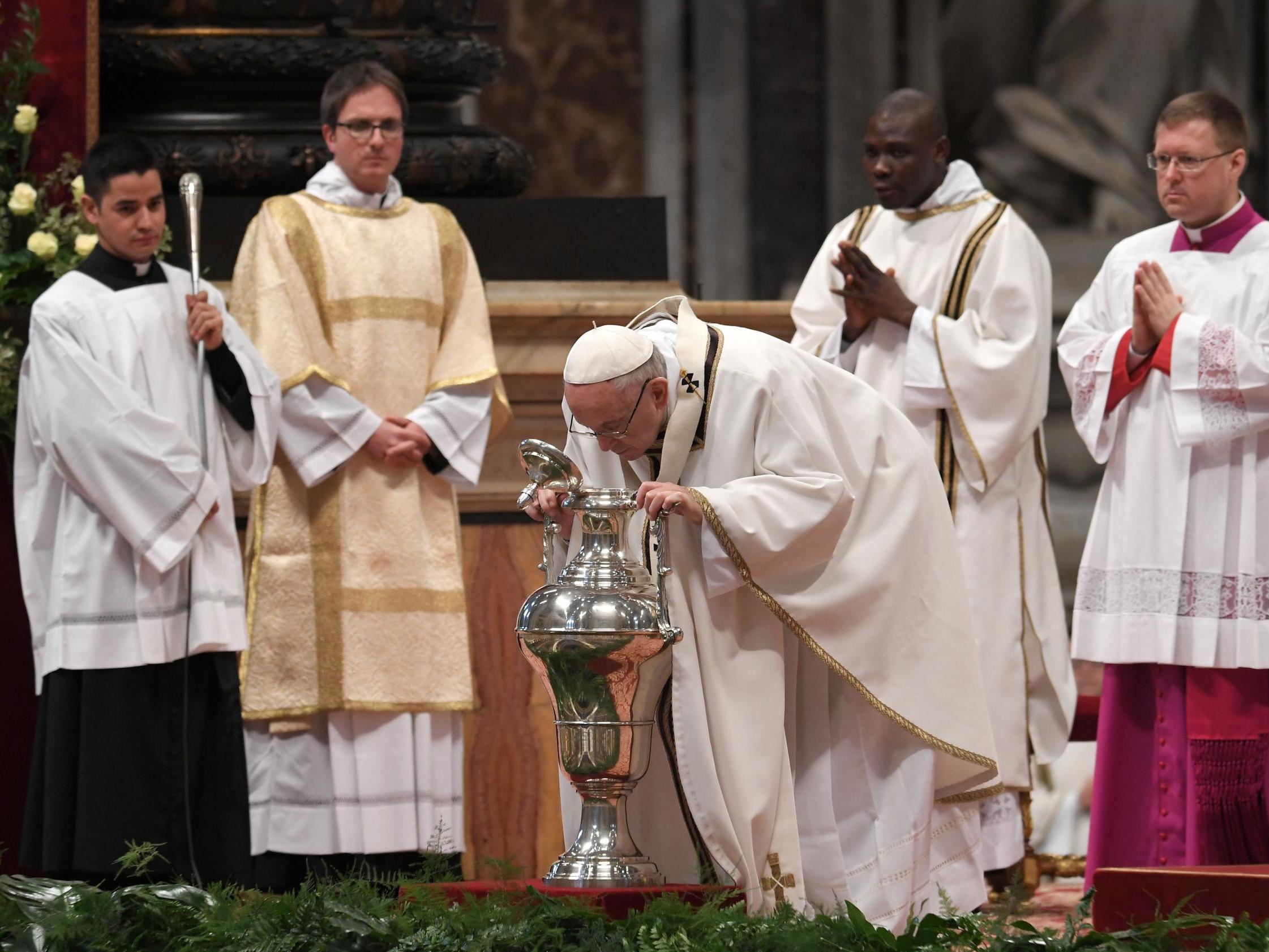
This week, Christians around the world will be preparing to celebrate Easter weekend.
However, there remains one other important date to mark in the Christian calendar before Good Friday.
Enter Maundy Thursday.
While the day may not warrant a day off work, it is still a crucial occasion for those that observe Christian teachings in Western and Orthodox churches.
Here’s everything you need to know about Maundy Thursday:
When is it?
Maundy Thursday falls on the fifth day of Holy Week, which commenced this year on Palm Sunday, and falls on Thursday 18 April.
The day is also recognised by names including Holy Thursday, Covenant Thursday, Great and Holy Thursday and Thursday of mysteries.
It is followed by Good Friday (19 April), Holy Saturday (20 April) and Easter Day (21 April), otherwise known as Easter Sunday.
Easter Monday takes place on 22 April, which commemorates Jesus Christ's resurrection, according to Christian belief.
What does it commemorate?
On Maundy Thursday, Christians commemorate the day on which Jesus Christ shared the Last Supper with his twelve apostles, prior to his crucifixion.
Jesus is believed to have washed the disciples' feet before the meal in order to demonstrate the importance of serving others.
The word “Maundy” comes from the Latin word “mandatum” meaning “command”.
According to Christian scripture, Jesus told his followers: "A new command I give you: Love one another. As I have loved you, so you must love one another.” John 13:34.
Some believe the Last Supper may have been a Passover meal, due to the inclusion of wine and unleavened bread.
However, it is not explicitly stated that the meal was a traditional Jewish Passover Seder.
During the Last Supper, it is said Jesus fed his followers bread, which was representative of his body, and wine, which was representative of his blood.
The ceremonial practice, known as Communion, Mass or Eucharist, is recognised in the Christian service and involves consecrated bread and wine being distributed to participants in the Catholic mass and in other Christian churches.
Following the supper, Jesus and his followers are believed to have headed to the nearby garden of Gethsemane to pray. Christian scripture reads that Jesus was betrayed that evening by one his disciples, Judas, with a kiss on the cheek and later arrested and taken to trial.
How is it commemorated?
Until 1689, it was customary for the monarch to watch worshippers' feet in Westminster Abbey, as well as hand out food and clothing
However, that practice now remains a tradition in the Catholic and Armenian Apostolic Churches and is routinely performed by priests.
Believers mark Maundy Thursday by attending mass in many Anglican churches across the UK.
Nowadays, the Queen attends a Royal Maundy service at one of Britain’s cathedrals or royal chapels, which this year is scheduled to take place at St George’s Chapel in Windsor.
What is “Maundy money”?
During the Royal Maundy service, the monarch will hand out two small leather string purses containing special coins to elderly attendees.
A red purse contains a standard coin, while a white one contains silver Maundy coins, amounting to the same number of pence as the years of the sovereign’s age.
This year, there will be 93 men and 93 women receiving Maundy money from the Queen to mark her age. Her Majesty will turn 93 on Sunday 21 April.
The first Maundy money ceremony took place in the reign of Charles II, when the king gave people undated hammered coins in 1662.
The coins are traditionally made of sterling silver and are designed especially for the service. They are legal tender and highly collectable.